Here's the truth about granite slab pricing for contractors: it’s complex because granite isn't a simple commodity. Unlike a pallet of lumber or a box of tile, every natural stone slab has a unique story. That story—its origin, rarity, and the journey it took to a California showroom—is built into its final price. This guide explains what drives those costs so you can have clearer conversations with your clients.
Why Granite Pricing Feels Like a Black Box
Have you ever felt frustrated when a supplier tells you to “ask your fabricator” for a price? You’re not alone. Contractors and homeowners often believe suppliers are hiding prices on purpose.
But the real issue is that granite isn’t a standard product where one piece is just like the next. Every slab is unique, and its value is tied to many factors.
The Problem with a Simple Price Tag
Asking for a flat price is like asking a car dealer for the cost of "a car" without saying the make or model. A real number is impossible without knowing the details.
Forums and surveys show that pricing is a major pain point for buyers. People feel “kept in the dark” because no one explains how granite pricing actually works.
Granite isn't a commodity product. Its price depends on things that can’t be quoted without knowing your project, such as:
- Slab Yield: How much of the slab is usable for your project versus how much will be waste?
- Origin and Rarity: Is the stone from a common quarry or a rare, exotic source?
- Finish: Does it have a standard polish or a more labor-intensive leathered texture?
This isn't just a stone industry problem. In logistics, decoding complex pricing for shipping works the same way—weighing many factors to find a final cost. Instead of asking for a flat price, ask suppliers for price ranges and what drives the cost.
Understanding Granite Grades and Rarity
The biggest factor in a granite slab's price is the stone itself. It's like buying a diamond—clarity, color, and rarity determine its value. Granite is sorted into grades based on its look and origin.
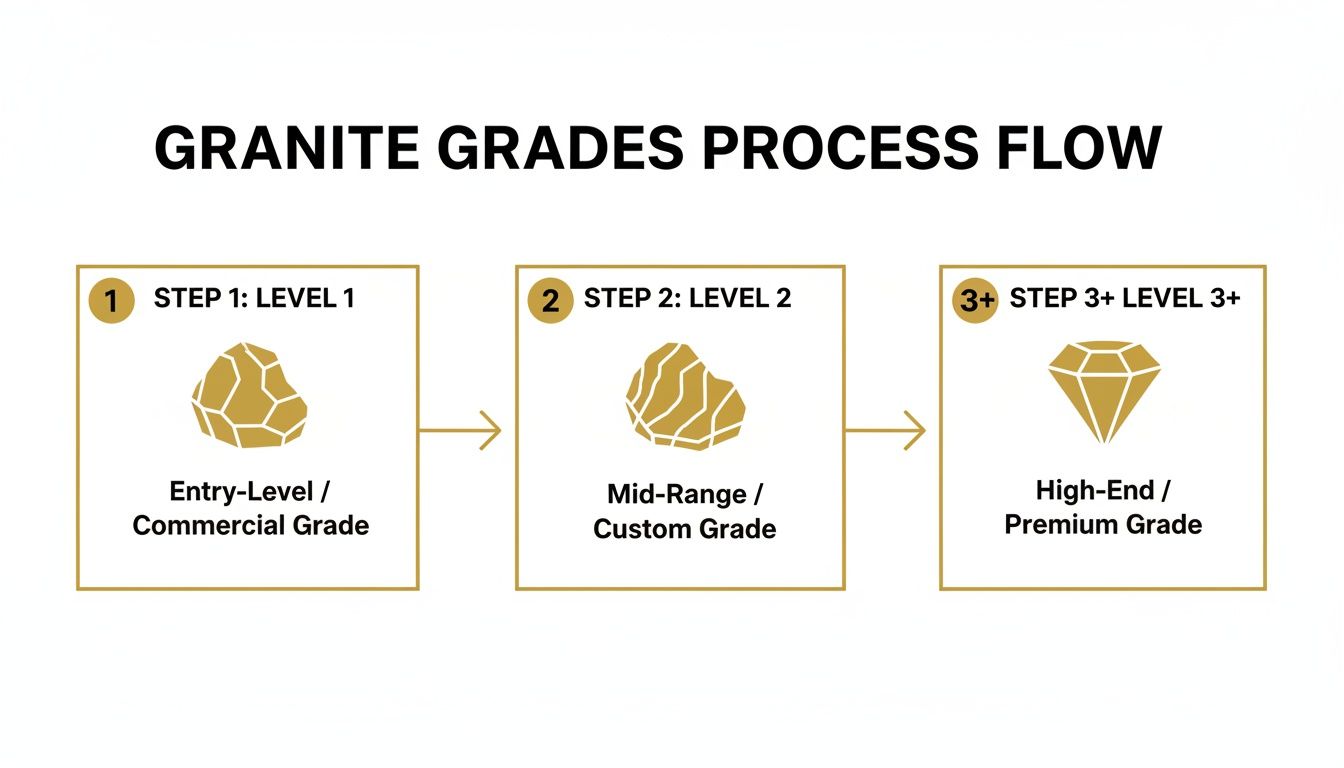
Not all granite is the same. The industry uses a simple grading system—usually Level 1, 2, and 3+—to classify slabs. Understanding this system is the first step to explaining the truth about granite slab pricing for contractors with confidence.
Level 1: Entry-Grade Granite
Level 1, or entry-grade, granite is the most common and affordable option. These slabs have simple, consistent patterns with a limited color range. Think flecks and speckles, not dramatic veins.
This granite comes from large quarries where the stone is abundant. This keeps costs low, making Level 1 a great choice for budget projects or rentals.
Level 2: Mid-Grade Granite
Step up to Level 2, and you’ll see more interesting patterns and colors. These slabs often have more veining and "movement," giving the stone more character.
Sourced from places like Brazil or India, Level 2 granites are less common than Level 1. For many homeowners in the Bay Area, this grade hits the sweet spot between a custom look and a good price.
Level 3+: Exotic and High-End Granite
Level 3 and beyond is where you find the showstoppers. These "exotic" stones are valued for their rare colors, bold veining, and unique patterns. They look more like art than a building material.
These slabs come from smaller, less predictable quarries. Scarcity drives the price here. A higher price means a totally unique look, a huge selling point for clients in design-focused areas like Palo Alto.
Granite Grade and Price Range Comparison
This table shows the typical features and material-only price ranges for different granite grades.
| Granite Grade | Common Characteristics | Typical Price Range (Slab Only) | Best For |
|---|---|---|---|
| Level 1 | Simple, uniform patterns (speckles/flecks), limited color palette, widely available. | $35 – $50 / sq. ft. | Budget-conscious projects, rentals, commercial spaces, high-traffic areas. |
| Level 2 | More intricate patterns, visible veining and movement, wider color selection. | $50 – $70 / sq. ft. | Homeowners seeking a custom look with good value, residential kitchens. |
| Level 3+ | Rare colors, dramatic veining, unique mineral inclusions, sourced from smaller quarries. | $75+ / sq. ft. | High-end custom homes, feature islands, clients wanting a unique statement. |
Remember, these are ballpark figures for the material alone. They can change based on the factors in this guide.
A common myth is that granite is always pricier than engineered stone. The reality is that slab granite material often runs from $35 to $75 per square foot, making it very competitive.
The grading system is about looks and rarity, not strength. A Level 1 slab is just as tough as an exotic one. For a closer look at styles popular in our area, check our guide on top granite slab options in the Bay Area.
Tracing the Global Supply Chain Costs
A granite slab's price includes more than just the stone. It also tells the story of a long journey from a quarry thousands of miles away.
It all starts at the quarry. Getting massive blocks of stone out of the earth is expensive and requires heavy machinery and skilled workers.
The Long Journey from Quarry to Showroom
Once quarried, a block travels across oceans and continents. This global journey adds many layers of cost before the slab even reaches a U.S. port.
These costs change all the time. Fuel prices, tariffs, and currency exchange rates can all cause sudden price jumps. This is a big reason why suppliers can’t offer fixed, long-term prices.
To manage your costs, it helps to use a few supply chain cost reduction strategies to guard against these changes.
Key Cost Drivers in the Supply Chain
The trip from a quarry in Brazil to a showroom in Palo Alto adds costs at several checkpoints.
Here are the main stages where costs are added:
- Quarrying Costs: This includes extraction, cutting, and on-site labor.
- Overseas Shipping: The slab is shipped in a container, which involves port fees and insurance.
- Import Tariffs and Customs: In the U.S., every slab has import duties and taxes. You can learn more about pre-tariff pricing on stone slabs to understand this better.
- Inland Transportation: The slab is trucked from the port (like Oakland) to a warehouse, adding freight costs.
The price you see reflects a long, expensive, and unpredictable journey across the globe.
As a direct importer, Carmel Stone Imports helps make this process more efficient. By sourcing directly from quarries, we control these costs better. This allows us to give you more stable and competitive pricing for projects in the Bay Area.
How Slab Size And Yield Impact Your Bottom Line
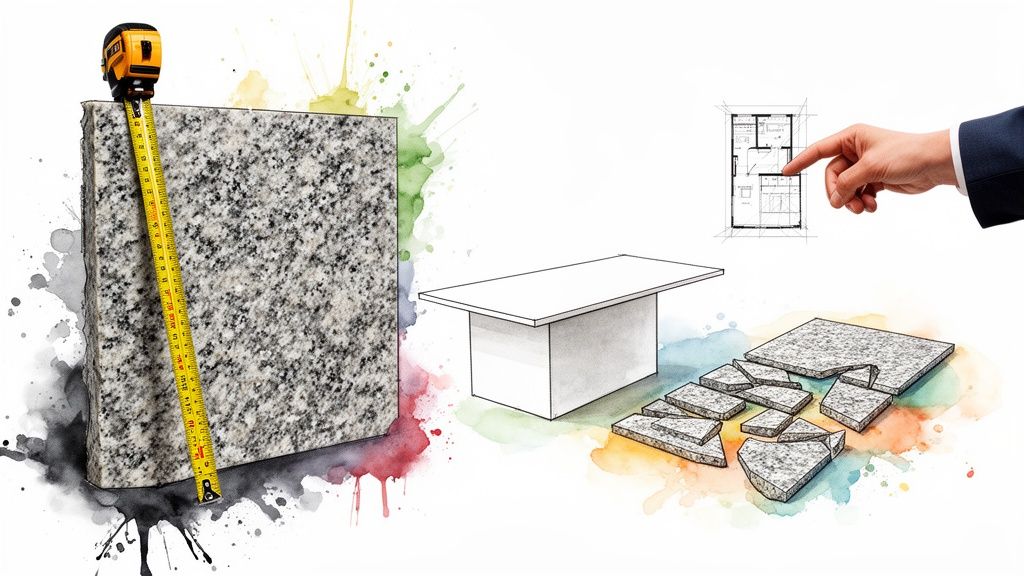
You’ve picked a grade and origin. Now, managing costs comes down to the slab itself. Focusing only on the price per square foot is a common mistake. The true cost is in the slab’s size and how much you can actually use, which is called yield.
Understanding slab size and yield is a huge part of the truth about granite slab pricing for contractors. This is where you either save money or face unexpected costs.
Why Bigger Slabs Command a Premium
Modern kitchen designs in California often feature large, seamless islands. This trend has put a premium on "jumbo" granite slabs. These big pieces are harder to quarry and ship, which raises their price.
But their value is clear. A jumbo slab lets you create a huge island or a long countertop without any seams. For clients in Monterey and Carmel, this luxurious look is often worth the extra cost.
The total cost of granite is the cost of the entire slab you need for the job, including the leftover waste.
This is why yield is so important. Yield is the usable square footage you get from a slab after all the cuts are made.
Understanding Slab Yield: A Practical Example
Let's imagine you need 50 square feet of countertop material. You find two granite slabs you like, both priced at $60 per square foot.
- Slab A: A standard slab measuring 110" x 65" (49.8 sq. ft.).
- Slab B: A slightly larger slab measuring 120" x 70" (58.3 sq. ft.).
Slab A looks perfect, but there's a problem. The kitchen is L-shaped, and the layout of Slab A means you can't arrange the pieces efficiently. You'd need a second slab to finish the job.
Slab B is larger, but its dimensions allow for a better cutting layout. Everything fits on one slab with very little waste.
Let’s look at the final material cost:
- Scenario with Slab A: You must buy two full slabs.
- Total Cost: 2 slabs x 49.8 sq. ft. x $60/sq. ft. = $5,976
- Scenario with Slab B: You get the job done with one slab.
- Total Cost: 1 slab x 58.3 sq. ft. x $60/sq. ft. = $3,498
The difference in yield created a $2,478 cost difference. This is why you should always discuss the project layout with your supplier. A good partner helps you choose a slab that maximizes yield and minimizes waste. Knowing where to compare the best stone slabs near San Francisco helps you find a partner who understands this.
How Surface Finishes Affect the Final Price
A slab's surface finish is another factor that can change the price. The finish gives the stone its specific texture and sheen.
Each finish requires a different amount of processing and time. This is a key part of the truth about granite slab pricing for contractors, and these choices can add a premium to the material cost.
Common Finishes and Their Cost Implications
Every finish gives the stone a different personality. In coastal areas like Monterey, clients often want natural, textured looks. Explaining the cost behind each finish helps manage expectations.
The rule is simple: the more complex the process, the higher the cost.
Here’s a breakdown of common finishes:
- Polished Finish: This is the glossy, reflective surface you see most often. Since it’s the standard, its cost is usually included in the base price of the slab.
- Honed Finish: A honed finish is smooth and matte with no shine. It’s great for hiding fingerprints but often needs extra sealing. It adds a moderate premium to the slab's price.
- Leathered Finish: This finish is all about texture, with a soft sheen and subtle dimples. Because this process is more involved, a leathered finish adds a significant premium to the material cost.
A special finish is a material cost. The extra work happens at the source. A leathered slab will have a higher price tag than a polished slab from the same block.
Connecting Aesthetics to the Budget
When showing clients their options, frame the finish as a design investment. A polished slab might be great for a modern Bay Area kitchen, while a leathered one could be perfect for a rustic Carmel Valley home.
Be upfront about costs. Let them know a leathered finish might increase the material cost by 10-20%. This helps them balance looks and budget early on.
For a deeper dive, learn more about how to choose the right stone finish for your space in our guide.
A Better Strategy for Pricing Conversations
Now you can change how you talk about price. Shift from asking "how much?" to "what are my options?" This positions you as an expert partner.
The frustration most contractors feel comes from asking for a simple price per square foot. That number is almost useless on its own. It's better to have a detailed, value-focused conversation with your supplier.
What to Bring to Your Supplier
Plan a visit to a showroom. Seeing slabs in person helps connect grade, finish, color, and cost.
Bring this information with you:
- Rough Project Dimensions: A simple sketch of the kitchen layout is perfect. This helps the supplier think about slab yield.
- Client Aesthetic Preferences: Bring photos or a clear description of the look your client wants.
- Key Project Details: Note any must-haves, like a large seamless island.
Instead of asking for a flat price per square foot, ask suppliers for price ranges and cost drivers. Bring rough measurements so you can educate clients early and avoid sticker shock later.
When you provide this info, a knowledgeable supplier like Carmel Stone Imports can guide you to slabs that fit your client’s vision and offer the best yield.
Visiting a physical showroom is the best way to see the difference between a Level 1 and Level 3+ slab. You can feel the textures and compare them side-by-side. Find a trusted stone showroom near me to make both price and value crystal clear.
Frequently Asked Questions
Here are answers to some of the most common questions contractors have about granite pricing.
Why Can't I Get a Simple Price Per Square Foot Over the Phone?
Granite isn't a standard product where every piece is the same. An accurate material price depends on the specific slab you choose—its grade, origin, and finish. A supplier who gives you a blind quote over the phone is just guessing.
Is More Expensive Granite Better Quality?
Not really. With granite, a higher price almost always means rarity and looks, not better performance. Every granite slab is incredibly durable. An exotic slab is priced for its unique pattern, while a common slab is just as tough but more affordable.
How Can I Help My Client Save Money on Granite?
The best way to manage costs is to focus on yield. This means finding a slab that fits your layout with as little waste as possible. Working with a knowledgeable supplier makes a huge difference here. Our team can help you find beautiful, cost-effective options.
Does the Finish Really Impact the Price That Much?
Yes. A standard polished finish is included in the base price. But specialty finishes like leathered or honed require more complex, labor-intensive processing. That extra work adds to the slab's cost before it ever arrives in a Monterey showroom.
Are Prices for the Same Granite Consistent Between Suppliers?
Prices for a similarly named stone can vary a lot. This is usually due to purchasing power and the supply chain. Direct importers like Carmel Stone Imports source straight from quarries. This cuts out middlemen and unnecessary markups, so we can pass those savings to you.
If you want clearer granite pricing conversations with your clients, Carmel Stone Imports helps contractors understand slab value upfront. Visit one of our showrooms or talk with our team—we’ll help you explain the “why” behind the price, not just the number. Learn more at https://carmelimports.com.