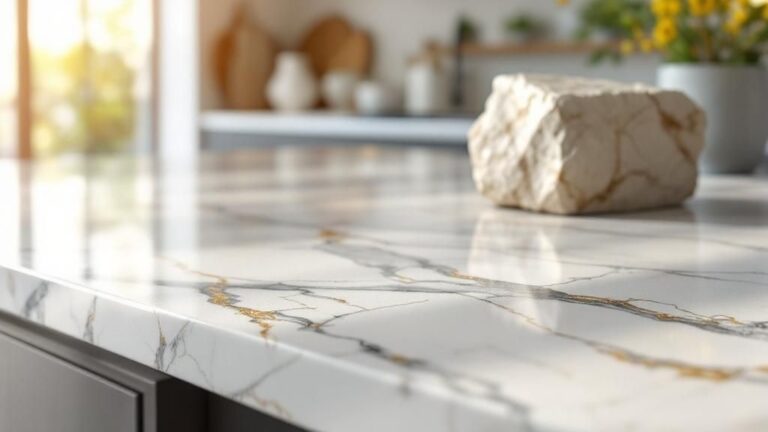
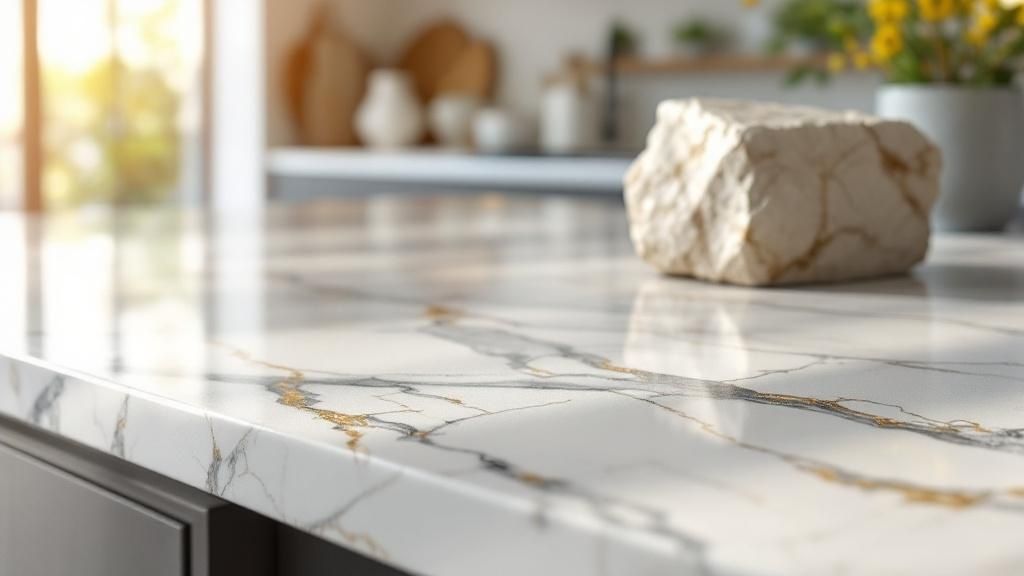
Thinking about a countertop that blends natural artistry with unbelievable strength? This guide explores what quartzite stone is, from its geological origins to its stunning applications in California homes. At its core, quartzite is a 100% natural metamorphic rock, created when quartz sandstone gets put under immense heat and pressure deep inside the earth.
The Journey from Sandstone to Stunning Stone
So, what is quartzite stone exactly, and how does it earn its reputation for durability? Picture grains of sand on an ancient beach. Over millions of years, these grains get buried and compacted, forming sandstone.
This sandstone is then forced deeper into the Earth's crust, where intense geological forces recrystallize the individual quartz grains. This process fuses them together into an exceptionally dense and hard stone.
This incredible transformation gives quartzite its signature look and feel, making it a top choice for discerning homeowners in the Bay Area and beyond. The intense heat and pressure erase that original sandy texture, creating a smooth, often glassy surface with beautiful, flowing patterns. Unlike engineered materials, every single slab of quartzite tells its own unique geological story.
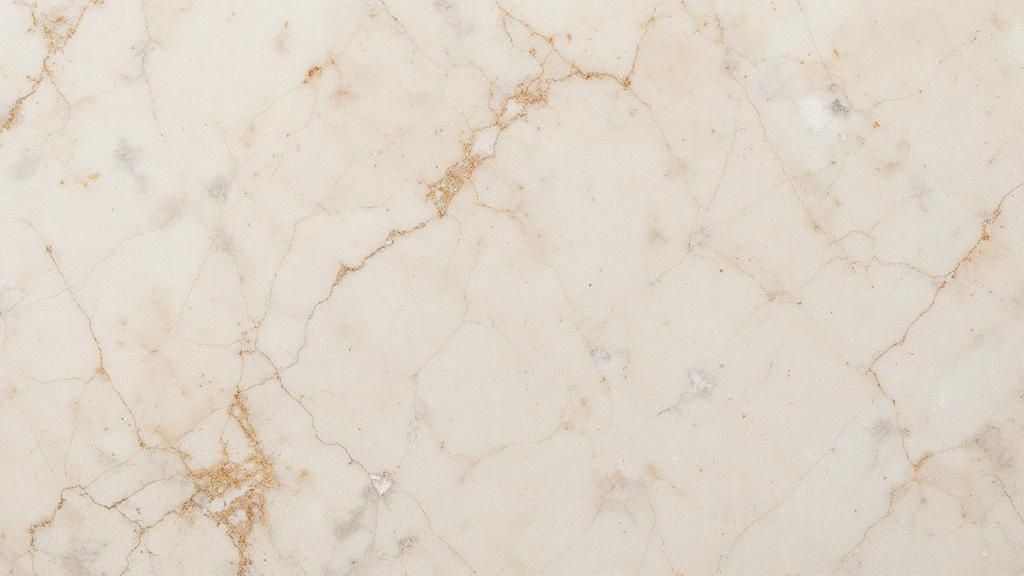
This metamorphic process results in one of the toughest natural stones you can buy. It ranks around a 7 on the Mohs hardness scale, which actually makes it harder than glass and even granite. You can dive deeper into its market performance and properties by exploring quartzite industry insights.
To give you a better idea of what makes quartzite so special, here’s a quick overview of its standout features.
Quartzite Stone At a Glance
| Attribute | Description |
|---|---|
| Material Type | Natural Metamorphic Rock |
| Origin | Formed from quartz sandstone under intense heat and pressure. |
| Hardness (Mohs Scale) | Approximately 7 (harder than granite) |
| Porosity | Low, but requires sealing to prevent staining. |
| Heat Resistance | Excellent; can withstand hot pots and pans directly on the surface. |
| Appearance | Unique veining and patterns, often resembling marble but with superior durability. |
This tough nature translates directly into practical benefits for home applications:
- Superior Scratch Resistance: It stands up incredibly well to the daily wear and tear of a busy kitchen.
- Heat Tolerance: Go ahead and place hot pots and pans on it without worrying about scorch marks or damage.
- Natural Beauty: Each piece features one-of-a-kind veining and color variations that simply can't be replicated.
Exploring the Natural Beauty of Quartzite
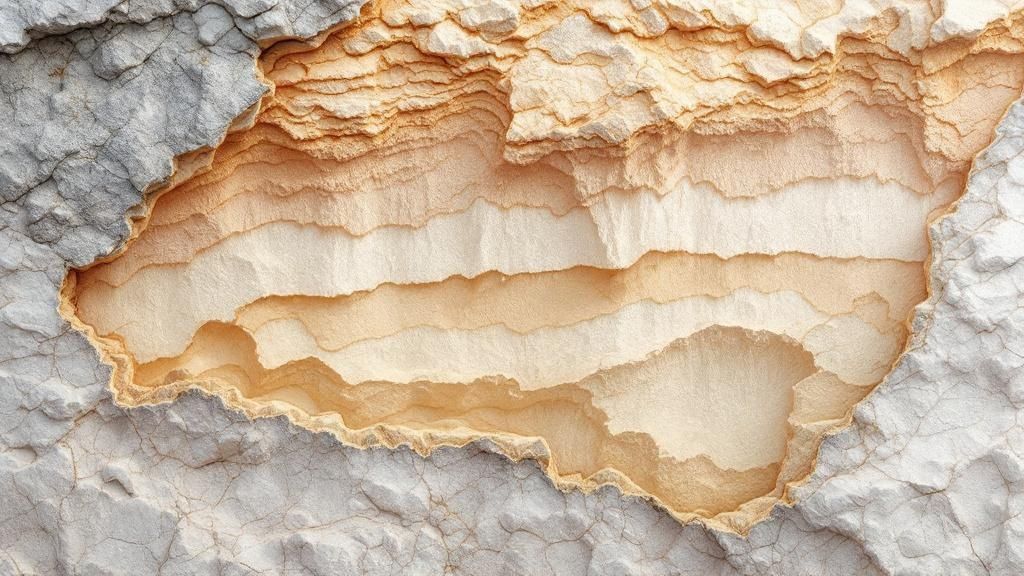
Sure, its durability is impressive, but the real reason people fall in love with quartzite is its breathtaking beauty. Every single slab is a piece of art straight from the earth, telling a unique geological story through its colors and patterns.
Many homeowners are drawn to quartzite because it captures the luxurious look of marble, often with the same soft, feathery veins. But here's the kicker: you get all that sophisticated style without marble's notorious fragility, making it a perfect solution for a busy household.
It’s this perfect marriage of delicate beauty and rugged strength that has made quartzite a go-to material for high-end California interiors. It brings an air of elegance to sleek Bay Area kitchens and tranquil Monterey coastal homes alike.
A Palette Crafted by Nature
The incredible range of colors you see in quartzite comes down to the minerals present when the stone was formed. The purity of the original sandstone dictates the final color and character of the slab.
This natural process creates a stunning spectrum of options:
- Pristine Whites & Soft Grays: Slabs like Taj Mahal or Macaubas offer a timeless, clean look that's perfect for creating bright, airy spaces.
- Warm Earth Tones: You'll find varieties like Sea Pearl with creamy beiges, gentle golds, and warm taupes that add an instant welcoming touch.
- Dramatic & Bold Hues: For a true showstopper, rare quartzites like Azul Macaubas boast vibrant blues, while others might surprise you with hints of green, pink, or red.
The real magic of quartzite is that no two slabs are ever the same. The intricate crystalline structure guarantees that your countertop or feature wall will be a one-of-a-kind installation, adding exclusive value to your home.
This inherent uniqueness gives you incredible design flexibility. When you explore the different types of natural stone countertops, you'll see how quartzite's distinct character stands out.
How Quartzite Compares to Other Stones
Picking the right stone can feel overwhelming, but understanding how quartzite stacks up against materials like quartz, granite, and marble makes the choice easier. The best surface comes down to your lifestyle, design vision, and where it's going to be installed.
For example, everyone loves the timeless elegance of marble, but its softer, porous nature makes it prone to scratching and etching. Quartzite gives you that same luxurious, veined look but with far more durability, making it a much more practical solution for a busy family kitchen.
Quartzite Vs. Engineered Quartz
One of the biggest mix-ups in the stone world is between quartzite and quartz. The names are incredibly similar, but the materials are fundamentally different.
Simply put, quartzite is a 100% natural stone quarried from the earth. In contrast, quartz is an engineered product made from about 90% crushed natural quartz mixed with resins and pigments.
This leads to a few key distinctions:
- Appearance: Quartzite has unique, organic patterns that nature creates. Quartz offers a very consistent, uniform look.
- Heat Resistance: As a natural stone, quartzite is exceptionally resistant to high temperatures. Engineered quartz is less heat-tolerant because the resins can be damaged.
- UV Resistance: Quartzite is UV stable, so its color won't fade in sunlight. This makes it a fantastic option for outdoor kitchens or rooms with abundant natural light. The resins in quartz can yellow with prolonged UV exposure.
Quartzite Vs. Granite and Marble
When you compare quartzite to other natural stones, it truly holds its own. It often feels like the best of both worlds, combining the hardness of granite with the visual appeal of marble.
The chart below gives a great visual of quartzite's strength, hardness, and low water absorption compared to its peers.
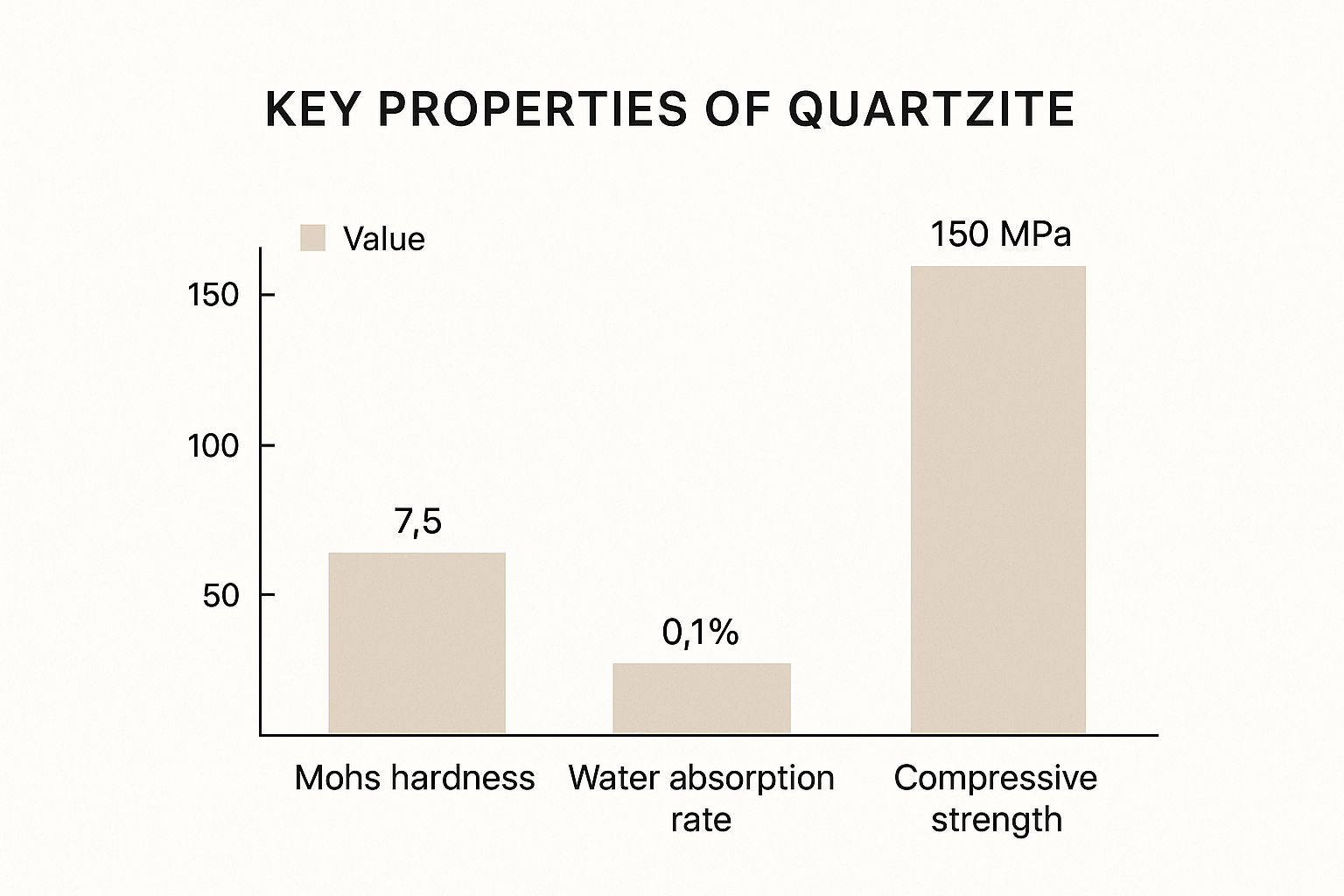
This data shows that quartzite is not only incredibly hard but also very dense, which helps it resist soaking up liquids once properly sealed.
For a clearer picture, here’s a quick comparison table.
Quartzite vs Granite vs Marble vs Quartz
| Feature | Quartzite | Granite | Marble | Quartz |
|---|---|---|---|---|
| Origin | Natural | Natural | Natural | Engineered |
| Hardness (Mohs Scale) | 7 | 6-7 | 3-4 | 7 |
| Porosity | Low (requires sealing) | Low to Medium | High (requires sealing) | Non-porous |
| Heat Resistance | Excellent | Excellent | Good | Fair (can be damaged) |
| Scratch Resistance | Excellent | Very Good | Fair | Very Good |
| Appearance | Marble-like veining | Speckled, granular | Soft, delicate veining | Uniform, consistent |
As you can see, quartzite truly shines as a durable and beautiful option. If you're wondering how these factors influence cost, you can dive deeper in our guide on the price of quartzite vs granite.
Bringing Quartzite Into Your Home Design
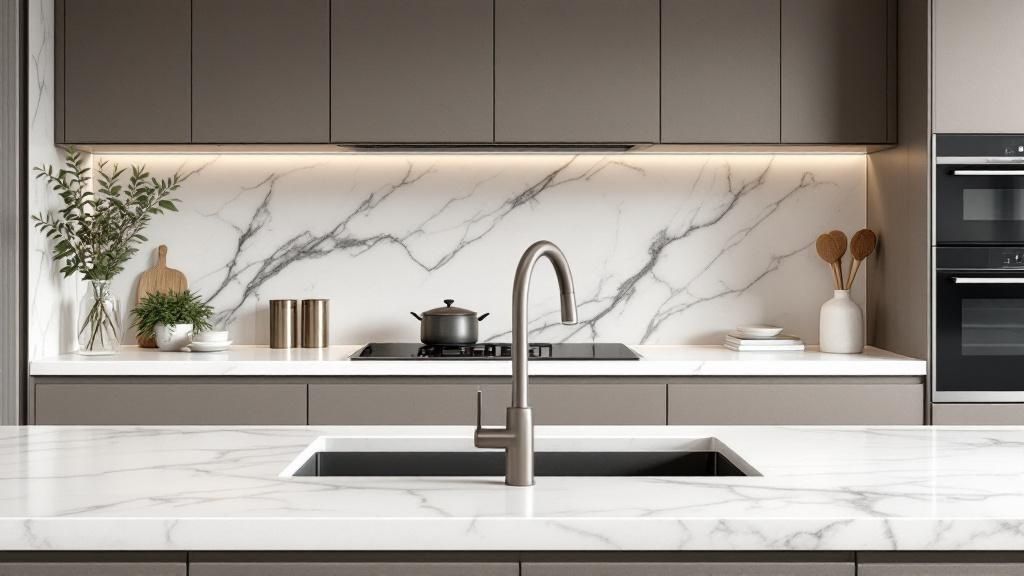
Kitchen countertops might be quartzite’s most famous role, but this stone’s blend of elegance and resilience makes it a star player all through the house. Its versatility lets you create a cohesive, luxurious feel from one room to the next.
Imagine a master bathroom with a stunning Taj Mahal quartzite vanity, its soft veins adding spa-like tranquility. Or picture a dramatic floor-to-ceiling fireplace surround made from a bold, dark quartzite, creating an undeniable focal point for the living room.
Tailoring the Look with Finishes
The finish you choose can completely change the stone’s personality to match your vision. Each option plays with light differently, highlighting unique aspects of the stone's character.
- Polished Finish: This classic choice creates a glossy, reflective surface that makes the stone’s colors and veins pop, lending a touch of formal elegance.
- Honed Finish: Also known as a matte finish, honed quartzite has a soft, satin-smooth feel that is perfect for a more understated, modern look in a Palo Alto home.
- Leathered Finish: This finish adds a subtle texture you can feel, highlighting the stone’s natural contours. It gives off a more organic vibe and is fantastic at hiding fingerprints.
It's no surprise that quartzite's popularity has soared. Residential projects now account for over 50% of its total usage globally, appearing in everything from countertops to stunning feature walls, according to these market trends on DataHorizzon Research.
Choosing the right finish is just as important as picking the slab itself. For more advice, check out our guide on how to choose countertops for your California home.
Simple Steps to Care for Your Quartzite
Keeping your quartzite looking incredible is easier than most people think. A few simple habits are all it takes to ensure your investment looks stunning for years to come.
The single most important step is ensuring it’s properly sealed. Because quartzite is a natural stone, it’s porous, and sealing creates a shield against stains. We have a helpful guide on how to seal natural stone that walks you through the process.
Daily Upkeep and Protection
When it comes to day-to-day cleaning, gentle is the way to go. Avoid harsh, acidic, or abrasive cleaners, as they can damage the sealer and the stone itself.
Instead, stick to these easy practices:
- Use pH-Neutral Cleaners: Mild soap and water is perfect, as are cleaners made specifically for natural stone.
- Wipe Spills Promptly: The minute you see a spill, wipe it up with a soft cloth to prevent it from soaking in.
- Protect the Surface: Though quartzite is very hard, always use cutting boards and place trivets under hot pans to protect the sealer and the surface.
Think of it like this: these little routines are simple preventative care for a natural work of art in your home. Taking a few seconds each day protects your stone and ensures it lasts a lifetime.
Frequently Asked Questions
When homeowners and designers start exploring this incredible natural stone, a few common questions always pop up. Here are answers to some of the most frequent inquiries.
Is quartzite prone to staining or etching?
Quartzite has a high resistance to etching from common kitchen acids like lemon juice, a major advantage over marble. Since it is a natural stone, it does have some porosity. A proper seal is key to guarding against stains, making it remarkably stain-resistant and a worry-free choice for busy kitchens.
How does quartzite pricing compare to other stones?
Quartzite is a premium natural stone, with pricing often similar to high-end granite and quartz. The cost of a slab depends on its rarity, origin, and the complexity of its patterns. For example, exotic varieties like Azul Macaubas are a significant investment, while more common types may have pricing closer to luxury granite.
How often do I need to seal my quartzite?
As a general rule, we suggest resealing quartzite countertops every 1-2 years. However, this depends on the specific slab and sealer quality. A simple trick to check is to sprinkle a few drops of water on the surface; if the stone darkens after 10-15 minutes, it’s ready for a fresh coat.
Can I use quartzite for an outdoor kitchen?
Absolutely. Quartzite is an exceptional choice for outdoor applications, especially in the sunny California climate. It is naturally UV-resistant, so its gorgeous color won't fade or yellow with sun exposure. Its durability also helps it stand up beautifully to the elements.
What is the difference between quartzite and quartz?
This is a critical distinction. Quartzite is a 100% natural metamorphic rock, quarried directly from the earth, so every slab is unique. Quartz countertops are engineered products, created by combining crushed natural quartz with resins, resulting in a consistent and uniform look.
Find Your Perfect Quartzite in California
Quartzite truly is a marvel of nature, blending incredible durability with an artistic flair that no engineered material can replicate. It offers the best of both worlds: raw performance and stunning, one-of-a-kind beauty.
At Carmel Stone Imports, we have dedicated ourselves to sourcing the finest quartzite slabs for designers and homeowners across the Bay Area. Reading about it is one thing—seeing it for yourself is another entirely.
Stop by our showrooms in either Monterey or Palo Alto to walk through our curated collection. Our team would be happy to show you around and help you find the perfect natural stone for your home that brings your vision to life. Ready to get started? Contact us today.