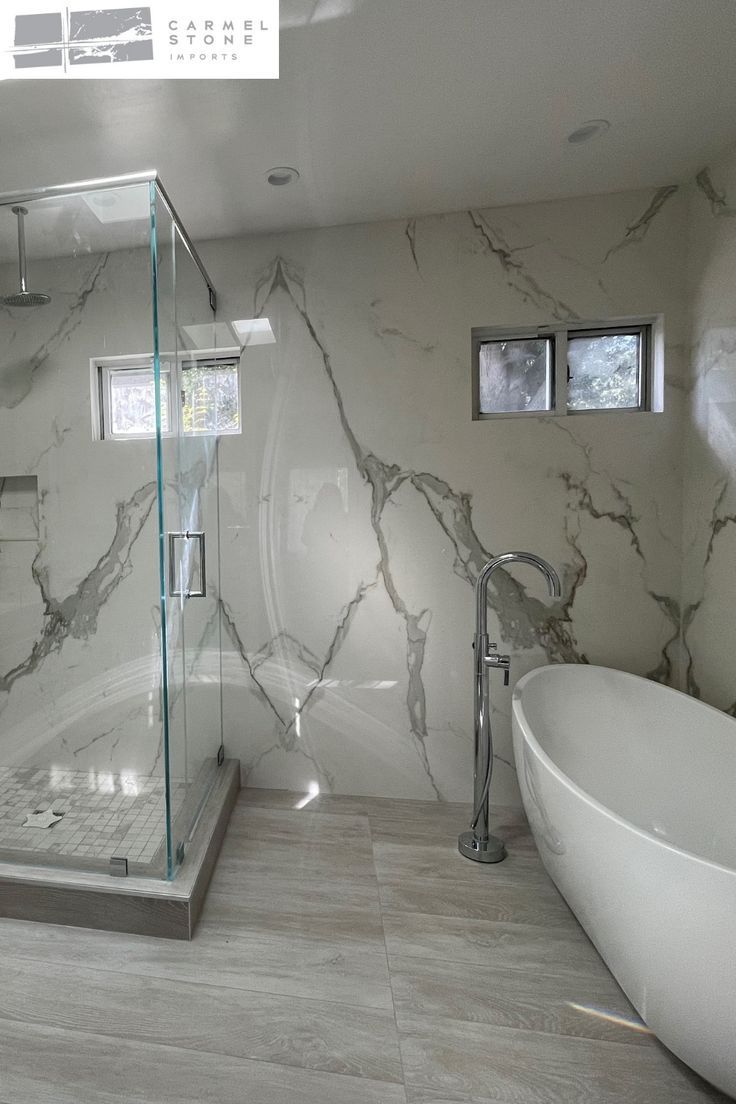
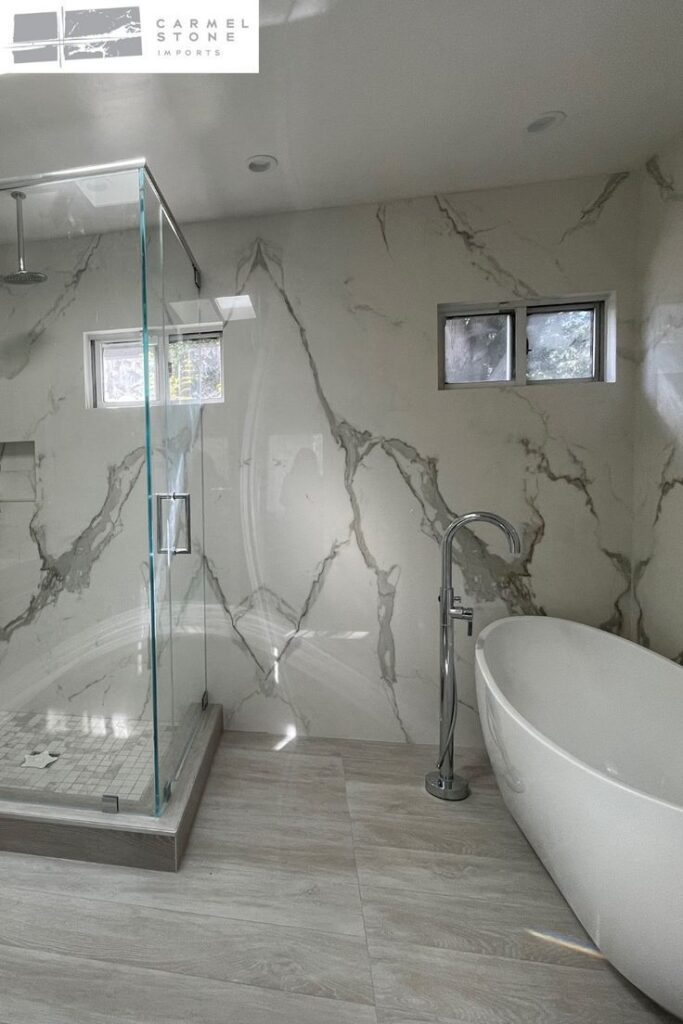
Porcelain slabs can be used for bathroom renovations. They are ideal for flooring, especially if a complex design needs to be cut. If your bathroom is indoors, you can create a luxurious space with porcelain walls, countertops, and accents.
What Are Porcelain Slabs?
Porcelain slabs are made of the same material as ceramic tiles. The difference is that porcelain is more refined and does not give off any odors or chemicals when in use. These are normally used for bathrooms because they are resistant to moisture, heat, acids, corrosion, and other things that can damage tiles.
They are also scratch-resistant, and you won’t have to worry about chips anymore since they’re quite durable. However, do note that they’re still prone to staining, just like glass tiles, which you might want to consider first before choosing a material for bathroom flooring.
Porcelain slabs can either be natural stone or cultured marble.
However, if you want simplicity in design, go for cultured marble since it has smooth surfaces, making cutting easier. You can choose different colors for these tiles, like light turquoise or white, but the most common and cheapest is the white color, finished with a matte texture.
You may not know it, but porcelain slabs are resilient and easy to work with since you don’t need to cut them out too much because of their thickness (usually around 4 inches).
Remember, its durability means that it’s quite cheap compared to other materials used for bathrooms. If you want more information about this product, read on below.
Advantages of Using Porcelain Slabs in Bathrooms
Porcelain is lighter than traditional stone, so it will be easier to work with and can help you save more money. It’s also scratch-resistant and will not break even if dropped accidentally, but it might chip away, so keep that in mind before installing this flooring.
It won’t require too much maintenance since these tiles are waterproof. This means that the moisture from the shower won’t be able to absorb into the tile itself or penetrate through tiny cracks if there are any. These kinds of tiles are also airtight, making them highly effective at stopping mold or mildew from developing on them. However, it is recommended that you wash the surface every once in a while.
Stone is also easy to cut and install because it doesn’t break easily, unlike glass tiles, which will crack when applied to them. You can install it over a previous floor or just lay the stone directly on the bare concrete, which makes installation easier and faster, especially for DIY enthusiasts who don’t have much experience with these kinds of materials.
Lastly, this is an affordable option if you want to save money because it’s less expensive than other stones and tiles used for bathroom floors, such as marble.
Porcelain Countertops in the Bathroom
Porcelain can be used for bathroom floors and countertops. However, before you do this, make sure that your sink and faucets are compatible with the stone. If they are not, there will be a visible line between the two, so consider testing them first to avoid any problems in the future.
One advantage of choosing porcelain bathroom countertops is that they’re easy to clean. Because they’re smooth and glossy, grime or dirt won’t build up easily on top of these materials and will wipe off easily with just some water and soap. You can seal these tiles before installation to give them extra protection against moisture and stains, so you don’t have to worry about wiping them with soap every time you step out of the shower.
Its durability is also advantageous. Because its surface has been correctly finished, it won’t soften or wear away quickly and will last for a long time, even if exposed to water.
However, one disadvantage of using this product for bathroom countertops is that it can absorb stains, so be sure to wipe it clean regularly, just like any other surface. Also, it may take some effort to get used to at first since porcelain countertops are slightly different from colored marble or granite ones. Still, once you try using this material in your bathroom, you’ll see why most people prefer these materials.
Tips When Installing Porcelain Slabs
The kind of grout you use depends on the tile you will install for your bathroom floors or countertops. Usually, these tiles are installed using white cement-based grouts, which protect their surface against dirt and stains from water. However, white grout is more challenging to clean than colored grout (unless a sealant has been applied).
One thing that should be considered when installing porcelain slabs as bathroom tile surfaces is keeping them away from moisture and humidity since these can soften the stone, which may result in scratches or dents if it is bumped accidentally. Take note of this tip, especially if you have kids at home because they might damage the stone if they’re around.
Lastly, when installing these kinds of surfaces, make sure that the area where you will be working is well-ventilated and free from dust to avoid inhaling any particles while you work. Use a mask if necessary, and also wear gloves to protect your hands against cuts or scratches caused by sharp objects such as the tile cutter. It’s also easier to cut porcelain tiles using wet saws, but unless you have one at home already, we recommend doing it manually because it won’t take long anyway.
The Best Porcelain Tile for Bathrooms
At present, porcelain tiles are available in different sizes, including 12″, 18″, and 24″ inches, which gives you many options. In addition, shapes and designs are plentiful, which you can search for online or at your local hardware store.
Suppose you’re having difficulty finding the perfect one for your bathroom renovation. In that case, we recommend using white porcelain tiles for bathroom floors and walls because it has a matte finish that’s easy to clean and won’t absorb stains easily so that they will last compared to other colors such as brown, gray, or black. If applicable, make sure that your bathroom floor is arid before you start installing them because moisture may ruin the surface of these tiles and leave permanent damage on top of them, so it’s best to wait until all traces of water have dried out.
The cost of these materials is not that expensive compared to other kinds of countertops, such as marble or granite. If you’re planning to renovate your bathroom using porcelain slabs, we recommend doing some research first to better understand how to install them correctly for maximum durability.
We hope this article will help you choose the best product for your bathroom. For the best porcelain slabs in Santa Cruz, be sure to contact Carmel Stone Imports.