Direct Answer: Porcelain slabs are durable and low-maintenance, but they’re brittle during fabrication, unforgiving of installer errors, and not every slab sold is the same thickness or quality.
Porcelain slab countertops have become one of the most searched countertop options on the Monterey Peninsula and throughout the Bay Area — and for good reason. They photograph beautifully, hold up to heat and UV exposure, and require almost no sealing. But there’s a gap between what the marketing materials say and what actually happens on a job site.
Most buyers don’t find out about the fabrication risks, thickness variations, and installer requirements until they’re already mid-project. By then, choices are limited and mistakes are expensive — sometimes $200 or more per square foot expensive once you factor in material replacement and rework.
This article covers the three things that matter most before you commit to a porcelain slab countertop: how fabrication risk actually works, why slab thickness is a decision you need to make before you order, and what the price spread in this category really reflects.
Fabrication Is the Hidden Risk of Porcelain Slabs
Porcelain is fired at very high temperatures, which is what makes it so dense and stain-resistant. But that same density makes it brittle under stress. When a fabricator cuts into a porcelain slab — especially around a sink cutout or cooktop opening — the material can crack along the cut line if the blade, speed, or support setup isn’t right.
This isn’t a rare edge case. It’s common enough that experienced fabricators in the Bay Area and Central Coast often charge a premium of 20–35% more to work with large-format porcelain slabs compared to natural stone or quartz. Some fabricators won’t touch them at all.
Before you select a porcelain slab, ask your fabricator directly:
- Have you worked with this brand and format size before?
- Do you have CNC waterjet or bridge saw equipment rated for porcelain?
- What’s your policy if the slab cracks during fabrication?
If you’re sourcing the slab yourself, understanding how porcelain slabs actually get to your kitchen counter matters — especially when you’re coordinating delivery between a supplier and a separate fabrication shop. Skipping that coordination step is one of the most common ways projects go sideways.
Thickness Isn’t Cosmetic — It Changes Everything
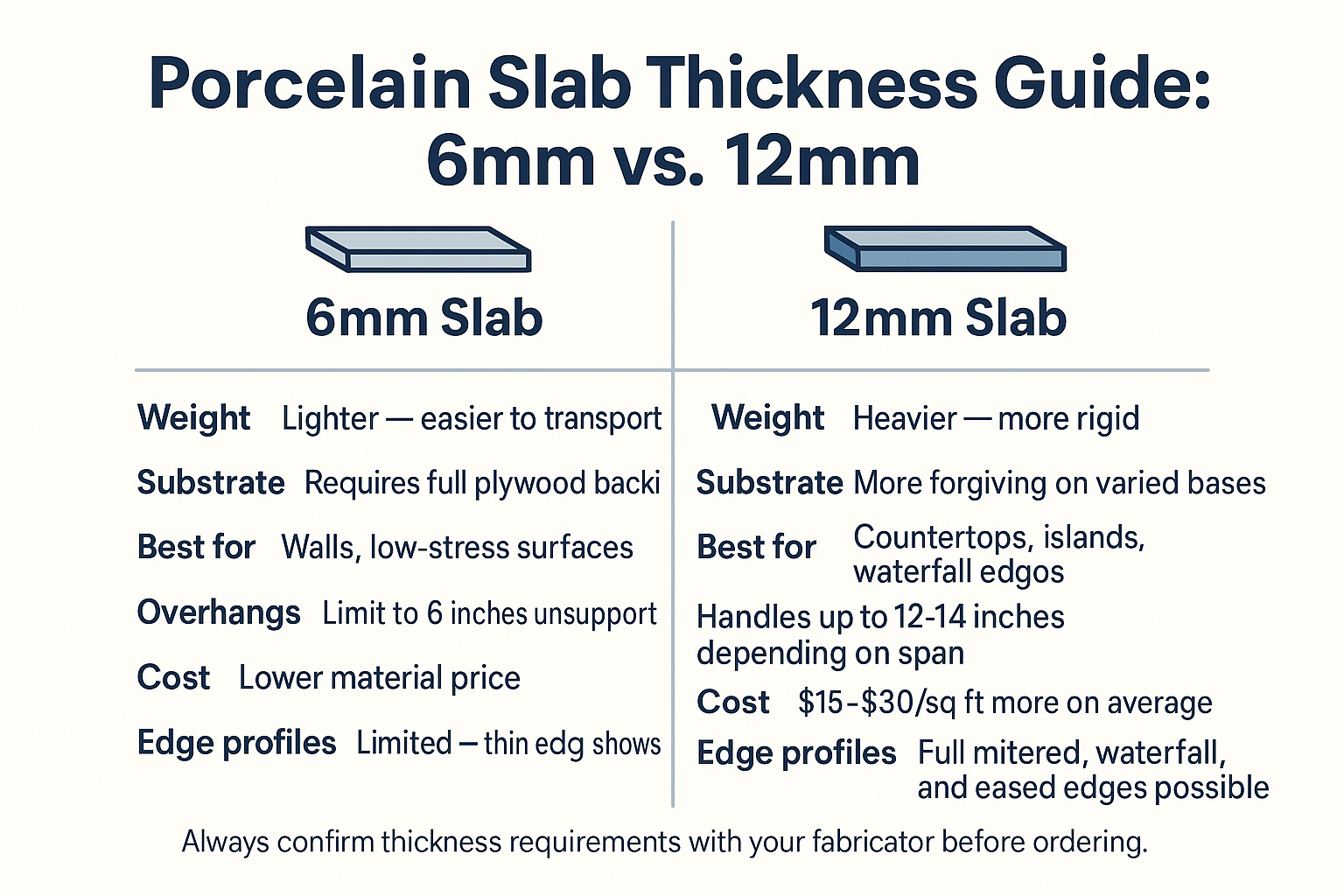
Porcelain slabs come in multiple thicknesses, and the difference isn’t just aesthetic. The two most common are 6mm and 12mm, though some manufacturers also produce 20mm slabs for exterior or flooring applications.
6mm slabs are lighter and less expensive, but they require a full plywood substrate beneath them for structural support. Without it, they flex — and flexing leads to cracking, either immediately or over time as the substrate shifts. In older Carmel-by-the-Sea homes or Bay Area craftsman kitchens where cabinet boxes weren’t built to modern standards, a substrate upgrade is sometimes required before 6mm porcelain can be installed correctly.
12mm slabs are heavier, more rigid, and more forgiving during handling and installation. They’re also more expensive — typically $15–$30 more per square foot just for the material before fabrication. But for island overhangs, waterfall edges, or any unsupported span over about 18 inches, 12mm is usually the right call.
Key questions to settle before ordering:
- What is the longest unsupported span in your countertop layout?
- Is your cabinet substrate solid plywood, particleboard, or something else?
- Are you planning a waterfall edge or any mitered detail?
- What thickness does your fabricator recommend for your specific layout?
Nobody can answer these questions from a catalog image. That’s exactly why seeing actual slab options in person before committing changes the quality of the decision.
Porcelain Slab Thickness: 6mm vs. 12mm at a Glance
This comparison shows the key differences between the two most common porcelain slab thicknesses so you can match the material to your actual project conditions.
What the Price Range Actually Reflects
Porcelain slab countertops span a wide price range — and buyers are often surprised to find quotes anywhere from $65 per square foot on the low end to $175 or more at the top. That spread isn’t random.
On the lower end, you’re typically looking at thinner slabs, simpler patterns, and materials produced in higher volumes with less variation control between slabs. On the upper end, you’re looking at large-format slabs with precise veining that requires careful pattern matching, thicker stock, and materials from producers who maintain tighter quality standards across their runs.
For anyone comparing quotes in the Bay Area or along the Central Coast, the number that matters isn’t just the material price per square foot. It’s the installed cost, which includes:
- Material (slab price per square foot)
- Fabrication (cutting, edge profiling, sink and cooktop cutouts)
- Delivery and handling (porcelain requires specialized equipment and care in transit)
- Substrate preparation, if needed
A $90/sq ft slab with a $70/sq ft fabrication quote isn’t necessarily cheaper than a $130/sq ft slab where the fabricator is experienced and confident with the material. The full picture on what drives porcelain countertop pricing is worth understanding before you start comparing bids.
And if you’re coordinating a project in Carmel, Pebble Beach, or Pacific Grove — where delivery logistics from a slab supplier add another layer — getting that timing right before fabrication scheduling matters more than most buyers expect.
Porcelain Slab vs. Natural Stone: Key Differences for Countertop Buyers
This table covers the practical differences most buyers are weighing when choosing between porcelain and natural stone for a kitchen or bathroom countertop.
| Factor | Porcelain Slab | Natural Stone (Marble / Quartzite / Granite) |
|---|---|---|
| Sealing required | No | Yes — frequency depends on stone type |
| Heat resistance | Excellent | Good to excellent depending on stone |
| UV resistance | Excellent — colorfast outdoors | Varies — some stones yellow over time |
| Fabrication sensitivity | High — brittle under cutting | Moderate — more forgiving with standard tools |
| Pattern consistency | Controlled — repeatable | Variable — each slab is unique |
| Edge profile options | Limited with 6mm; full options at 12mm | Wide range regardless of thickness |
| Appearance over time | Does not patina or age | Natural stone develops character with use |
| Typical material cost (Central Coast) | $65–$175/sq ft | $60–$250+/sq ft depending on stone |
Matching the Slab to the Space — Not Just the Style
One of the most common mistakes in porcelain slab selection is choosing based on the finish photo and not the application. Porcelain comes in polished, matte, and textured surfaces — and each one behaves differently in daily use.
A high-polish porcelain countertop shows fingerprints, water spots, and scratches more than its matte counterpart. That’s not a flaw in the material — it’s a characteristic. In a busy Monterey Peninsula kitchen with kids and daily cooking, that matters. In a minimalist guest bathroom that rarely sees hard use, it might not.
Matte and textured finishes hide wear better but require more attention when cleaning grout lines on tile applications or surface debris on countertops. They also tend to photograph darker than they appear in person under showroom lighting.
This is why reviewing a sample at home — under your kitchen lighting, against your cabinet color — gives you information that no showroom photo can. Most buyers who skip that step end up surprised by how different a slab looks in place versus under fluorescent warehouse lights.
For a broader look at how porcelain compares to natural stone in kitchen design decisions, this designer’s guide to porcelain tile marble alternatives covers the surface-level trade-offs in plain terms.
Frequently Asked Questions About Porcelain Slab Countertops
Can I cut directly on a porcelain slab countertop?
Technically yes — porcelain is hard enough to resist knife scratches better than many natural stones. But cutting directly on the surface will dull your knives faster than almost any other material, and it can leave faint marks over time on polished finishes. A cutting board is still the right call.
Do porcelain slab countertops need to be sealed?
No. That’s one of the genuine advantages. Porcelain is non-porous by nature, so liquids don’t penetrate the surface. No sealing on installation, no annual maintenance sealing. This is a real difference from marble or even some quartzite options.
Can I put a hot pan directly on a porcelain countertop?
Porcelain itself can handle heat — it’s fired at over 2,000°F during production. But thermal shock from a very hot pan set down quickly on a cool surface can cause stress fractures, especially near edges or cutouts. Trivets are still a smart habit, even with porcelain.
Why are porcelain slab countertop quotes so different between contractors?
A big part of the spread comes from fabrication experience and equipment. Cutting large-format porcelain slabs — especially around sink openings — requires specific tooling and technique. Fabricators who do it regularly charge accordingly. Ones who are less experienced may quote lower but carry more risk of slab damage during cutting, which could mean you’re buying a replacement slab. Always ask fabricators for porcelain-specific references before signing anything.
Is porcelain better than quartz for a kitchen countertop?
They’re close in daily performance, but they behave differently. Quartz is more forgiving during fabrication and offers more edge profile flexibility at standard thicknesses. Porcelain has the edge on UV resistance — it won’t fade near windows or in outdoor kitchens the way some quartz can over time. The right answer depends on your specific layout, lighting, and how the space is used.
Can I buy porcelain slabs directly from a supplier without going through a contractor?
Yes — and many homeowners on the Monterey Peninsula and in the Bay Area do exactly that. You select and purchase the slab from a supplier, then coordinate separately with your fabricator. Buying porcelain slabs directly in the Bay Area without a contractor is a normal process, but it means you’re responsible for coordinating delivery timing and confirming slab specs with your fabricator before ordering.
Ready to See the Slabs in Person?
Carmel Stone Imports carries live porcelain slab inventory at its Carmel-by-the-Sea and Palo Alto showrooms — actual slabs you can view, measure, and take samples from before you commit to anything. If you’re planning a kitchen or bathroom project on the Monterey Peninsula or anywhere in the Bay Area, call (650) 800-7840 or email info@carmelimports.com to schedule a slab selection appointment with someone who can walk you through thickness options, finish trade-offs, and fabrication considerations in plain terms.