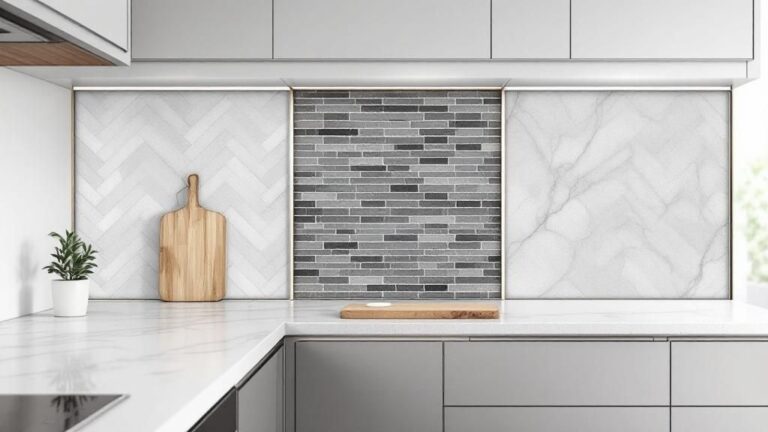
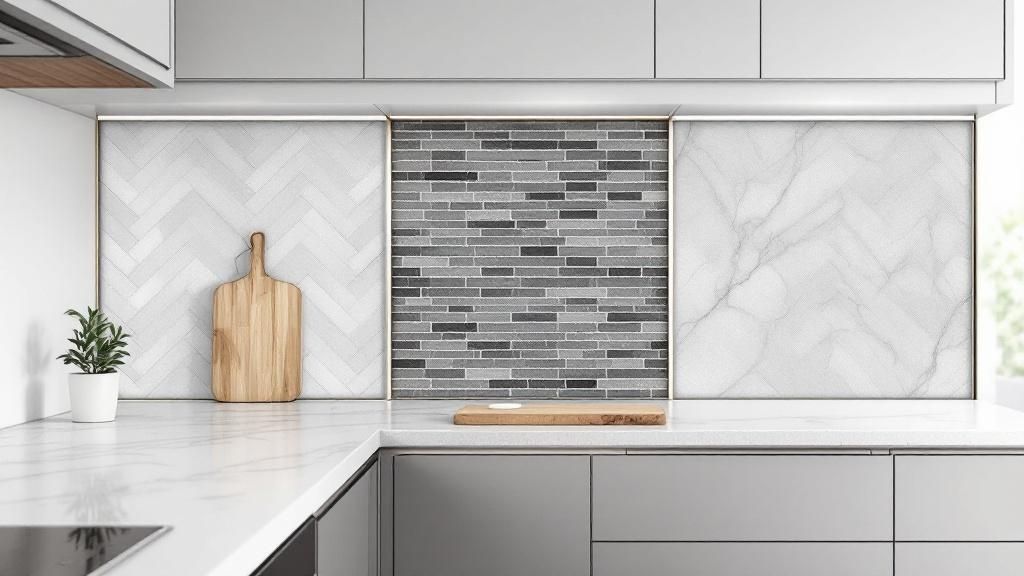
Choosing the right kitchen backsplash is more than a finishing touch; it is a definitive statement of style and quality. A stone backsplash not only protects your walls from splashes and heat but also serves as the artistic centerpiece of your culinary space, expertly tying together cabinetry, countertops, and flooring. This guide explores the most compelling kitchen backsplash stone ideas, offering inspiration for every aesthetic, from the rustic charm of a Monterey farmhouse to the sleek modernism of a Palo Alto tech-hub home. Discover how premium natural stone from Carmel Stone Imports can infuse your kitchen with unparalleled character, durability, and lasting value.
We will move beyond generic suggestions to provide specific, actionable insights into a curated collection of stone designs. This includes detailed looks at materials like marble, travertine, and slate, along with classic and contemporary patterns such as herringbone, stacked stone, and large-format slabs. A 2023 Houzz & Home Study revealed that kitchen renovations remain a top priority for homeowners, with backsplashes being a key area for high-impact upgrades. Our goal is to equip you with the knowledge to select a design that is both timeless and perfectly suited to your California home and lifestyle, ensuring your investment is as practical as it is beautiful.
1. Subway Tile Natural Stone Backsplash
The subway tile backsplash is a design classic, but elevating it with natural stone transforms it from a familiar favorite into a luxurious statement. This approach replaces standard ceramic with materials like marble, travertine, or limestone, cut into traditional rectangular shapes (typically 3×6 or 4×8 inches). The result combines the timeless, orderly pattern of subway tile with the unique veining, texture, and inherent durability of stone. This makes it one of the most versatile kitchen backsplash stone ideas, fitting seamlessly into high-end urban, rustic farmhouse, or coastal California designs.
Key Implementation Tips
To maximize the impact of your natural stone subway tile, consider these specific details:
- Grout Selection: Use a contrasting grout color (e.g., dark gray with white marble) to emphasize the iconic brick pattern. For a more seamless, monolithic look, match the grout to the stone's primary color.
- Orientation: While the horizontal brick layout is classic, running the tiles vertically creates an illusion of height, offering a modern twist that can make a Bay Area kitchen feel more spacious.
- Rustic Appeal: For styles like Mediterranean or modern farmhouse, using slightly wider grout lines (around 1/8 inch) can enhance the stone's organic, handcrafted feel.
The following infographic highlights the core elements you can customize when choosing a natural stone subway tile backsplash.
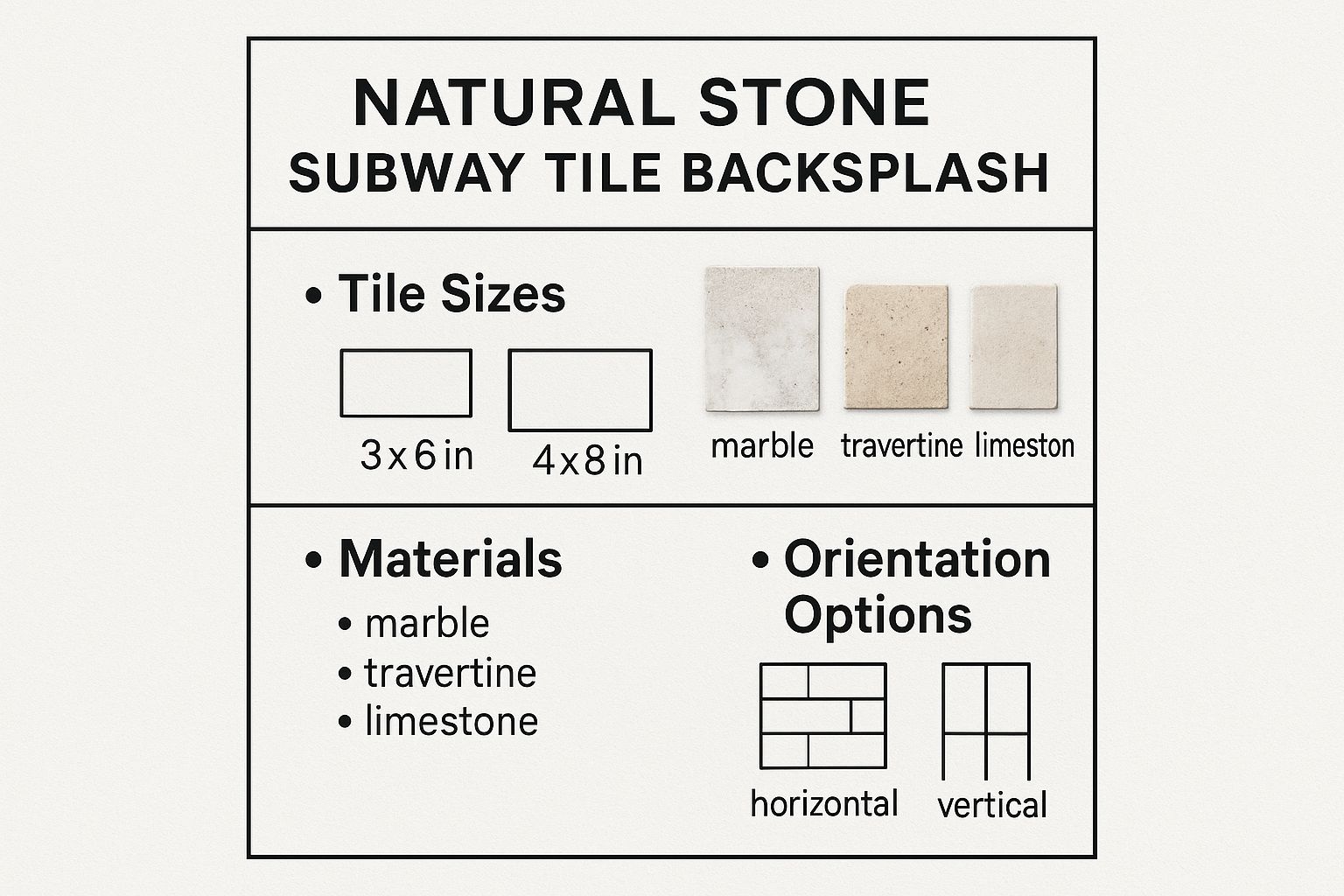
As the visualization shows, your primary choices involve material, tile size, and orientation, each significantly influencing the final aesthetic. When planning your project, remember that the properties of each stone vary. For expert guidance on selecting the right material for your lifestyle and design, you can learn more about how to purchase natural stone tile on carmelimports.com.
2. Stacked Stone Backsplash
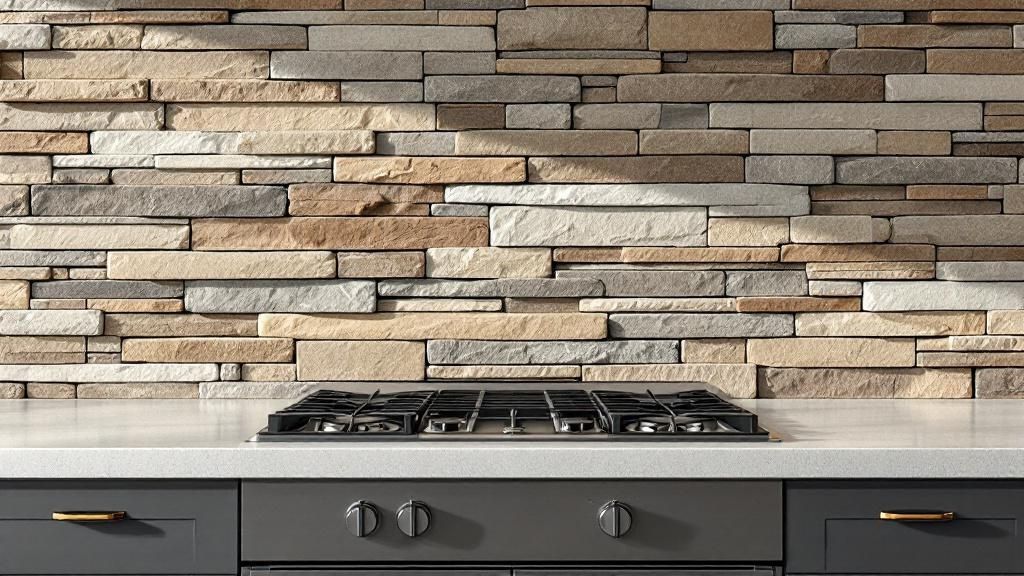
A stacked stone backsplash introduces a dramatic, textural element that transforms a kitchen wall into a rugged, organic feature. This design utilizes ledger panels—pre-assembled strips of natural stone like slate, quartzite, or sandstone—that are stacked horizontally without visible mortar joints for a seamless, dry-stack appearance. The varying thicknesses and rough-hewn faces of the stone pieces create captivating depth and shadow play, making it one of the most impactful kitchen backsplash stone ideas for establishing a focal point. It excels in styles ranging from rustic mountain cabin and modern industrial to earthy Southwestern designs.
Key Implementation Tips
To properly execute a stacked stone backsplash and ensure its longevity, focus on the following details:
- Strategic Placement: Use stacked stone behind the range or along a single feature wall. This creates maximum visual impact without overwhelming the entire kitchen.
- Accent Lighting: Install under-cabinet or directional lighting to graze across the stone's surface. This technique highlights its inherent texture and creates dramatic shadows, enhancing its three-dimensional quality.
- Seal for Protection: Because of its porous and textured nature, stacked stone is susceptible to grease and food stains. Applying a high-quality penetrating stone sealer is essential to protect it and make cleaning easier.
- Color Consideration: In smaller kitchens, opt for lighter-colored quartzite or sandstone ledger panels. These will reflect more light and prevent the space from feeling enclosed or dark.
Below, you can see how stacked stone ledger panels are installed to achieve this distinct, rustic look.
The video demonstrates the panelized system that makes this sophisticated look more accessible. By carefully selecting the stone type and using lighting to your advantage, you can create a powerful design statement that brings natural, raw beauty into the heart of your home.
3. Herringbone Stone Pattern
The herringbone pattern elevates a kitchen backsplash from a simple surface to a dynamic focal point. This sophisticated design is created by laying rectangular stone tiles at a 45-degree angle to one another, forming an elegant, interlocking zigzag. Using materials like Carrara marble, travertine, or limestone in this arrangement introduces a sense of movement and texture, making it an excellent choice for adding visual interest without overwhelming a space. Its origins in historic European architecture give it a timeless, luxurious feel that works in both traditional and contemporary kitchens.
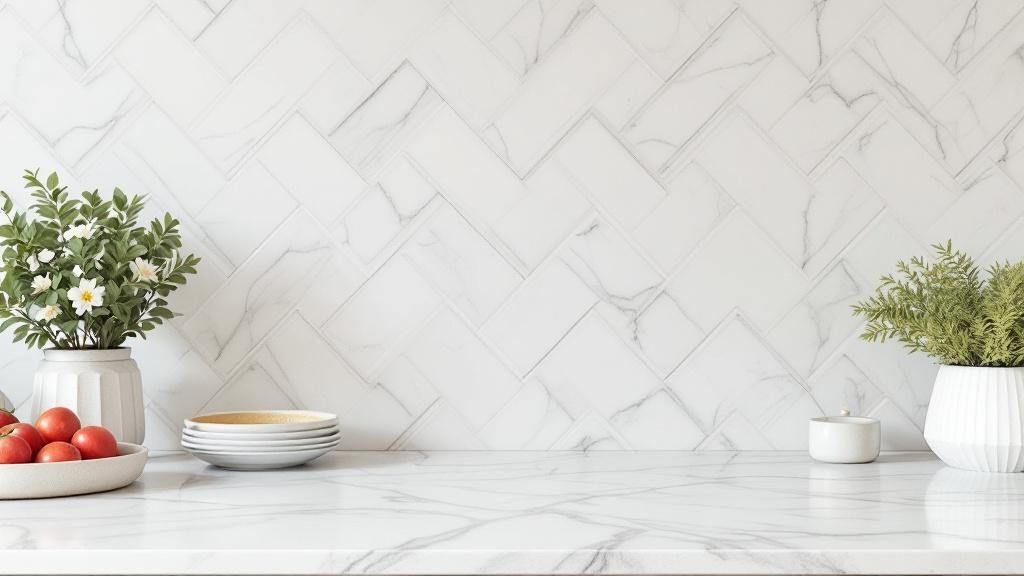
Key Implementation Tips
To execute a flawless herringbone stone backsplash, focus on precision and material selection. These tips will help you achieve a high-end, professionally installed look.
- Feature Wall Focus: For maximum impact, use the herringbone pattern on a single feature wall, such as behind the range or sink. This prevents the energetic pattern from becoming too busy.
- Subtle Veining: Choose stones with soft, subtle veining. Heavily patterned stones like some exotic granites can compete with the zigzag layout, making the final look feel chaotic.
- Layout Planning: A successful herringbone installation requires meticulous planning. Dry-lay the tiles on a flat surface first to ensure the pattern is centered and to minimize awkward cuts at the edges.
- Grout Consistency: Maintain a consistent grout width throughout the installation. Even minor variations can disrupt the pattern's rhythm and detract from the final appearance.
- Scale Appropriately: In smaller kitchens or galley-style spaces, consider a mini-herringbone pattern using smaller tiles to keep the design proportional to the room's scale.
4. Large Format Stone Slabs
A large format stone slab backsplash delivers a bold, seamless statement, popular in high-end contemporary and minimalist kitchens. Instead of using smaller tiles, this method utilizes a single, continuous piece of stone, such as marble, quartzite, or granite, to cover the entire area between the countertops and cabinetry. The result is a dramatic, uninterrupted canvas that fully showcases the stone's natural veining, color, and texture with virtually no grout lines. This makes it an exceptional choice among kitchen backsplash stone ideas for creating a clean, luxurious, and visually expansive focal point.
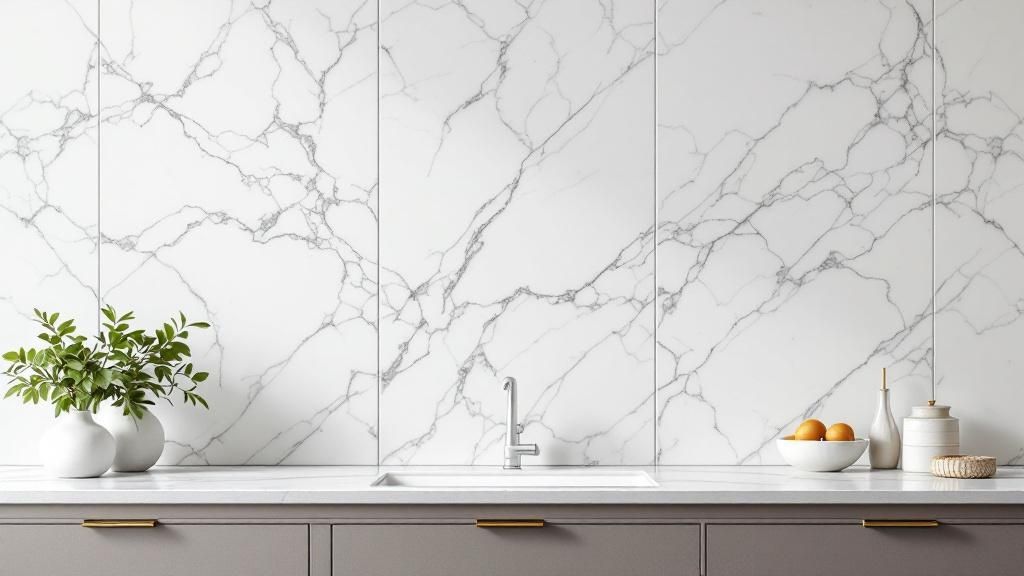 Stone Slabs“>
Key Implementation Tips
To ensure your large format slab achieves its full design potential, focus on these critical details:
- Book-Matching: For stones with dynamic veining, consider book-matching two adjoining slabs. This technique creates a stunning, symmetrical, mirror-image pattern that elevates the backsplash into a work of art.
- Outlet Planning: Plan the placement of electrical outlets and switches meticulously before fabrication. Cutting into a solid slab is a precise process that cannot be easily altered, so it's vital to get it right the first time.
- Edge Treatments: The visible edges of the slab require a finished treatment. Options like a simple eased edge offer a clean, modern look, while a mitered edge can create the appearance of a thicker, more substantial block of stone.
Proper installation begins long before the slab arrives on-site. For expert guidance on the precise measurements needed for a flawless fit, it is helpful to understand how to template countertops on carmelimports.com, as the same principles apply.
5. Mosaic Stone Backsplash
A mosaic stone backsplash introduces intricate artistry and endless personalization into kitchen design. Composed of small stone pieces, typically one to two inches in size, these tiles are arranged in captivating patterns to form a detailed, textured surface. Mosaics can feature a single type of stone for a uniform look, such as a spa-inspired marble design, or mix different materials like travertine, limestone, and even glass accents for a more eclectic feel. This versatility makes it one of the most customizable kitchen backsplash stone ideas, allowing homeowners to create a truly one-of-a-kind focal point.
Key Implementation Tips
To ensure your mosaic backsplash is both beautiful and functional, focus on the details of its application:
- Grout Choice: A slightly darker grout can be a practical choice in high-use kitchen areas, as it helps camouflage potential stains over time.
- Pattern Planning: Before installation, lay out the mosaic sheets to plan the pattern's flow and ensure a seamless transition around outlets and corners. This prevents awkward cuts and maintains the design's integrity.
- Texture and Finish: Create subtle visual depth by mixing matte and polished finishes within your mosaic pattern. The interplay of light on the different surfaces adds a layer of sophisticated interest.
- Simplify with Accents: If a full mosaic wall feels too busy, consider using mosaic tiles as a decorative accent strip or as a feature panel behind the cooktop, framed by larger, simpler tiles.
The beauty of this approach lies in its artistic heritage, tracing back to ancient designs and now modernized for contemporary spaces. To explore how these intricate designs can be incorporated into your project, you can find more inspiration on decorative mosaics and trims at carmelimports.com.
6. Natural Stone Brick Backsplash
For those seeking a look rooted in history and texture, the natural stone brick backsplash offers unparalleled rustic warmth. This design swaps traditional clay bricks for thin-cut stone blocks made from materials like limestone, sandstone, or even weathered granite. The result is an authentic, old-world charm that feels both substantial and inviting, making it a powerful focal point in farmhouse, industrial, or traditional kitchen designs. More than just a visual element, it adds tangible texture and depth that few other kitchen backsplash stone ideas can match.
Key Implementation Tips
To successfully execute a natural stone brick backsplash that balances rustic appeal with modern functionality, consider these details:
- Whitewash Technique: To lighten the look and prevent the stone from overpowering a smaller kitchen, apply a whitewash or limewash finish. This technique mutes the stone's natural color while beautifully highlighting its texture.
- German Smear: For a more heavily textured, old-world masonry effect, a German smear application involves spreading mortar over the face of the bricks and then partially removing it, creating a charmingly imperfect, historic look.
- Seal Before Grouting: Natural stone is porous. Applying a high-quality penetrating sealer to the stone bricks before grouting is crucial. This prevents the mortar or grout from staining the face of the stone, ensuring a clean and professional finish.
7. Marble Bookmatched Backsplash
A bookmatched backsplash is the pinnacle of luxury design, transforming a simple kitchen wall into a work of art. This technique involves slicing a block of marble into two adjoining slabs and then opening them like a book to create a perfect mirror image. The result is a stunning, symmetrical pattern where the stone's natural veining flows seamlessly across the surface, creating a breathtaking focal point. It is one of the most dramatic and sophisticated kitchen backsplash stone ideas available today.
This high-impact look is particularly effective with stones that have bold, linear veining, such as Calacatta Gold or Statuario marble. Often seen in high-end penthouses and luxury commercial spaces, a bookmatched backsplash elevates the entire kitchen, making a powerful statement about craftsmanship and natural beauty. It turns the functional area behind your stove into a bespoke masterpiece that is entirely unique to your home.
Key Implementation Tips
Achieving a flawless bookmatched installation requires precision and expertise. Consider these essential tips:
- Slab Selection: Choose slabs with prominent and dynamic veining. The more dramatic the lines, the more impressive the mirrored effect will be. Work closely with your stone supplier to view the slabs side-by-side before fabrication.
- Expert Fabrication: This is not a DIY project. A successful bookmatch depends entirely on the skill of the fabricator to cut and align the slabs perfectly. Always work with an experienced professional.
- Layout Planning: Meticulously plan the layout to center the most compelling part of the pattern. This is often done over a range or sink to create a deliberate and balanced focal point on the wall.
8. Fieldstone Backsplash
A fieldstone backsplash introduces a profoundly rustic and organic element into the kitchen, using naturally shaped stones collected from fields or riverbeds. This design creates an irregular, flowing pattern that blurs the line between indoor and outdoor environments. The style celebrates the uncut, authentic beauty of stone, with varying sizes, shapes, and colors combining to form a completely unique, one-of-a-kind installation. It's one of the most distinctive kitchen backsplash stone ideas for bringing raw, natural texture to a home.
Key Implementation Tips
Achieving a successful fieldstone backsplash requires careful planning and specialized craftsmanship to balance its rugged appeal with kitchen functionality.
- Seal for Practicality: Due to its uneven surface and porous nature, sealing the fieldstone is essential. A high-quality sealant will protect the stone from food splatters and grease, making cleaning significantly easier without altering its natural appearance.
- Strategic Lighting: Install under-cabinet or accent lighting to graze across the stone's surface. This technique highlights the deep textures, shadows, and color variations, turning the backsplash into a dramatic focal point.
- Professional Installation: Unlike uniform tiles, installing fieldstone is a craft that requires an experienced stone mason. They will artfully arrange the stones to create a visually balanced and structurally sound mosaic that fits the space perfectly.
- Powerful Ventilation: Given that fieldstone is often used as a full-height feature wall behind the range, pairing it with a powerful ventilation hood is crucial to manage cooking-related moisture and airborne grease.
9. Travertine Versailles Pattern
Inspired by the opulent floors of French palaces, the Travertine Versailles Pattern brings a sense of classical, established elegance to the kitchen. This design uses four different tile sizes arranged in a specific, interlocking, non-repeating layout that feels both sophisticated and organic. Using the warm, earthy tones of travertine, this pattern creates a rich tapestry of texture and visual interest without overwhelming the space. It’s an exceptional choice among kitchen backsplash stone ideas for adding a touch of European grandeur, perfectly suited for Mediterranean, Tuscan, and transitional kitchen styles.
Key Implementation Tips
To properly execute the intricate beauty of a Travertine Versailles Pattern, focus on the details:
- Grout Consistency: Use a single, neutral grout color throughout the pattern. This ensures the focus remains on the stone's natural beauty and the unique tile arrangement rather than the grout lines.
- Filled vs. Unfilled: For easier cleaning and maintenance in a kitchen environment, opt for filled travertine. The natural pits and voids are filled at the factory, creating a smoother surface that is less prone to trapping food and grease.
- Layout Planning: Before installation, perform a dry lay of the tiles on the floor. This allows you to plan the pattern's flow across the backsplash area and strategically place cuts in less visible corners, preserving the integrity of the design.
The pattern’s historic roots and inherent warmth make it a timeless choice. To explore how this classic material can be integrated into your project, you can learn more about travertine design possibilities on carmelimports.com.
10. Slate Backsplash with Natural Cleft
A slate backsplash with a natural cleft surface brings an earthy, sophisticated texture into the kitchen. This design choice celebrates the stone's inherent characteristic of splitting along natural layers, creating a subtly uneven surface that is rich with tactile appeal. The color palette of slate is famously complex, ranging from deep charcoal grays and blues to muted greens and warm, earthy rust tones. This organic look is one of the most distinguished kitchen backsplash stone ideas, offering a refined yet grounded aesthetic that complements traditional, rustic, and contemporary designs alike. It is a popular choice in settings from Welsh country kitchens to minimalist urban lofts.
Key Implementation Tips
To get the most out of a natural cleft slate backsplash, focus on these key details:
- Highlight the Texture: Install under-cabinet LED lighting to cast light across the stone's surface. This will create dramatic shadows that accentuate the natural cleft texture and color variations.
- Ensure Uniformity: Use "gauged" slate tiles, which have been milled on the back to a consistent thickness. This simplifies installation and ensures a more level, professional finish without sacrificing the natural face.
- Contrast with Grout: A lighter grout color, like a soft white or light gray, creates a striking contrast against the dark slate, making the individual tile shapes stand out and brightening the overall look.
- Sample in Your Space: Always test slate samples in your kitchen under its specific lighting conditions. Slate's colors can shift dramatically depending on the light, so what you see in a showroom may look different at home.
The natural beauty and durability of slate make it a compelling choice. For more information on sourcing the perfect material for your project, you can find out more about slate tile near you on carmelimports.com.
Frequently Asked Questions
What is the easiest stone backsplash to keep clean?
A large-format slab of a dense, polished stone like quartzite or granite is the easiest to clean. The non-porous surface and lack of grout lines prevent grease and food from penetrating, allowing you to simply wipe it clean.
Can I put a stone backsplash behind my stove?
Yes, most natural stones like granite, quartzite, and slate are highly heat-resistant and perfectly safe for use behind a stove. However, porous stones like marble or limestone should be properly sealed to protect against splatters and stains.
How do I match a stone backsplash to my countertops?
For a cohesive look, choose a backsplash stone that shares a color tone with your countertop's base color or veining. Alternatively, create a bold contrast by pairing a dark countertop with a light backsplash, a popular choice in modern Bay Area aesthetics.
Is a stacked stone backsplash a good idea for a small kitchen?
While visually stunning, the deep texture of stacked stone can sometimes make a small kitchen feel enclosed. If you love the look, consider using it as a smaller feature panel behind the range or opt for a lighter-colored stone to maintain a sense of openness.
How can I make my stone backsplash look more modern?
To achieve a modern look, choose stones with clean lines and minimal veining. Opt for large-format slabs, vertical subway tile layouts, or a honed (matte) finish instead of a traditional polished one. These choices create a sleek, sophisticated, and contemporary feel.
Bring Your Vision to Life with Carmel Stone Imports
From the enduring elegance of a subway tile layout to the dramatic, continuous beauty of a large-format slab, your kitchen backsplash is far more than a functional surface. It is a defining design element that sets the tone for the entire room. As we've explored, the world of kitchen backsplash stone ideas is vast and varied, offering a solution for every aesthetic, from rustic farmhouse to sleek, coastal modernism.
The key to a successful design lies in the details. Choosing between the raw, textural appeal of a stacked stone backsplash and the refined geometry of a herringbone pattern can completely transform your kitchen's atmosphere. Likewise, opting for a bookmatched marble slab creates a singular, breathtaking focal point, while a classic travertine Versailles pattern introduces Old World charm and warmth. Each of these options tells a unique story through its material, cut, and finish.
Key Takeaways for Your Project
Mastering the selection process empowers you to create a space that is not only beautiful but also deeply personal and highly functional. Here are the most critical takeaways to guide your decision:
- Balance Texture and Pattern: A highly textured stone like fieldstone or slate with a natural cleft provides organic, rustic appeal. In contrast, polished patterns like herringbone or mosaics add sophisticated visual interest. Consider how your backsplash will complement your countertops and cabinetry.
- Embrace the Slab: For a seamless and luxurious statement, a full-height, large-format stone slab is unmatched. This approach minimizes grout lines, creating an easy-to-clean surface that doubles as a monumental piece of art. It’s a popular choice in high-end Bay Area homes for its clean, impactful look.
- Don't Overlook the Cut: The same stone can yield vastly different results. A classic material like Carrara marble can feel traditional as a 3×6 subway tile, yet modern and dramatic as a bookmatched slab. The format is just as important as the stone itself.
- Consider Lifestyle and Maintenance: Honed travertine offers a soft, matte finish that hides water spots, while polished granite provides a durable, high-gloss surface. Be realistic about your maintenance tolerance to ensure your backsplash remains stunning for years to come.
Your Next Steps to a Perfect Backsplash
Ultimately, the best kitchen backsplash stone ideas are the ones that resonate with your vision and enhance your home's unique character. The right choice elevates your daily experience, turning a simple cooking space into the heart of your home. By thoughtfully considering material, pattern, and finish, you invest in a timeless feature that delivers both aesthetic joy and lasting value.
Feeling inspired to find the perfect stone for your kitchen? Our experts at Carmel Stone Imports are here to turn your ideas into reality. Visit a Carmel Stone Imports showroom in Carmel, Sand City, or Palo Alto to see our curated collection of premium natural and engineered stone. Let our experienced team help you select the ideal backsplash to complete your dream kitchen.