
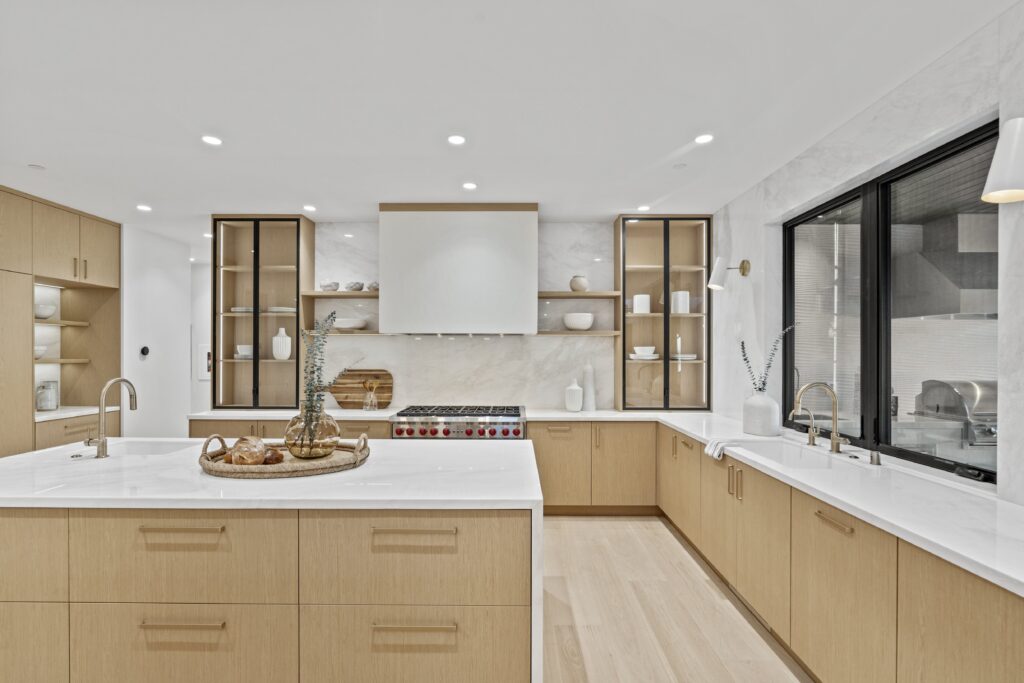
Direct Answer: An exact match to a discontinued slab is rare. Bring the product name, thickness, finish, and a daylight photo, then judge close matches or a deliberate contrast in person against your existing counter.
You are adding an island, a powder bath, or a small addition next to a counter that went in years ago. And the sentence in your head is probably some version of “I need it to match what I already have.”
That is a reasonable thing to want. It is also the request most likely to run into a hard truth: if the original was a manufactured slab product, it may have been discontinued, and an exact match may no longer exist anywhere.
That does not mean the project is stuck. Plenty of kitchens on the Monterey Peninsula get extended every year without a perfect match, and they look right. This guide covers what to bring to the search, how silica free quartz countertops fit into an older kitchen, and how to make the difference look like a choice instead of an accident.
Why an Exact Match to an Older Slab Is Rare
Manufactured slab products get retired. Colors and patterns rotate on a schedule that has nothing to do with your remodel timeline, and once a line is discontinued, the remaining inventory scatters across warehouses until it is gone.
Even when a product is still made, batches shift. Color and pattern can drift from one production run to the next, which is why fabricators try to pull all the material for a job from the same lot.
Natural stone is a different story but lands in the same place. As the Natural Stone Institute explains, stone varies from block to block and even within a single block, so two slabs with the same name can look like cousins rather than twins.
Here is what that means for an extension in a Carmel, CA kitchen:
- A slab bought five or more years ago will rarely be matched exactly from current stock
- A photo match is not a match until you see the two side by side in daylight
- A near miss reads worse than a clear contrast, because the eye goes straight to the small difference
- Quartzite, marble, and granite from the same quarry will show new movement, not the old movement
The realistic goal is a close or complementary match judged in person, not a search for a twin that may not exist.

What to Bring So the Search Actually Starts
One homeowner who contacted us about a discontinued slab had done this exactly right. They supplied the product name, the item number, the slab size, the thickness, and the finish, then asked whether other warehouses could be checked.
That level of detail turns a vague question into a search someone can actually run. The more you can say about what is already installed, the more useful the answer will be. Even a name and a clear photo is a real starting point.
Bring whatever you can find of this list:
- Product name or SKU from the original invoice or quote
- The original invoice itself, which often names the supplier and the purchase date
- Thickness: 2cm or 3cm, because this decides whether new material can sit flush with the old
- Finish, meaning polished, honed, or leathered
- A daylight photo of the counter, shot near a window with no flash, including an edge and a corner
- An offcut or leftover sample if one survived the install
That last one matters most. A piece of the actual material, carried into a showroom and held against candidate slabs, settles the question in about ninety seconds. Check the garage, the side yard, or your fabricator’s shop before you assume it is gone.
If you only have a photo, that is still workable. Color temperature and movement read reasonably well in a daylight shot, and staff can shortlist slabs to compare in person.
The Six Details That Move a Match Search Forward
Not everyone has all of these. Bring what you can, and note where the rest usually turns up.
| What to bring | Why it matters | Where to find it |
|---|---|---|
| Product name or SKU | Narrows thousands of slabs down to a short list | Original invoice, quote, or a label on the back of an offcut |
| Original invoice | Names the supplier, date, and sometimes the lot | Your files, your fabricator’s records, or the original contractor |
| Thickness (2cm or 3cm) | Decides whether the new piece sits flush with the old counter | Measure the counter edge with a tape, or ask your fabricator |
| Finish | Polished, honed, and leathered look very different side by side | Look at the surface in daylight, or compare showroom samples |
| Daylight photo | Lets staff judge color and movement before you drive over | Shoot near a window, no flash, include an edge and a corner |
| Offcut or sample | Settles the comparison faster than anything else | Garage, side yard, or the fabricator’s shop |
Where Silica Free Quartz Countertops Fit In an Extension
If your original counter is a manufactured product, there is a point worth knowing up front: not every supplier carries every line, and many older patterns are simply out of production. The honest conversation is usually about what fits alongside the old counter rather than what duplicates it.
Crystalline silica-free quartz is a strong candidate for new surfaces in an older kitchen for a few practical reasons:
- Pattern is consistent slab to slab, so a new island reads as one clean surface
- It comes in quiet, low-movement looks that sit comfortably next to busier older stone
- Edge and thickness options are predictable, which helps your fabricator plan the transition
- It performs well in high-use zones like a prep island or a secondary bath vanity
If you want the background on the material itself, what crystalline silica-free quartz actually means for your kitchen covers it without the sales angle.
Keep one distinction straight while you shop: quartzite is natural stone and is not quartz. People use the two words interchangeably all the time, and it leads to the wrong slab being specified. If your existing counter is quartzite, the match conversation is a natural stone conversation.
When You Cannot Match, Contrast on Purpose
The kitchens that look best after an extension usually stopped chasing the match. They made a decision instead.
A few approaches that read as intentional:
- Silica free quartz countertops on the new island, with the older stone left alone on the perimeter
- A natural stone with real movement in the new space, used as a deliberate feature against a quieter existing run
- A different finish on the same family of material, such as honed against polished, which looks considered rather than mismatched
- A color break at a natural boundary, like the point where the original kitchen ends and the addition begins
The logic is simple. A slab that is almost the same draws attention to every small difference in tone and vein. A slab that is clearly different reads as a design move, and nobody questions it.
Finish drives more of this than people expect. Two slabs that look similar in a photo can feel completely different in a room depending on how they handle light, which the finish decision on natural stone countertops gets into in detail.
In Carmel and Pebble Beach kitchens with strong afternoon light off the water, a honed surface tends to calm down a busy pattern. In a darker Pacific Grove galley, a polished face can bounce light the older counter is not giving you.
The Match Search, Step by Step
Here is the order these searches usually run in, from the details you gather at home to the final check with your fabricator.

Your Timeline Is Not Really Yours
Renovation schedules belong to the contractor and the fabricator, not the homeowner. That creates a familiar bind: you find the right slab, but nobody has confirmed quantities yet.
Two things stall these projects more than anything else.
Quantities that have not been confirmed. Until your fabricator templates or at least measures, nobody knows if you need one slab or two. Guessing high wastes money, guessing low risks pulling from a different lot later. Reading yield, seams, and slab sizes explains how that math actually works.
Fabricator minimum slab dimensions. Many shops need a slab of a certain length to cut your pieces cleanly, and a threshold around 130 inches comes up often. Ask your fabricator for their number before you fall in love with a specific piece, because a beautiful slab that is too short for your layout is not an option.
If you find the right slab while your contractor is still working out the details, ask about a hold. Short holds are a normal part of how slab selection works, and the team can confirm what is possible on a given piece. You should not have to choose between rushing the decision and losing the slab.
One more sequencing note for Monterey County and Carmel, CA projects: if your extension needs a permit, material selection and plan review often run on different clocks. Stone selection and permit timing walks through how to order those steps so neither one holds up the other.
What a Serious Match Search Looks Like
Matching work comes down to people who take the question seriously instead of giving a fast no. That means checking inventory across locations, flagging what is arriving, and being honest when the answer is that the original is gone.
One reviewer put it plainly after a tile match for an extension: “She helped me match various of the tiles we had for an extension and is very helpful and prompt.” That same pattern applies to slabs. A designer review describes it a different way, noting that when something is not on hand, staff spend the time to find it.
When you bring your details in, here is what a useful search looks like:
- A check of current stock across every location, not just the floor you are standing on
- A shortlist of close and complementary options pulled for side-by-side viewing
- A clear answer on thickness and finish, since 2cm and 3cm are not interchangeable
- Take-home samples so you can see candidates in your own kitchen light
Carmel Stone Imports searches across a 60,000 square foot warehouse in Palo Alto, a 20,000 square foot warehouse in Sand City, and the Carmel showroom on Carmel Rancho Lane, so the search is not limited to one floor of slabs.
One last practical note. The team supplies material and can coordinate delivery, often straight to your fabricator, which keeps you out of the middle of that handoff. Cutting, fabrication, and installation are handled by your own fabricator, and referrals are available if you still need one.
Frequently Asked Questions About Matching Slabs in an Older Kitchen
Can you find a discontinued slab that matches my existing counter?
Sometimes, and often not. If a manufactured pattern has been discontinued, remaining inventory is scattered and shrinking, so the honest answer is that an exact match may no longer exist. Bring the product name, SKU, thickness, and finish and the team will check current stock and tell you straight. If the original is gone, the next conversation is about a close or complementary option you can judge in person.
Does the new material have to be the same thickness as my old counter?
If the new surface runs continuous with the old one, yes, thickness needs to line up. 2cm and 3cm are not interchangeable at a visible seam. If the new surface is a separate island or a different room, you have more freedom, but confirm with your fabricator before you choose.
Is it a mistake to use two different materials in one kitchen?
No, as long as the difference looks intentional. A perimeter in one material and an island in another is a common, deliberate look. The problem is not contrast, it is a near miss that makes people squint at the seam.
How do I find out my fabricator’s minimum slab size?
Call and ask for their minimum length and width for your layout. Thresholds around 130 inches come up frequently. Get that number before you shop so you do not pick a slab that cannot produce your pieces.
Can a slab be held while my contractor confirms quantities?
Short holds are a normal part of slab selection. Ask when you are in the showroom and the team will confirm what is possible on that specific piece, since availability changes as containers arrive through the Port of Oakland.
Do you cut and install the countertops too?
No. Material is supplied through the showrooms and warehouses, and fabrication and installation are handled by your own fabricator or contractor. Referrals are available if you need one, and delivery can often be coordinated directly to their shop.
Comparing Slabs for a Kitchen Extension?
If you are extending a kitchen in Carmel, CA or anywhere on the Monterey Peninsula, bring your product details, a daylight photo, and an offcut if you still have one. Slabs can be compared in person at the Carmel, Palo Alto, or Sand City showrooms, with take-home samples for most materials. Reach the team at (650) 800-7840 or info@carmelimports.com and they will confirm what is currently on hand.