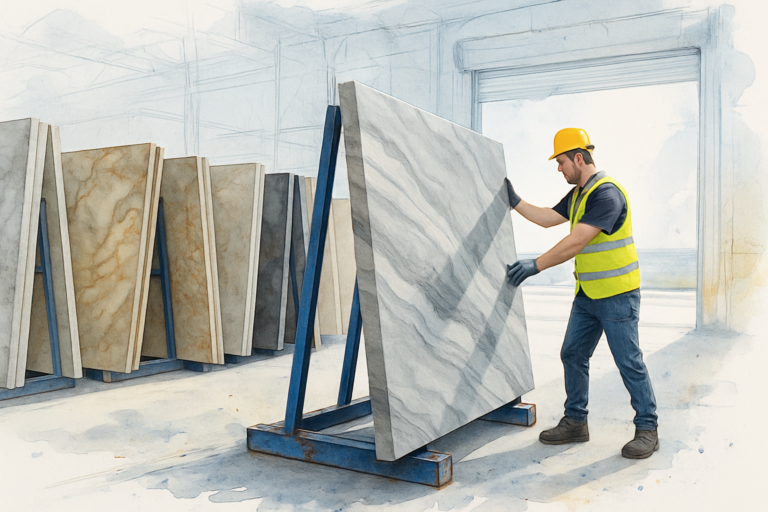
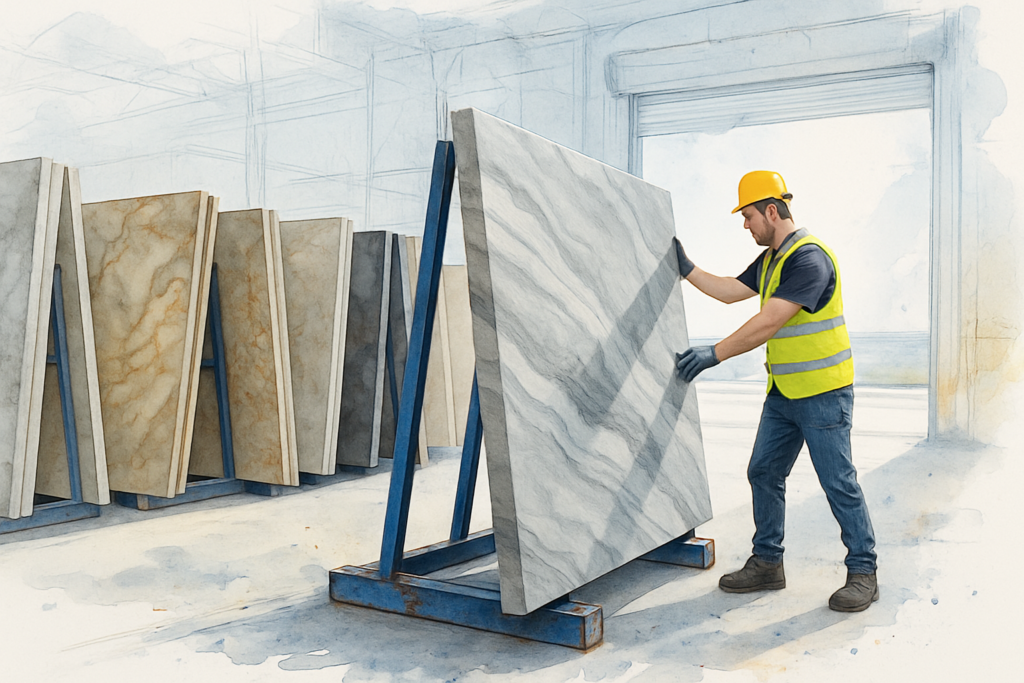
Direct Answer: Live inventory means the slabs physically sitting on a supplier’s yard floor at one location on a given day. It is not a catalog, and it is not a reorder list.
You found the slab online. The color is right, the veining is right, and the listing says it is available. So you call to make sure before you drive over from Carmel or down from the city.
That call is the single most common one stone suppliers get. In one recent month of tracked calls at a Monterey Peninsula stone supplier, roughly 38 percent were availability checks, and the same sentence kept showing up in the notes: the website says it is available, but I want to make sure.
The gap between a listing and a confirmed slab is real, and it is not sloppiness. It comes from how imported stone actually moves. Here is what live inventory means, why it shifts, and what to confirm before you spend an afternoon driving.
What Live Inventory Means at Stone Slab Suppliers
Live inventory means the slabs physically standing in the racks at one location on one specific day. Nothing more than that.
It is not a catalog of everything the company can source. It is not a reorder list where a warehouse somewhere restocks the same item next Tuesday. Every slab is a one-off piece of a finite block.
That distinction matters for three reasons:
- Quantity is fixed. A container arrives with a set number of slabs from one quarry block. When those sell, that exact material is gone from the floor.
- The next batch will look different. Same material name, different block, different veining and background tone. Buyers who ask “can you just order more of that?” usually expect a simpler answer than they get.
- Bookmatching depends on today. If your island and backsplash need sequential slabs, you need them from the same block, standing next to each other right now.
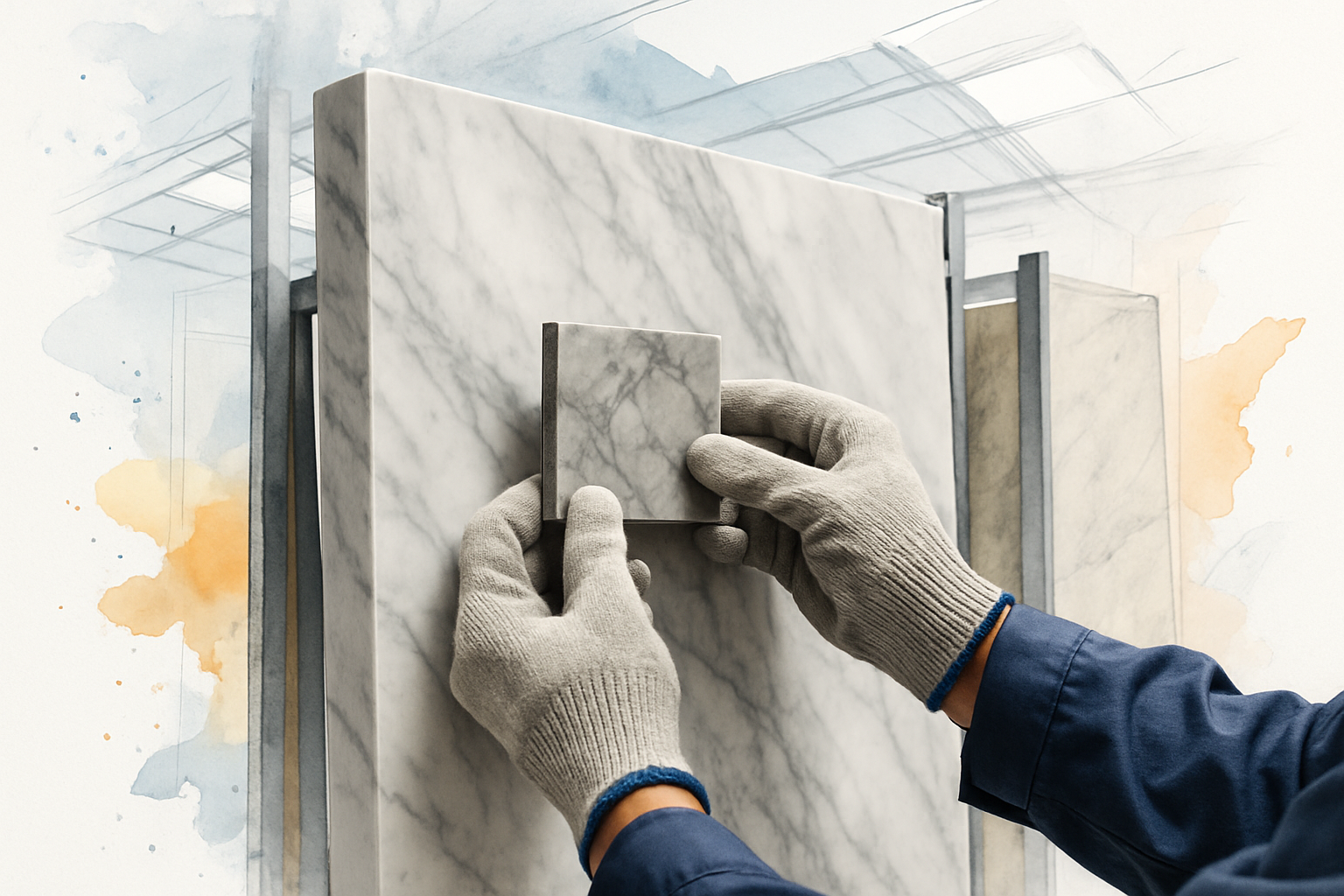
This is also why looking at slabs in person still beats scrolling photos. Several callers each month say some version of the same thing: they cannot tell from website images what the stone actually looks like. Lighting, batch variation, and screen calibration all get in the way.
Why the Website and the Yard Floor Do Not Always Match
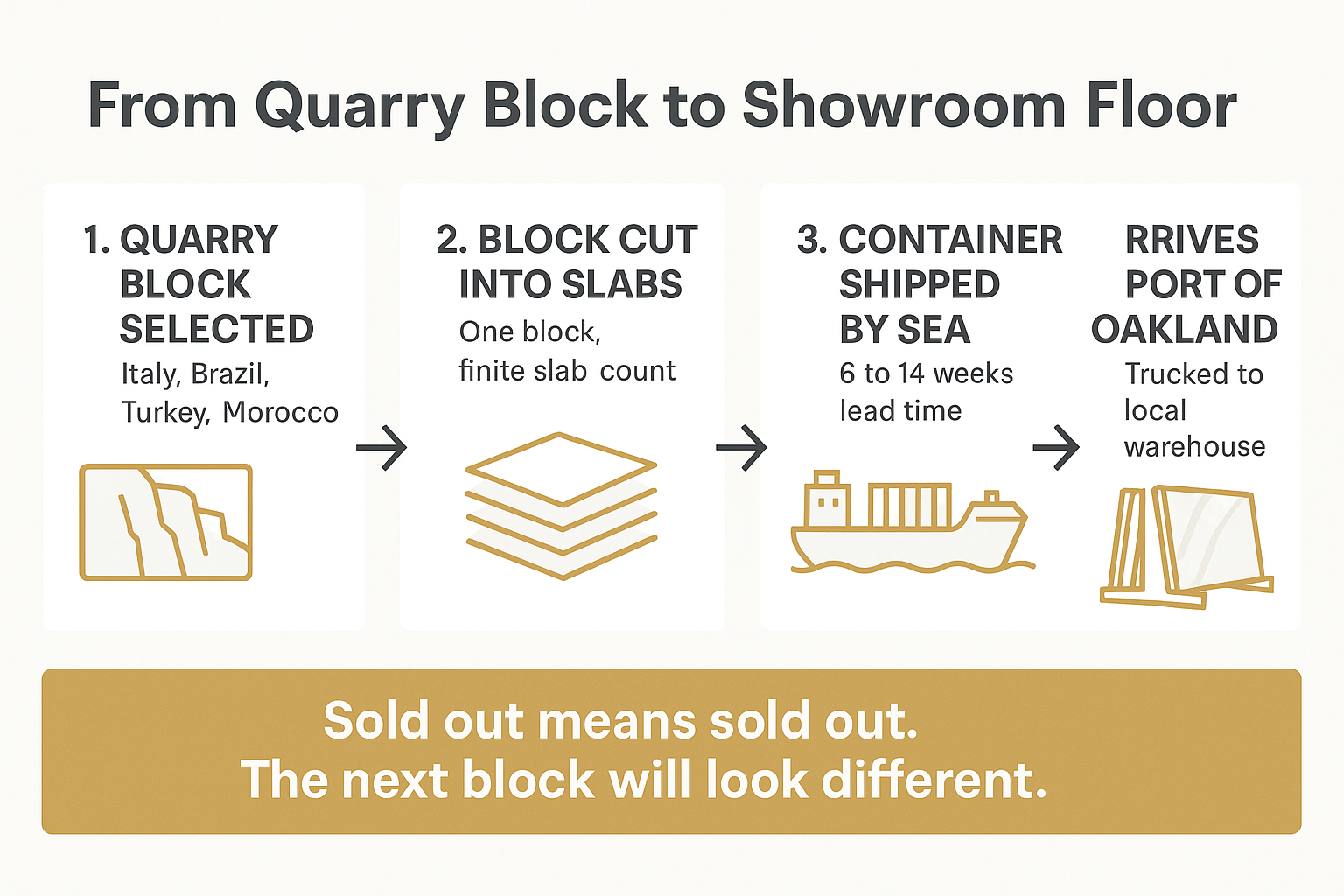
Imported stone runs on a container schedule, not a click-and-restock system. Material gets selected at quarries in Italy, Brazil, Turkey, Morocco, and elsewhere, then crated and shipped by sea.
Most of that freight lands at the Port of Oakland before it moves down to warehouses on the Peninsula and the Central Coast. What shows up in any given month was typically ordered 6 to 14 weeks earlier.
So the timeline runs like this:
- A container gets ordered and loaded overseas
- Ocean transit and port processing take weeks, not days
- Slabs get unloaded, racked, and photographed at a specific warehouse
- Listings catch up after the slabs are already standing in the yard
That lag cuts both ways. You may walk into a showroom and find something that was not on the site last week. You may also find that a material listed last month sold to a contractor on a Tuesday morning.
Dimension stone has always worked this way. The U.S. Geological Survey tracks dimension stone as a quarried commodity, which is a useful reminder that you are buying a piece of extracted earth, not a manufactured SKU with a production line behind it.
What to Ask Before You Drive Out
A two minute phone call saves a wasted trip. These are the questions that actually change the answer you get.
| Ask This | Why It Matters | A Useful Answer Sounds Like |
|---|---|---|
| “Which location has it today?” | Inventory is location-specific, not company-wide | “Two of those are in Sand City, none in Palo Alto right now” |
| “How many slabs are left in that lot?” | Determines if you can cover an island plus backsplash | “Three slabs, same block, all in one rack” |
| “Are they sequential from the same block?” | Bookmatching and vein continuity depend on it | “Yes, numbered one through three” |
| “When did the container land?” | Newer arrivals may not be listed online yet | “Came in two weeks ago, photos are not up yet” |
| “What does it take to hold one?” | Verbal interest does not reserve anything | “A deposit converts it to a reservation” |
How a Slab Gets From a Quarry to a Showroom Floor
The path from quarry block to yard rack explains most of the timing questions buyers have.
Same Company, Different Slabs at Every Location
This one trips up more buyers than anything else. A slab you saw in Sand City is not automatically waiting for you in Palo Alto.
Each warehouse receives its own containers and racks its own material. Moving a slab between locations is a freight decision, not a shelf transfer, and it takes coordination and time.
When you call, name both things: the material and the location you plan to visit. That lets staff check what is physically standing at that site instead of what exists somewhere in the company.
If you are open to driving, ask which location has the deepest selection of your material. Quartzite lots, for example, often cluster wherever the most recent container landed. A buyer chasing a leathered quartzite island may find four options at one site and none at another on the same day.
It also helps to know what actually happens on a first showroom visit so you can plan enough time to see full slabs rather than samples.
How Slab Holds Actually Work
Here is the part buyers most often misunderstand. A phone call expressing strong interest does not reserve a slab. A deposit does.
That sounds blunt, but it protects everyone. If verbal holds counted, popular materials like Taj Mahal and Mont Blanc would sit frozen for weeks while three different buyers each believed the slab was theirs.
So the practical sequence looks like this:
- See the slab in person or review real photos of the actual piece
- Confirm slab count, dimensions, and location
- Place a deposit to convert interest into a reservation
- Coordinate with your fabricator on template timing and delivery
Deposit amounts and terms vary by material and project, so ask directly rather than assuming. Once a slab is reserved, delivery to your fabricator can be coordinated.
Worth repeating: a stone importer supplies material and helps you select it. Fabrication, cutting, and installation are handled by your own fabricator or contractor, and most suppliers can point you toward people they work with regularly. If you are still weighing materials, comparing granite, quartz, and porcelain side by side is a better use of a showroom appointment than chasing one specific listing.
Frequently Asked Questions About Live Slab Inventory
If the website says a slab is available, is it really there?
Usually, but listings trail the yard floor by days. Slabs sell in person, containers land before photos go up, and material moves. Call and name the location before you drive.
Can you just order more of the same stone?
More of the same material name, yes. More of the same block, usually no. Natural stone varies block to block, so a new container of the same name can read noticeably different in tone and veining. If you need matching slabs, buy them together.
Will you hold a slab while I check with my fabricator?
Not without a deposit. It is the only fair way to handle it when several buyers are looking at the same piece. A deposit turns your interest into an actual reservation.
Is inventory shared across the Carmel, Palo Alto, and Sand City locations?
No. Each site racks its own containers, so a slab in Sand City is not automatically in Palo Alto. Ask which location has your material physically on the floor.
How far ahead should I look for slabs before my remodel starts?
Start selection before your fabricator needs a template date. Stock material can often move quickly, while special orders run longer because they follow the same ocean freight schedule as everything else. Give yourself buffer instead of racing a container.
Want to See What Is Actually on the Floor?
The most reliable way to know what is available is to stand in front of it. Showrooms in Carmel, CA and Palo Alto keep live inventory you can walk, and staff can confirm by location which slabs are racked before you make the trip. Carmel Stone Imports can be reached at (650) 800-7840 or info@carmelimports.com if you want to check a material or set up a slab selection appointment.