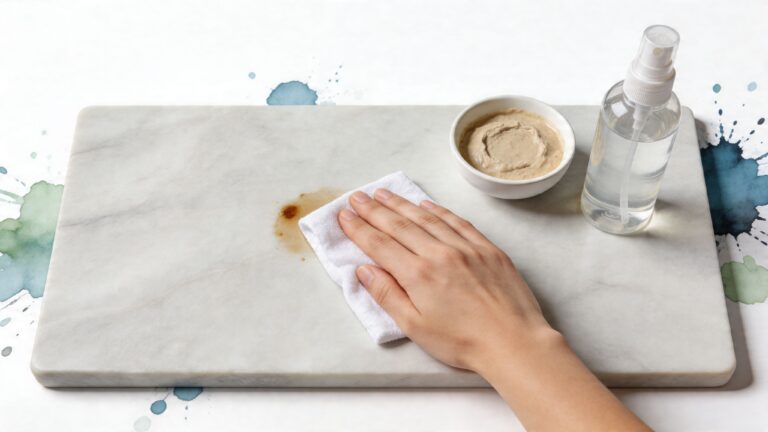
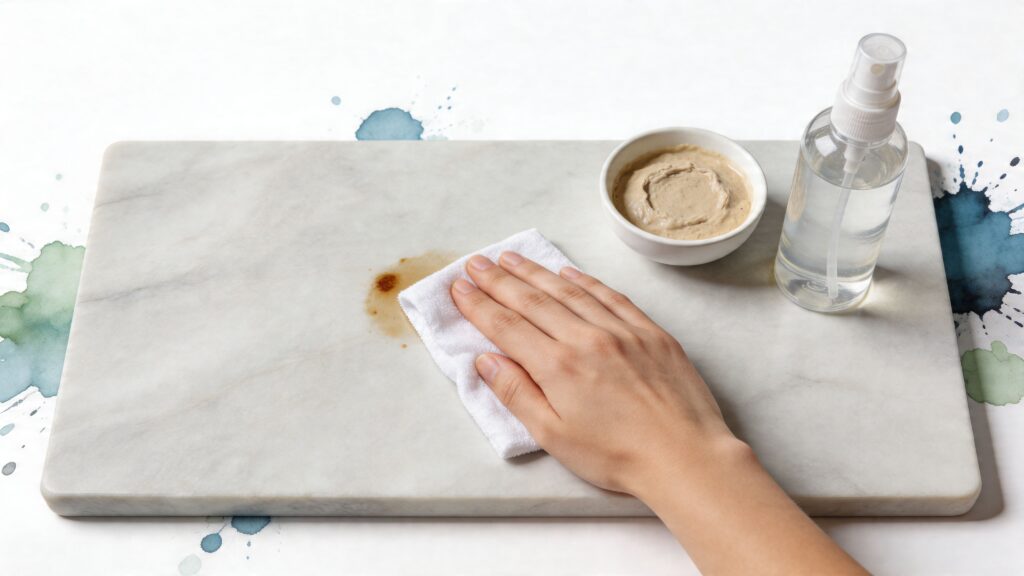
Quick Answer
Quartzite countertop stain removal starts with identifying what you’re looking at. Use a baking soda poultice for oil-based stains and hydrogen peroxide for organic stains, then work patiently and avoid harsh cleaners, and keep quartzite sealed every 6 to 12 months so spills are less likely to sink in.
You saw a mark on your quartzite and now you’re wondering whether to scrub, spray, or panic. Don’t. Most stain problems get worse when the wrong cleaner goes on the stone first.
Quartzite countertop stain removal is usually straightforward if you diagnose the stain before treating it. If you’re still learning how quartzite behaves as a material, this guide to what quartzite stone is gives useful background on why it performs so well and why it still needs thoughtful care.
Your Guide to Quartzite Countertop Stain Removal
Quartzite is durable, but stain removal depends on matching the treatment to the problem. A dark grease mark, a wine stain, and an etched dull spot may look similar at first glance, yet they need different responses.
That’s where most homeowners go wrong. They reach for an all-purpose spray, a magic eraser, vinegar, or something abrasive, and the stone ends up with a bigger issue than the original mark.
Practical rule: If you haven’t identified the stain type yet, don’t apply random cleaners. Quartzite usually rewards patience, not force.
A good stain removal process has three parts:
- Identify the mark first. Look at color, texture, and whether the spot appears darker, lighter, or duller than the surrounding stone.
- Choose the least aggressive effective method. Start with stone-safe cleaning and move to a poultice only when the stain is clearly in the stone.
- Protect the surface afterward. If the area absorbs water easily after treatment, the seal may need attention.
First, Identify the Stain Type on Your Quartzite
You wipe up a mark, come back an hour later, and it is still there. Before you reach for a stronger cleaner, stop and diagnose what you are seeing. Quartzite usually tolerates the right treatment well, but the wrong one can leave a dull patch, a rougher finish, or a stain that gets driven deeper.
Misidentification causes more countertop damage than the stain itself. Oil, coffee, rust, and etching can look similar in passing, yet each leaves a different pattern. The safest approach is simple. Check color, sheen, and texture first. Then decide whether the problem is sitting on the surface, absorbed into the stone, or changing the finish itself.

Oil-based stains look darker than the stone
Cooking oil, butter, hand lotion, greasy food, and some cosmetics usually create a dark spot that looks wet even after the surface has dried. On light quartzite, this kind of stain often stands out right away. On darker slabs, tilt the surface under a light and compare the stained area to the surrounding stone.
Use a quick field check. Place a few drops of water beside the mark, not on top of it. If the suspected stain still looks darker than both the dry stone and the water-darkened test area, absorbed oil is a likely cause.
Organic stains usually add color
Coffee, tea, wine, fruit juice, sauce, and food spills usually leave a tint. Brown, pink, red, yellow, or purple are common. That is different from an oil mark, which tends to deepen the stone’s existing color instead of adding a new one.
Look at the edges. Organic stains often have a clearer outline or a colored center. If the spot reads as color first, not sheen or darkness first, treat it as an organic stain until proven otherwise.
For homeowners still sorting out material differences, this guide to quartz versus quartzite differences explains why natural quartzite needs a stain-by-stain approach.
Rust and metal transfer need a careful read
Rust usually appears orange, reddish brown, or tea-colored, often near a metal can, soap dispenser, pan, or tool left on a damp surface. Metal transfer is different. It often leaves a gray or black streak that sits closer to the surface.
That difference matters. Rust removers made for one type of stone can create new problems on another, and abrasive pads can scratch polished quartzite before the mark is gone. If a stain started where metal sat, assume caution first and test any product in an inconspicuous area.
Etching and surface damage are often mistaken for stains
If the area looks lighter, flatter, or less reflective than the surrounding finish, you may be dealing with etching or abrasion instead of absorption. Run your fingertips across the spot after the surface is clean and dry. A slight change in texture or gloss points to finish damage.
A true stain changes the stone’s color. Etching changes how the surface reflects light.
This is why random DIY cleaners cause trouble. Some homemade mixes, including many natural kitchen cleaners, rely on vinegar or other acids that can worsen a dull spot on calcium-rich areas or on neighboring surfaces.
A quick diagnostic check before treatment
Use this sequence at the counter, under good light:
- Darker than the surrounding stone: likely oil or grease
- Clearly brown, red, yellow, pink, or purple: likely organic staining
- Orange or rusty near metal: likely rust
- Gray streak on top of the finish: likely metal transfer
- Lighter, duller, or rougher than the rest: likely etching or surface wear
If the answer is not obvious, do one more thing. Clean the area gently with a pH-neutral stone cleaner, dry it fully, and look again after the surface is completely dry. A proper diagnosis starts with a clean view of the problem.
Step-by-Step Quartzite Stain Removal Methods
A dark ring around the olive oil bottle, a pink patch from spilled wine, and an orange mark left under a metal canister do not get the same treatment. Quartzite usually forgives patience. It punishes guesswork.
Start with the method that matches what you identified in the last step. Keep the process controlled, use one product family at a time, and stop if the stone starts looking lighter, duller, or rougher instead of cleaner.
A pH-neutral stone cleaner is still the right first move before any poultice or specialty remover. If you want a broader reference on products that are generally gentle on natural stone, this roundup of safe cleaners for granite is useful because many of the same caution rules apply to quartzite.

Oil and grease stains
Oil-based stains usually show up as a darker area that stays visible after the counter is dry. For those, a simple absorbent poultice is the most dependable DIY option.
- Clean the area first. Use a pH-neutral stone cleaner or a mild dish soap solution, then dry the surface completely.
- Mix the poultice. Combine baking soda with water until it forms a thick paste.
- Apply a full layer. Spread it about ¼-inch thick, extending slightly beyond the stain.
- Cover with plastic. Tape the edges so the poultice stays in contact and dries slowly.
- Wait 24 to 48 hours. Let the poultice pull the oil upward instead of rushing the process.
- Remove gently. Lift it with a plastic scraper, rinse with clean water, and dry with microfiber.
Fresh oil stains often respond well to this method when the paste stays thick and in place long enough. As noted earlier, success rates are strongest on newer stains.
Keep the paste thick. A runny mix dries too quickly and does very little pulling.
If the mark improves but does not disappear, repeat the treatment once or twice. Deep, old grease stains can need more than one cycle.
Organic stains from coffee, wine, or juice
Organic stains usually leave a tan, pink, red, or brown cast rather than a dark greasy shadow. These respond better to oxidation than to absorbent paste alone, so hydrogen peroxide is often the right choice.
Use this sequence:
- Pre-clean the area. Remove surface residue with a stone-safe cleaner and dry the stone fully.
- Make the poultice. Mix hydrogen peroxide with baking soda to create a paste.
- Apply it only over the stain. Keep the edges tidy, especially on darker quartzite.
- Let it dwell. Give it time to work before checking.
- Remove and rinse. Lift the poultice with a plastic tool and rinse thoroughly.
The Pellegrino quartzite stain removal guide describes hydrogen peroxide poultices for organic and deeper stains and reports strong first-pass results when the stain type is matched correctly.
There is a real trade-off here. Peroxide can lighten some darker stones or affect resins used in certain slabs. Test in a hidden area first, then treat the visible spot only if the test dries without a color change.
Rust stains
Rust needs more caution than oil or coffee stains. If the orange or brown mark started under a soap dispenser, metal tray, can, or utensil holder, assume a metal reaction until proven otherwise.
Restraint matters for this type of stain. Use only a natural-stone-safe rust remover labeled for quartzite or natural stone, and test it in an inconspicuous spot first. Acid-based rust products, abrasive powders, steel wool, and melamine pads create a second problem by damaging the finish while you chase the first one.
Use this quick guide if you are deciding between methods:
| What you see | Likely issue | Best next step |
|---|---|---|
| Dark greasy patch | Oil-based stain | Baking soda and water poultice |
| Brown, pink, wine-colored mark | Organic stain | Hydrogen peroxide poultice |
| Orange or rust-colored mark | Rust or metal reaction | Stone-safe rust treatment, test first |
| Light, dull, flat-looking patch | Etch or finish damage | Stop cleaning and assess surface damage |
For broader day-to-day care after stain treatment, this guide on how to clean natural stone helps prevent the cleaner misuse that leads to repeat problems.
Addressing etching
Etching is surface damage, not a stain sitting in the pores. A polished area often looks flatter or less reflective. A honed finish may show a pale patch that feels slightly different under your fingertips.
Stain removers will not reverse that change. Gentle cleaning can remove residue so you can see the area clearly, but restoring the finish usually requires stone polishing methods, and sometimes professional refinement.
If the mark looks lighter and dull instead of darker and absorbed, stop stain treatment and reassess the surface.
How to Prevent Future Stains and Protect Your Investment
Prevention is easier than stain removal, especially on a valuable natural stone. Quartzite performs well in kitchens, but it still needs a working sealer and sensible daily habits.

Sealing matters more than most people expect
The single most important maintenance habit is keeping quartzite sealed on schedule. Properly sealing quartzite countertops every 6 to 12 months is the most critical maintenance step, and a good seal can reduce stain incidence from common kitchen spills by over 90%, according to Rock Solid Tops’ quartzite care article.
That’s why some kitchens stay easy to live with while others seem to mark up from every little spill. The stone may be the same type, but the protection level isn’t.
Use simple checks instead of waiting for a problem
A countertop rarely announces that the sealer is fading. It gives small warnings first.
Watch for these signs:
- Water darkens the surface quickly. That often means the protective barrier is weakening.
- Condensation rings linger. Temporary dark spots can point to an area that’s more absorbent than it should be.
- The cleaned area looks thirsty. After stain removal, one section may absorb faster than the surrounding field.
If you want a deeper primer on maintenance timing, this overview of how to seal natural stone explains what to look for before resealing.
Daily habits that help and habits that cause trouble
Routine care doesn’t need specialty products every day. It does need consistency.
- Do use microfiber cloths. They clean effectively without grinding grit into the finish.
- Do wipe spills promptly. Wine, coffee, oil, and juice become harder to remove the longer they sit.
- Do stick with pH-neutral cleaners. Mild stone-safe products are the safest default.
And skip these habits:
- Don’t use vinegar or acidic DIY sprays. Even when a homemade cleaner sounds natural, natural doesn’t always mean safe for stone. This is especially important if you’re reading recipes for natural kitchen cleaners, since vinegar-based solutions are popular for general housekeeping but aren’t a good fit for quartzite care.
- Don’t use abrasive pads. Hard scrubbing can dull the finish before the stain is gone.
- Don’t let mystery cleaners sit. If a product isn’t clearly stone-safe, it shouldn’t stay on the surface.
When to Stop and Call a Stone Care Professional
Some stains are good DIY candidates. Some aren’t. Knowing when to stop protects the finish and usually saves money in the long run.
If a poultice has been applied correctly and the stain doesn’t improve after two careful attempts, it’s time to pause. Repeating the same method over and over rarely changes the outcome. It usually just frustrates the homeowner and increases the chance of surface damage.
Call a stone care professional when you see any of these conditions:
- The mark is dull, light, or rough instead of stained. That points to etching or finish damage.
- The stain source is unknown. Mystery chemicals, dye transfer, and cleaners can react unpredictably.
- The affected area is large. Widespread dullness or staining often needs a more controlled restoration approach.
- A harsh product has already been used. Once bleach, acid, abrasive powder, or aggressive pads are involved, the problem may have shifted from stain removal to surface repair.
Some countertop problems look cleanable but are actually finish issues. That’s the point where restraint helps more than effort.
If you’re still choosing stone or want to compare finishes in person before making maintenance decisions, visiting a natural stone showroom near you can be useful. Seeing polished, honed, and leathered surfaces side by side makes care expectations much clearer.
Frequently Asked Questions About Quartzite Care
Can I use a magic eraser on my quartzite?
I wouldn’t. Even when it seems gentle, that kind of pad can be too aggressive for some finishes and may leave the surface looking uneven. A soft microfiber cloth and a stone-safe cleaner are the safer choice.
What should I use for daily wiping?
Use warm water, a microfiber cloth, and a pH-neutral cleaner made for natural stone when needed. For everyday crumbs and light residue, simple and gentle usually works better than a stronger spray.
How can I tell if my quartzite is properly sealed?
Place a few drops of water on the surface and watch how the stone responds. If the water sits on top for a while, that’s a good sign. If the area darkens quickly, the seal may be fading.
Is it normal for quartzite to stain at all?
It can happen because quartzite is a natural stone and some varieties are more absorbent than others. Staining risk drops a lot when the surface is sealed and spills are cleaned up promptly, but no natural stone should be treated as maintenance-free.
Why does my countertop have a dull spot that won’t clean off?
That usually suggests etching or surface wear rather than a stain trapped in the pores. If the area feels different or reflects light differently, cleaning products alone probably won’t fix it.
What should I bring to a showroom if I’m choosing quartzite?
Bring cabinet samples, flooring samples, paint colors, and any photos that show your lighting conditions. Designers and homeowners usually make better decisions when they compare slabs against the actual materials going into the room.
Explore Quartzite with Our Stone Experts
Understanding quartzite countertop stain removal is part of understanding the full life of the material. If you’re selecting quartzite for a kitchen or comparing finishes for a project in Carmel-by-the-Sea, Palo Alto, the Bay Area, or the Monterey Peninsula, it helps to see the stone in person and ask practical care questions before you choose.
If you’d like help comparing quartzite slabs, finishes, and maintenance expectations, visit Carmel Stone Imports at 26382 Carmel Rancho Lane, STE 100, Carmel-by-the-Sea, CA or 3160 West Bayshore Road, Palo Alto, CA. You can also call (650) 800-7840 or explore materials at carmelstoneimports.com. Showroom hours are Monday–Friday 8:00 AM–5:00 PM and Saturday 10:00 AM–3:00 PM.