As California's sunny days turn into the wet season, many homeowners start thinking about their outdoor spaces. For people in Carmel, Monterey, and the Bay Area, choosing the best outdoor stone surfaces is about more than just looks. It’s about creating a space that is safe and works well in the rain. This is what rain-ready design is all about: picking materials like slip-resistant porcelain and strong natural stones that last for years.
Choosing the Right Outdoor Surfaces for California’s Climate
When the rainy season starts in Northern and Central California, homeowners focus on outdoor upgrades that handle the weather. A slippery patio or a worn-out walkway is not just ugly; it's a safety problem. This is especially true in nice homes where every detail is important. You don't want your beautiful outdoor area to be unusable when it rains.
Poor drainage and slippery surfaces are a risk and make your home look bad. We see this with clients from Palo Alto to the Monterey Peninsula. They want strong, low-maintenance stone that can handle moisture and people walking on it. Creating a truly functional rain-ready design: the best outdoor stone surfaces for california’s wet season means finding a balance between safety and style.
Key Factors for Rain-Ready Surfaces
When you look at materials for wet weather, some things are very important. Focusing on these will make sure your outdoor areas stay safe, pretty, and easy to care for, no matter the weather.
- Slip Resistance: This is the most important factor. A textured or matte finish gives much better grip, which helps prevent falls on wet patios, walkways, and pool decks.
- Low Water Absorption: Materials that don't soak up water are less likely to get stains, grow moss, or be damaged by freezing and thawing in colder areas. A good rate for outdoor materials is under 0.5%.
- Durability and Hardness: Your outdoor surface needs to stand up to scratches, chips, and daily use from people and furniture. A tough material will stay beautiful for a long time.
Comparing Natural Stone and Porcelain Pavers
The two main choices for high-quality outdoor surfaces are natural stone and porcelain pavers. Each has different benefits. The right choice often depends on what your project needs. Our guide on the best pavers for patios goes into more detail.
| Feature | Natural Stone (Limestone, Travertine) | Porcelain Pavers |
|---|---|---|
| Aesthetic | Each piece is unique, with natural color and pattern changes. It gives an organic, classic look. | Looks are very consistent. They come in many colors and styles, including realistic wood and stone looks. |
| Slip Resistance | Depends on the finish. Honed or tumbled finishes offer better grip than polished surfaces. | Excellent. They are often made with a special texture for outdoor safety. |
| Water Absorption | Naturally porous. They need a good sealer to keep out moisture, mildew, and stains. | Very low porosity (usually <0.5%), making them great against water, stains, and frost. |
| Maintenance | Needs to be cleaned and resealed from time to time to stay protected and look good. | Very low maintenance. Usually just needs sweeping and an occasional wash. |
How the Wet Season Impacts Outdoor Stone in California
California's weather changes from very dry summers to wet winters. This change is a big test for any outdoor material. The coastal fog in Monterey and the heavy rains in the Bay Area put a lot of stress on outdoor stone. Understanding these challenges is the first step to designing a lasting outdoor space.
When it rains, the water does more than just get the stone wet. It can cause problems like stains or moss growth. This is why a rain-ready design is so important. It protects your investment and keeps your patios and walkways safe all year.
The Challenge of Water Absorption
Natural stone is porous, which means it has tiny holes. When water gets into these holes, it can cause several problems, especially during California’s wet season.
- Staining and Discoloration: Rainwater carries dirt and material from leaves into the stone. This can create ugly stains that are hard to get out.
- Algae and Moss Growth: A damp, porous surface is a perfect place for algae, moss, and mildew to grow. This looks bad and makes the surface dangerously slippery.
- Structural Damage: In colder parts of California, this is a big issue. Water inside the stone can freeze, expand, and cause cracks or flaking. This is called freeze-thaw damage.
Properly sealing your natural stone is a great way to fight water absorption. It creates a barrier that keeps water out and helps prevent stains and algae. Learn more in our guide on how to seal natural stone.
Safety First: Slip Resistance
A beautiful stone patio is no good if it's dangerous. For outdoor surfaces in a wet climate, slip resistance is the most important thing to think about. Polished or very smooth stones can get very slippery when wet.
The finish of the stone is key. Finishes that are honed, flamed, or naturally textured provide the grip you need to walk safely after it rains. In coastal places like Carmel-by-the-Sea, where mist keeps things damp, choosing a stone with good grip is a must.
Adapting to California's Unpredictable Rainfall
Our state's weather can be hard to predict. Rainfall amounts can change a lot from year to year. Data on California's rainfall patterns shows that outdoor materials need to be ready for anything.
This changing weather affects how water runs off a surface and can cause erosion. That’s why picking stones with low water absorption rates (under 0.5%) and high hardness is so important for long-term use.
Comparing the Best Rain-Ready Outdoor Surfaces
Choosing the right material for an outdoor space means balancing looks and performance. This is especially true in California, where rain requires surfaces that can handle the weather. When we look at the top choices—porcelain pavers, limestone, travertine, and slate—we see that each one offers something unique for a rain-ready design.
By looking at things like slip resistance and water absorption, you can choose a material that will look great and stay safe and strong through the wet season.
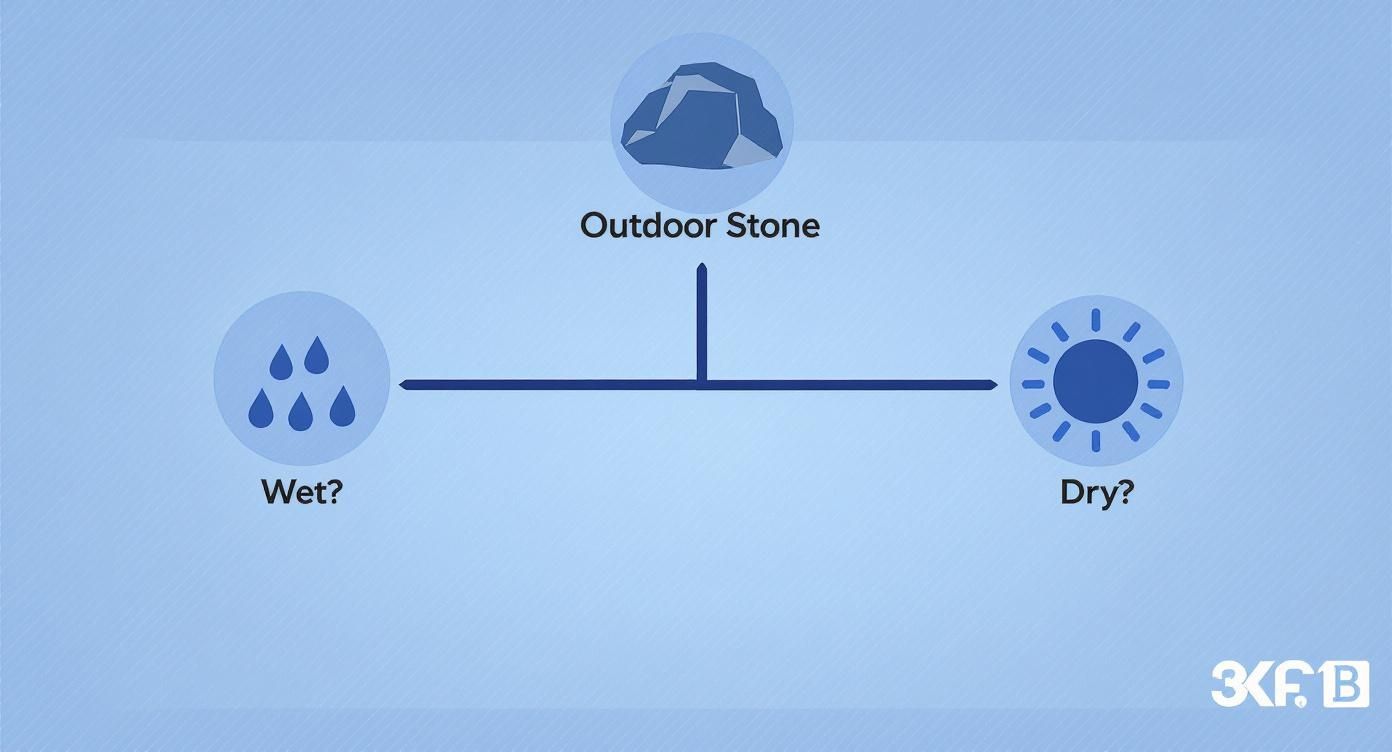
As the picture shows, moisture changes everything. It makes slip resistance and low absorption very important for safety and long life.
Porcelain Pavers: The Modern Powerhouse
Porcelain pavers are a popular choice for outdoor projects in Palo Alto and the Bay Area. They are engineered to be strong, safe, and stylish. They are fired at very high temperatures, which makes them very dense and almost completely non-porous.
With a water absorption rate below 0.5%, porcelain pavers keep moisture out. This means wet leaves and mud won't cause stains. This low porosity also makes them great for areas with freezing temperatures.
A big plus is their reliable slip resistance. Porcelain pavers are made with special textures for wet areas, giving you good traction. For those who like the look of natural stone but need top performance, stone-look porcelain tile offers many design options.
Limestone: Timeless Elegance with Proper Care
Limestone is a classic choice for a reason. It has a simple, elegant look that fits many California home styles. Its soft, natural colors create a warm feeling. However, because limestone is a natural stone, it is porous.
For limestone to work well in wet weather, it must be sealed. A good sealer protects it from water, stains, and moss. Without a sealer, limestone can get discolored from too much moisture.
When it comes to safety, the finish is what matters. A honed or tumbled finish has more texture and gives better grip than a polished one. This makes it a safer choice for outdoors.
Travertine: Rustic Charm and Natural Resilience
Travertine is another natural stone loved in California for its rustic look and warm colors. The stone has natural pits, which gives it texture that helps with slip resistance. You often see it used for pool decks and patios.
Like limestone, travertine is porous and needs to be sealed to protect it from water damage and stains. Once it is sealed, a travertine surface is ready for the wet season.
Travertine also stays cool in the hot California sun, which is a great benefit in the summer. When cared for properly, it is a beautiful and durable surface.
Slate: Rich Texture and Superior Durability
Slate is known for its unique layered look and deep, rich colors. Its naturally cleft surface gives it a great texture and one of the highest slip-resistance ratings among natural stones, even when wet.
This built-in grip makes slate a top choice for walkways and garden paths. Slate also has a fairly low water absorption rate, which adds to its durability. We still recommend sealing it to protect it further.
Outdoor Surface Performance in Wet Conditions
Here is a table that compares how these materials perform during California’s rainy season.
| Material | Slip Resistance (Wet) | Water Absorption Rate | Stain Resistance | Frost Tolerance |
|---|---|---|---|---|
| Porcelain Pavers | Excellent | Very Low (<0.5%) | Excellent | Excellent |
| Limestone | Good (with honed/tumbled finish) | Moderate to High (requires sealing) | Good (when sealed) | Moderate (when sealed) |
| Travertine | Very Good (with tumbled finish) | Moderate to High (requires sealing) | Good (when sealed) | Good (when sealed) |
| Slate | Excellent (with natural cleft finish) | Low to Moderate | Very Good | Excellent |
The best choice for your project will be one that fits your style and how much maintenance you want to do. Each of these materials can be part of a successful rain-ready design.
Matching Stone Surfaces to Your California Design Style
Function is important during the wet season, but looks make an outdoor space feel like home. The best material choice is one that performs well and matches your home's style. A good rain-ready design connects your indoor and outdoor spaces.
Whether you have a modern Palo Alto home or a rustic Carmel Valley house, there's a stone that fits your style. The key is to match the material's color, texture, and finish to your home.
For the Modern and Minimalist Bay Area Home
Modern California design uses clean lines and neutral colors. Large-format porcelain pavers are perfect for this style. Their straight edges and consistent color create a sleek look.
Porcelain is also very versatile. It can look like concrete for an industrial style or like light-colored limestone for a softer feel. This lets you get the look you want without sacrificing performance.
Capturing Rustic and Mediterranean Charm
For homes with a more traditional or rustic feel, like those in Carmel and Monterey, natural stone offers a unique character. The warm tones and varied surfaces of travertine create a Mediterranean feel.
Limestone also offers a timeless elegance that feels both grounded and sophisticated. The natural variations in each piece add an authentic touch that engineered products can't match.
The Impact of Finishes on Style and Safety
The finish on a stone's surface affects both its look and its function. The right finish can change a stone's style and make it safer.
- Honed Finish: This finish is smooth and matte. It softens a stone’s color for a modern look and offers better slip resistance than polished finishes.
- Tumbled Finish: This process softens the stone's edges and gives it an aged look. It is great for rustic designs and provides excellent texture for grip.
- Natural Cleft Finish: This finish is found on layered stones like slate. The result is a richly textured surface with outstanding slip resistance.
Design Insight: A great goal is to create a smooth flow from your indoor to outdoor spaces. For ideas, read our guide on how to create seamless stone transitions for your California home.
Integrating Stone into Landscape Design
Stone surfaces are the base of an outdoor space, but they look even better when they work with the surrounding landscape. The right material can connect different elements, like garden paths and retaining walls. Checking out some DIY rock garden ideas can give you creative ways to use stone.
Think about how your stone choice will look with your plants. The dark colors of a slate walkway can create a beautiful contrast with green plants. The soft colors of a travertine patio can blend nicely with succulents and grasses.
Practical Maintenance for Long-Lasting Outdoor Stone
Choosing the right material is the first step. But simple, regular care is what ensures your patios and walkways last through California's wet season. Good maintenance is not just about looks; it protects your investment and prevents slippery spots.
This ongoing care keeps your rain-ready design working at its best. Luckily, caring for these materials is usually easy and doesn't take much time.
The Critical Role of Sealing Natural Stone
Natural stones like limestone and travertine are porous, so they can soak up water. During the rainy season, this can lead to stains from wet leaves and dirt. That moisture also creates a perfect home for slippery moss and algae.
Sealing is the best way to prevent this. A good sealer fills the stone's tiny pores, creating a barrier that keeps water out. This is a key step to protect the stone's color, strength, and slip resistance.
Simple Steps for Routine Cleaning
Regular cleaning is the best way to prevent the slippery buildup that makes outdoor surfaces dangerous when wet. A simple routine can stop big problems before they start.
- Sweep Regularly: Keep surfaces clear of leaves, dirt, and other debris.
- Gentle Washing: Now and then, wash the stone with a pH-neutral cleaner and water. Avoid harsh chemicals that can damage the surface.
- Rinse Thoroughly: After washing, always rinse the area with clean water to remove any soap.
For more details, our guide on how to clean natural stone surfaces has expert tips to keep your stone looking great.
Addressing Deeper Maintenance Needs
Over time, even well-cared-for stone can show its age. You might see a white powder called efflorescence, which is just mineral salts coming to the surface. Tough stains may also appear.
When your outdoor stone needs more than a simple cleaning, it's good to know your options. Learning about restoring limestone patio stones can help you fix deeper issues. For very difficult problems, it's smart to ask a professional for help.
Local Design Recommendations for Bay Area and Coastal Homes
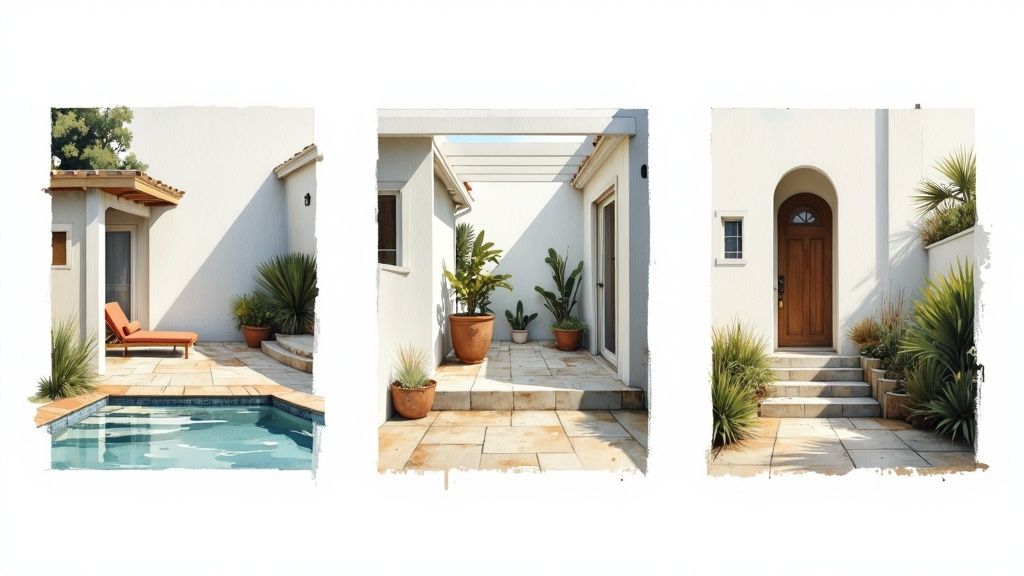
California has many different microclimates. The right stone for a sunny Palo Alto home won't work the same on a foggy Monterey patio. A good rain-ready design means choosing a material that fits the local environment. When you match a stone to the local weather, you create a space that is both beautiful and strong.
This is about more than just looks; it's about long-term safety and performance. A home in the Bay Area hills has different needs than a coastal home in Carmel-by-the-Sea.
Coastal Communities from Monterey to San Francisco
Homes on the coast deal with salty air and moisture from fog. This tough environment needs materials that can handle water and the corrosive effects of salt.
- Top Recommendation: Porcelain Pavers. With a water absorption rate under 0.5%, porcelain is great against moisture and salt. It’s perfect for patios, terraces, and walkways that are often damp.
- Alternative: Properly Sealed Slate. Slate is dense and naturally water-resistant. Once sealed, it holds up well to salty air and has great natural slip resistance.
Inland Valleys and Bay Area Cities
In places like Palo Alto and San Jose, the weather is usually warmer and drier but still gets heavy rain in the winter. The key is to find a balance between looks, durability, and resistance to summer heat.
A sealed limestone can be a beautiful choice for covered patios in these areas. A honed finish provides better grip, and a good sealer protects against stains.
Higher Elevation and Hillside Homes
For homes in hilly areas, freeze-thaw cycles can be a problem. If water gets into a porous stone and freezes, it can expand and cause damage. Frost-tolerant materials are a must.
- Primary Choice: Porcelain Pavers. Porcelain is engineered to handle temperature changes. It is the safest choice to prevent cracking from frost.
- Natural Stone Option: Slate. Slate is a very dense rock. This makes it naturally resistant to freeze-thaw damage.
Understanding Local Rainfall Patterns
California’s rainfall can be unpredictable. Historical data shows that we need strong surfaces that can handle both light drizzles and heavy downpours. You can explore more about California's historical rainfall patterns to see how these trends affect material choices.
Choosing the best outdoor stone surfaces for California’s wet season is about making a smart, local decision. Visiting a showroom in Carmel, Sand City, or Palo Alto is the best way to see the materials and get expert advice for your home.
Frequently Asked Questions
When you're choosing materials for an outdoor space in California, you might have questions. Here are simple answers to some common ones to help you make a good choice.
What is the best outdoor surface for rain?
The best surface for rain needs low water absorption and great slip resistance. Porcelain pavers are excellent because they absorb very little water (under 0.5%) and often have textured surfaces for good grip. Slate with a natural cleft finish is another top choice for a safe, rain-ready design.
Do I need to seal outdoor natural stone?
Yes, for most natural stones like limestone and travertine, sealing is very important for outdoor use in California. Sealing creates a protective shield that keeps water out. This helps prevent stains, algae growth, and damage from freezing temperatures in colder areas.
Is porcelain more durable than natural stone outdoors?
Porcelain is very durable and can be stronger than some natural stones in certain ways. It is non-porous, so it resists scratches, stains, and frost very well. However, very hard natural stones like slate and granite are also incredibly tough and have been used for centuries.
How do I prevent my patio from becoming slippery?
The best way to prevent a slippery patio is to choose a material with texture. This can be a honed or tumbled natural stone or porcelain pavers designed for outdoor grip. Regular cleaning to remove moss and making sure your patio has good drainage are also key.
Can I use the same stone inside and outside?
Yes, you can! Creating a seamless flow from indoors to outdoors is a popular and beautiful design choice. Many materials, like porcelain, come in different finishes for both interior and exterior use. This lets you have a consistent look from your living room to your patio.
If your outdoor spaces become slippery or unsafe during the rainy season, now is the time to explore alternatives. Upgrading to slip-resistant, weather-tough surfaces not only enhances safety but also prepares your home for year-round use.
Protect your investment and your peace of mind. Visit a Carmel Stone Imports showroom in Carmel, Sand City, or Palo Alto to explore durable, weather-resistant stone solutions tailored for California’s climate. Let our local experts help you design an outdoor space that performs beautifully in every season.