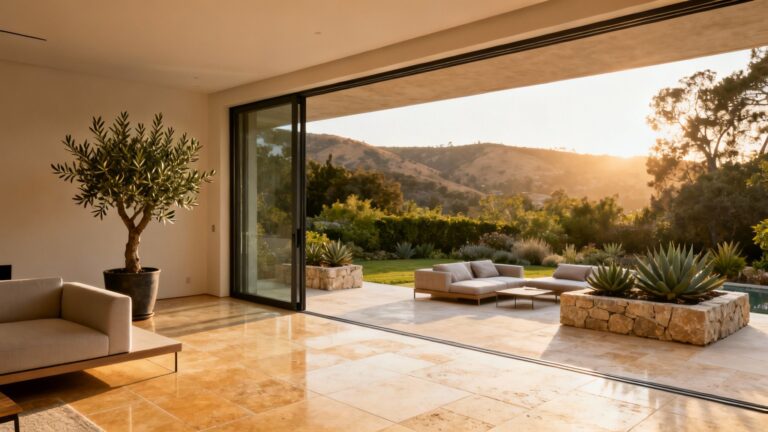
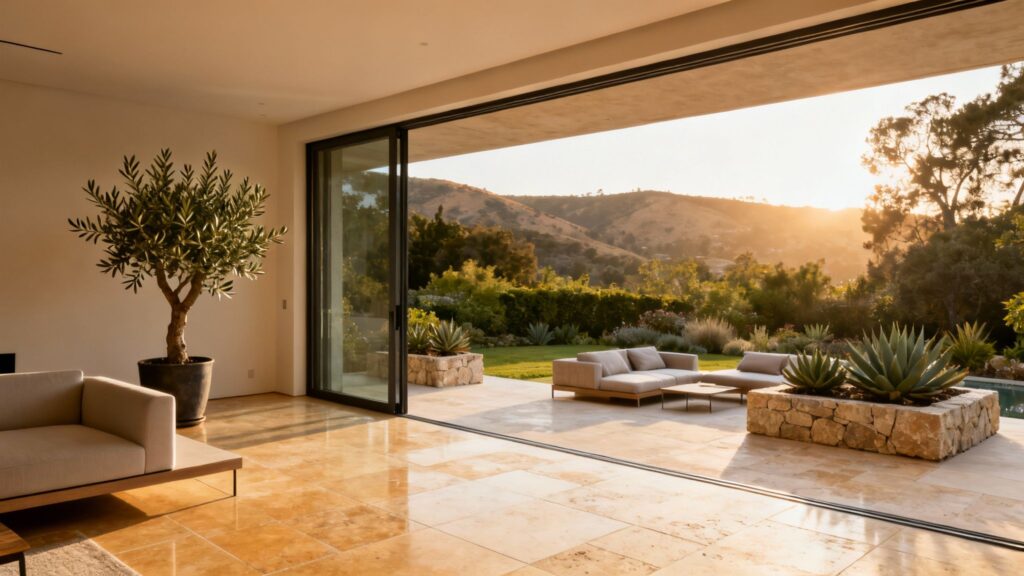
Creating a stunning, seamless stone transition in a California home is simpler than you might think. The key is to choose one type of stone and use it both inside and out.
This approach creates an amazing visual flow. It makes your whole living area feel bigger and more connected to the outdoors. A great tip is to use the same stone but with different finishes. For example, a smooth, honed surface for the living room can flow into a matching stone with a non-slip texture for the patio. You get a beautiful, unified look without giving up safety.
Embracing California's Indoor-Outdoor Lifestyle
In California, indoor-outdoor living is more than just a design trend—it's a way of life. From Carmel to the Bay Area, homeowners want to blend their homes with the beautiful landscapes outside.
Natural stone is the perfect material to connect these two worlds. It flows easily from a kitchen to a sunny patio or pool deck. This creates one large, unified space. For homeowners in places like Palo Alto and Monterey, this means making outdoor spaces feel as elegant as their interiors.
This isn't just a feeling; it's backed by data. Over 67% of U.S. homeowners now prefer to renovate their current homes rather than move. Many of these upgrades focus on lifestyle features like outdoor entertaining zones and alfresco kitchens.
A well-designed stone transition adds both beauty and long-term value to your home. The goal is to create a space that feels open and connected to its surroundings. For a great example of this, check out this California cabin project featuring New England stone.
When planning your project, choosing the right materials for our climate is key. Exploring options like the best pavers for patios can give you great ideas. Whether you are building a new home or just updating your backyard, the right stone can turn your house into a timeless California sanctuary.
Choosing the Right Stone for Flawless Flow
The material you choose is the most important decision for an indoor-outdoor transition. Getting this right is everything. The goal is to create a strong visual connection that makes your living space feel endless, and that starts with the stone itself.
Using the same type of stone both inside and out is the most effective strategy. Imagine a beautiful limestone or classic travertine flowing from your great room straight onto the patio. This creates a unified foundation that instantly connects the two areas. If you're looking for ideas, our guide to the types of natural stone is a great place to start.
This visual decision tree shows how natural stone is the key to achieving a truly seamless indoor-outdoor lifestyle.
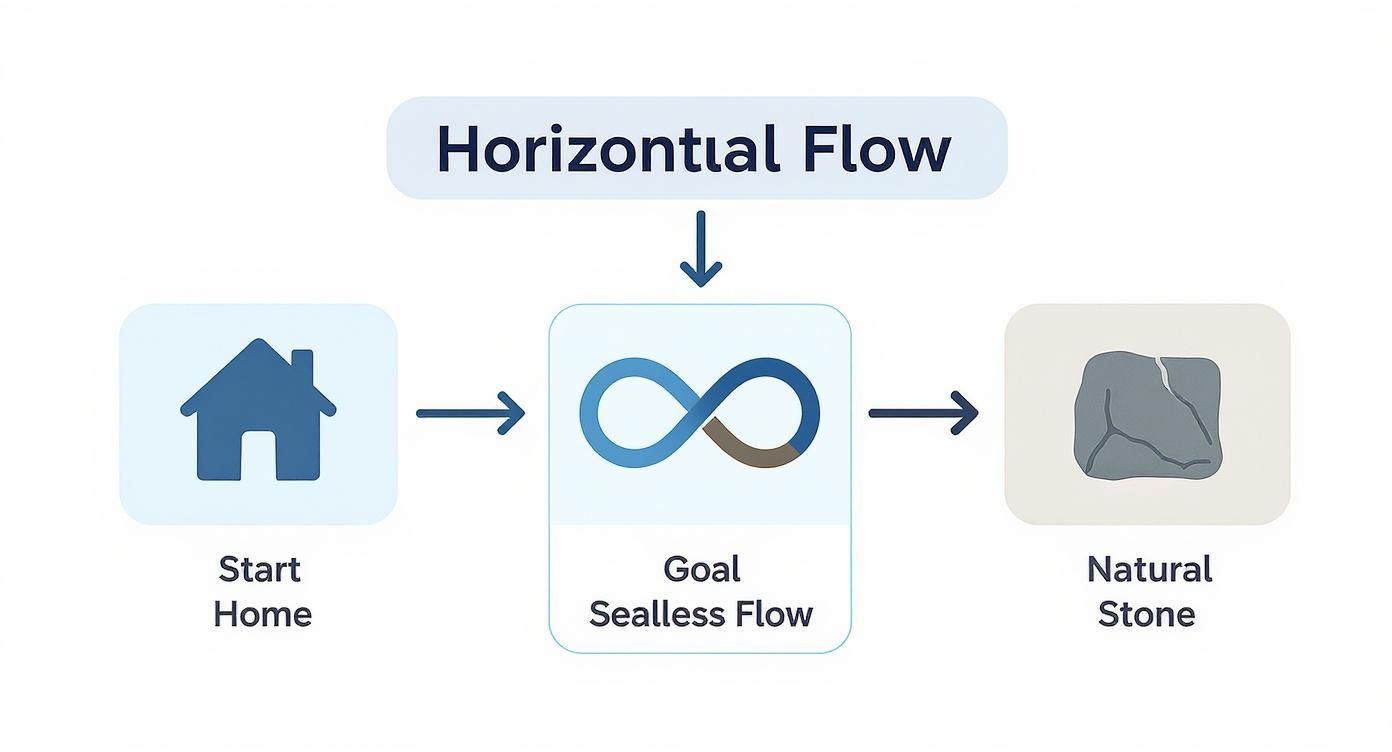
The path from a standard home to one with that coveted, flawless flow is paved with thoughtful material selection. Stone becomes the unifying element.
Finish and Scale Matter
While using the same stone is the first step, the finish is just as important. It affects both safety and style. A smart trick is to use different finishes in different areas. This can improve the space without breaking the visual flow.
For example, a living room might have a smooth honed limestone that feels great underfoot. Just outside, the patio could use the same stone but with a more textured, tumbled, or brushed finish. This provides essential non-slip grip, which is a must around a pool or on a damp Monterey morning.
Key Takeaway: The secret to a perfect transition is using the same stone in different finishes—one for interior elegance and another for outdoor durability and safety. This maintains visual continuity while addressing the practical needs of each space.
To really complete the look, also think about scale. Using large-format tiles is a great way to make any space feel bigger. With fewer grout lines, the stone surface looks like a single, continuous plane. This strengthens the indoor-outdoor connection and is popular in modern Bay Area homes.
Comparing Stone Finishes for Indoor vs Outdoor Use
Choosing the right finish is about function, not just looks. This table breaks down common options to help you decide what works best where.
| Finish Type | Best for Indoor Use | Best for Outdoor Use | Key Characteristic |
|---|---|---|---|
| Polished | Yes | No | High-gloss, reflective surface. Can be slippery when wet. |
| Honed | Yes | Sometimes | Smooth, matte finish. Less slippery than polished. |
| Brushed | Yes | Yes | Textured, slightly worn look. Good grip. |
| Tumbled | Sometimes | Yes | Naturally aged, rustic appearance with excellent traction. |
| Flamed | No | Yes | Rough, highly textured surface created by intense heat. |
A combination of finishes often provides the best of both worlds. You get a refined look inside and a safe, durable surface outside, all while keeping that beautiful, unbroken flow.
Harmonizing Color and Texture for a Cohesive Look
The magic in designing a seamless indoor-outdoor space isn't just about picking a stone you like. It's about blending color and texture to tell a single story. The goal is to choose a palette that matches your home’s interior and connects with the natural California landscape.
This is where true artistry creates a flow that feels both planned and effortless.
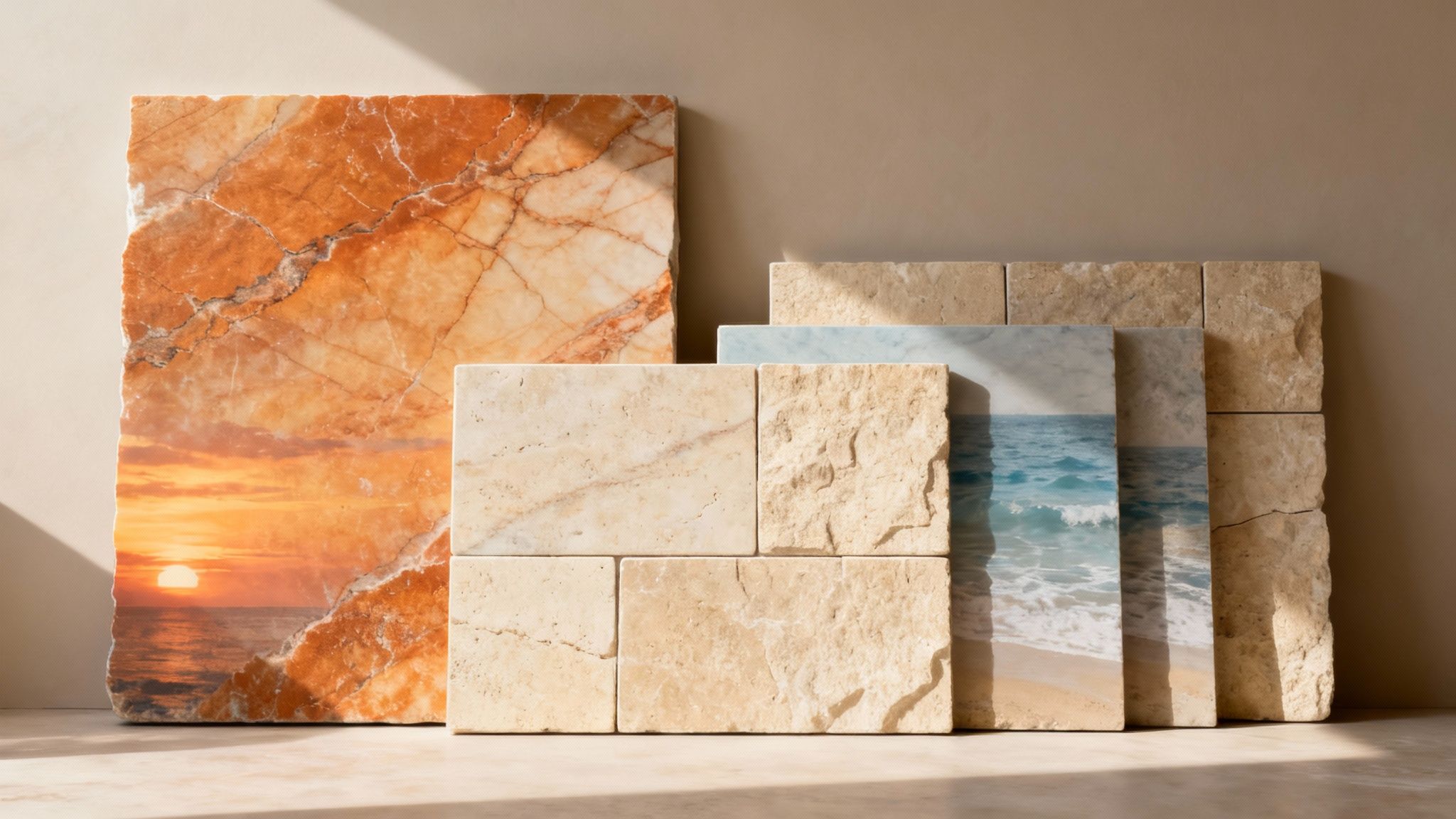
Imagine a warm-toned quartzite that captures the golden colors of a Monterey sunset. When you choose a stone with natural variations that echo the colors of the coast, your design becomes part of its environment. This approach ensures the final look is sophisticated and harmonious.
Selecting Your Color Story
Your home’s color palette should feel connected, not divided into separate indoor and outdoor zones. Start by looking at the main colors inside your home—the warmth of wood floors or the cool gray of cabinets.
Then, find a natural stone that carries some of those same tones while also pulling in colors from the view outside.
- Coastal Homes: For a home in Carmel overlooking the ocean, lighter stones like travertine or limestone are great choices. Their sandy beiges and soft whites reflect the beach landscape. You can explore this look in our guide to white stone tiles.
- Inland Properties: If your home is in the Palo Alto hills, consider earthy quartzites with veins of green and gold. These tones can beautifully mirror the surrounding oak trees.
The secret is finding a stone that acts as a bridge. It should have colors that tie back to both your indoor and outdoor palettes. This creates a subtle, sophisticated link that feels entirely natural.
Weaving in Texture
Texture adds depth and character, but it needs to be balanced. A chiseled-edge limestone, for example, can bring rustic charm to a patio. Inside, you could use the same stone with a sleek, honed finish for a more refined feel.
By using the same stone in different finishes, you create a clear connection without sacrificing style or function. This strategy ensures your space is both stunning and practical. It perfectly blends indoor comfort with the natural beauty of the outside.
Designing for Durability in the California Climate
California’s amazing weather also brings intense sun and the risk of wildfires. When planning an indoor-outdoor project, your stone must be beautiful and incredibly strong. Making the right material choice ensures your investment lasts.
Dense materials like quartzite and robust porcelain pavers are fantastic choices for our climate. They are very durable and low-maintenance. They resist fading from UV exposure and weathering from salty coastal air. These strong materials let you create seamless stone transitions for your California home that are built to last.
For a deeper look at one of our favorite options, our guide on porcelain tile slabs is packed with useful information.
Fire-Wise Design and Defensible Space
If you live in a high-risk fire zone, your material choice is even more important. Using non-combustible materials for your hardscaping is a key part of a modern, safe home. Stone patios and walkways can act as a fire-resistant barrier around your home.
This approach also aligns with new state regulations. Starting in 2025 for new homes in high-risk fire areas, the state will require 'ember-resistant' zones within five feet of the house. Hardscaping with non-combustible stone is a popular strategy for both safety and compliance.
A Proactive Approach: When you choose materials like stone for the areas around your foundation, you are actively creating a defensible space that can help protect your property.
To complement your stone transitions, consider resilient rock garden designs. They offer a beautiful, low-maintenance landscaping option that suits your home's look and stands up to the California climate.
Don't Forget the Walls: Using Vertical Surfaces for a Seamless Look
To truly blur the lines between inside and out, think beyond the floor. Using vertical surfaces creates a powerful, unified look. It ties your home's architecture into the natural California landscape.
Imagine the same stunning stone on your living room feature wall flowing right through the glass onto the exterior. It’s a simple move that completely erases the boundary. The same goes for an outdoor kitchen backsplash that mirrors the stone you used inside.
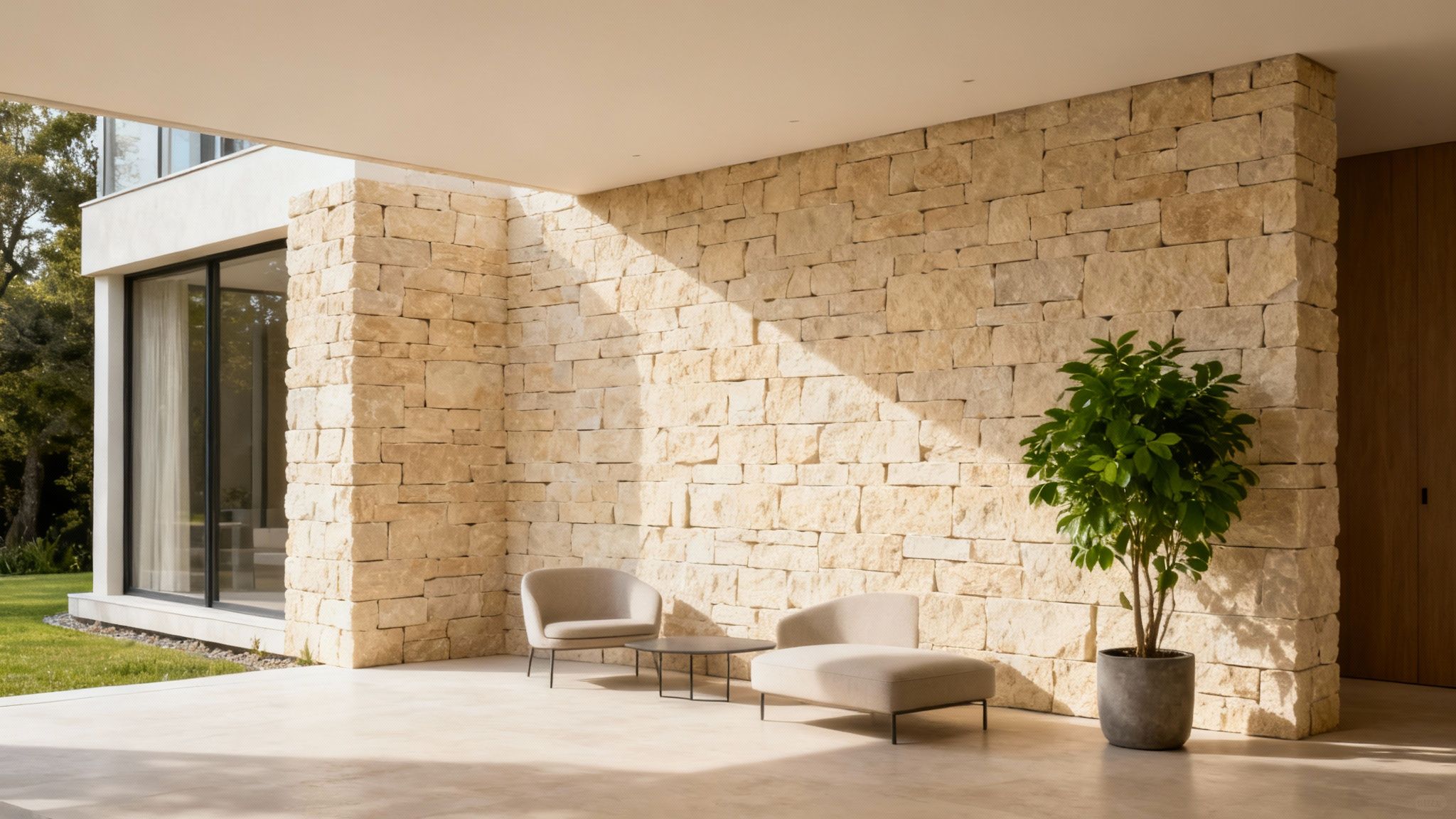
We're seeing this more and more, especially in Northern California. Designers use beautiful stone veneers on homes, retaining walls, and firepits. It adds a custom, timeless touch.
Unifying the Entire Space with Stone Accents
Stone is very versatile and can be the common thread that ties your whole property together. When you use it for more than just flooring, the design becomes a complete indoor-outdoor experience.
Here are a few ways to use stone with great impact:
- Fireplace Surrounds: A floor-to-ceiling stone fireplace that continues to an outdoor fire feature is stunning. It creates a clear focal point for both spaces.
- Accent Walls: An interior accent wall with textured stone can be matched on an exterior garden wall.
- Architectural Details: Think about wrapping columns or creating built-in seating that flows from the great room to the patio.
This strategy—using a shared material on both floors and walls—really creates the feeling of one large living area. It’s a sign of sophisticated design in modern Bay Area and Monterey homes.
For more inspiration, check out our guide on designing the best outdoor stone tile wall for timeless curb appeal. Using stone on your walls shows off its versatility and takes your project to another level.
Frequently Asked Questions
Planning an indoor-outdoor living space brings up a lot of questions. Here are the answers to some of the most common ones we get.
What’s the best stone for outdoor use in the Bay Area climate?
For the Bay Area, you need a stone that can handle both sun and damp, foggy air. We recommend dense, low-porosity stones like quartzite and high-quality porcelain pavers. These materials resist moisture and temperature swings, so your patio won't crack or stain easily. Always choose a non-slip finish for safety.
Can I use the exact same tile inside and out?
Yes, and that's the key to getting that beautiful, unbroken look. Many modern stone collections are designed for this. You can create seamless stone transitions for your California home by using a tile with a smooth, honed finish inside and a matching tile with a textured, anti-slip finish outside. It's a perfect blend of design and safety.
How do I make sure my indoor and outdoor stone colors match?
Natural stone has variations, which is part of its beauty. To get the most consistent color, select all your slabs or tiles from the same quarry lot. Be sure to take samples home and look at them in both your indoor lighting and in full daylight outside. This is the best way to ensure you'll love the final result.
Will adding natural stone really increase my home's value?
Absolutely. High-quality natural stone is a luxury feature that buyers value. In the competitive California real estate market, a beautiful indoor-outdoor living area is a huge selling point. It's a smart investment that adds real value and curb appeal to your property.
How much work is it to care for outdoor natural stone?
It's simpler than you might think. For the most part, outdoor stone just needs regular sweeping to clear off leaves and dirt. An occasional wash with a pH-neutral cleaner is usually all it takes to keep it looking fresh. For porous stones like limestone, applying a good sealer every few years will help protect it from stains and weather.
Ready to bring the incredible flow of an indoor-outdoor living space to your home? The team at Carmel Stone Imports is here to help you select the perfect materials for your vision.
Visit one of our showrooms in Carmel, Sand City, or Palo Alto to explore natural stone solutions tailored to your project. Our design team is ready to help you create a timeless California sanctuary. You can also get in touch with our team today to start the conversation.