

Starting a project by typing 'stone warehouse near me' into a search bar can feel overwhelming. This guide makes that journey easier for California homeowners and trade professionals. Whether you're remodeling a kitchen in Palo Alto or building a new home in Carmel, you'll learn how to choose the right supplier with confidence.
Your Guide to Finding the Right Stone Warehouse
Finding a top-notch stone warehouse is like hiring any trusted pro for your home. You are looking for a partner, not just a place with rocks. You can apply the same ideas you'd use from a guide to finding a good, trustworthy professional. It’s about more than the closest showroom; it's about finding an expert who understands your vision.

We'll walk you through everything, from the first online search to making your final choice. Forget feeling lost in endless options. Let's get you ready to visit local warehouses, check material quality, and find the perfect slab.
What to Look For in a Supplier
Your goal is to find a supplier who offers more than just stone. You want a true partner with deep knowledge, a great selection, and excellent service. This is the secret to making sure your project, whether a sleek Bay Area kitchen or a rustic Monterey patio, is a success.
A diverse, well-stocked inventory is your first big clue. A great supplier will carry a wide range of materials to suit different styles, budgets, and needs.
- Natural Stone: You can't go wrong with timeless options like marble, quartzite, and limestone. They bring a unique, earthy beauty into any space.
- Engineered Surfaces: For busy homes, durable choices like quartz offer great consistency and strength. You can learn all about what is engineered stone and its benefits in our guide.
- Porcelain Slabs: These are very popular for a reason. They resist stains, scratches, and UV rays, making them great for indoors and outdoors.
A well-chosen inventory shows the supplier understands trends and values quality. It’s a clear sign they are dedicated to helping you find the perfect material for your project.
To help you keep track, here's a quick reference table of important factors to consider when you visit showrooms.
Key Factors When Choosing a Local Stone Warehouse
| Factor | Why It Matters for Your Project | What to Look For |
|---|---|---|
| Inventory & Selection | A wider selection means you're more likely to find the perfect slab that fits your vision and budget. | A mix of natural stone, engineered surfaces, and porcelain. Look for unique slabs alongside popular choices. |
| Expertise & Service | Knowledgeable staff can guide you on the pros and cons of each material, saving you from costly mistakes. | Staff who ask about your project, listen to your needs, and offer helpful advice, not just a sales pitch. |
| Showroom Quality | A well-lit, organized showroom lets you see the stone's true color, veining, and texture. | Clean, well-organized displays. Good lighting is critical for seeing the real nature of the slabs. |
| Local Reputation | Good reviews and a strong local presence show reliability, quality products, and happy customers. | Check online reviews, ask contractors for references, and see how long they've been in the community. |
Using this checklist will help you compare different suppliers and make a choice you'll be happy with for years.
How to Build Your Shortlist of Local Suppliers
A successful search for a "stone warehouse near me" starts with a good list. A quick Google search is a fine place to start. But the best partners are often found through recommendations from industry professionals who work with suppliers every day.

The goal isn't just to find who's closest. It's to build a reliable shortlist of three to five potential warehouses. You want to find suppliers that deliver quality, selection, and service for projects like yours.
Tap into Professional Networks
The most reliable way to find a quality stone supplier is to ask people who depend on them for their jobs. Trade professionals have firsthand experience and can point you toward great warehouses. They can also warn you about ones with a reputation for problems.
Give some of these experts a call:
- Interior Designers & Architects: They have a great eye for quality and style. They often have relationships with suppliers who carry unique materials.
- General Contractors & Builders: They care about reliability and accurate inventory. They know which warehouses are dependable and won't cause delays.
- Fabricators: As the artisans who cut and shape the stone, fabricators know a lot about slab quality. They can tell you which suppliers provide the best materials.
A strong recommendation from a local designer or contractor is often the most valuable endorsement. These professionals stake their own reputations on the suppliers they use.
Leverage Digital Design Platforms
Digital resources can also offer great insights into a supplier’s reputation. I always suggest clients browse platforms like Houzz and local California design publications. They’re great for seeing a warehouse's inventory in real projects.
As you look, watch for suppliers whose work matches your vision. This could be a modern Bay Area kitchen or a classic coastal home in Monterey. Pay attention to their portfolios and what past clients say in reviews. This research helps ensure your showroom visits are productive.
If you're still exploring options, our guide to using natural stone in your home can be a valuable resource at this stage.
Making the Most of Your Showroom Visit
You've done your research and have a short list of local stone warehouses. Now for the best part: the showroom visit. This is where your design ideas start to feel real. Seeing the materials in person will help you find the perfect stone to transform your space.
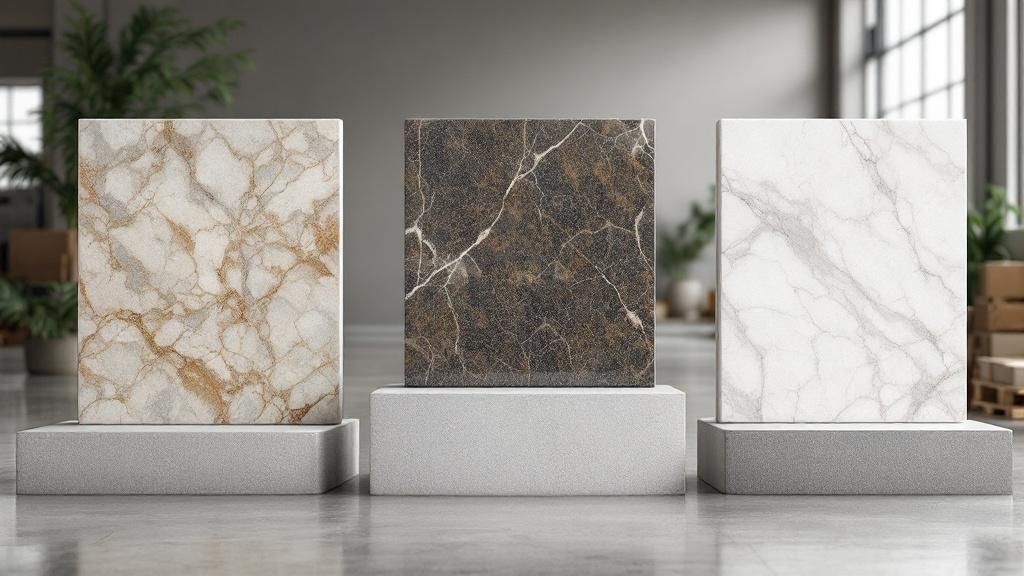
A well-run showroom should be clean, organized, and brightly lit. This allows you to inspect every detail of each slab. It shows the company's dedication to quality and a good customer experience.
Assess the Inventory and Staff Expertise
A top warehouse will showcase a huge variety of materials, from classic marbles to durable quartz. This variety tells you they serve different styles and budgets, especially for the unique aesthetics in the Bay Area. The demand for natural stone is growing, with the global market size reaching over $40 billion, according to industry reports. This shows its timeless appeal. You can read the full industry trends report to learn more.
Pay attention to the team on the floor. A great consultant will ask smart questions about your lifestyle and design goals. They won't just push the most expensive slab.
For example, an expert can explain the pros and cons of using quartzite versus granite for a kitchen in a coastal Monterey home. That kind of insight is priceless. If you're weighing options, our guide comparing engineered stone vs. natural stone is a great read before you go.
Key Questions to Ask During Your Visit
To get the most out of your time, show up with a list of questions.
Here's a checklist of what you should ask:
- "Can I see the full slab?" Never base your choice on a small sample. Natural stone's beauty is in the variations you can only see on a full piece.
- "What is the origin of this stone?" Knowing where the stone was quarried gives you insight into its quality and character.
- "Do you have a network of trusted fabricators?" A supplier with strong relationships with local fabricators helps ensure a smooth installation.
- "What is the process for reserving a slab?" If you find the perfect slab, you'll want to know how to put it on hold.
- "Can you provide a detailed, itemized quote?" Make sure there are no hidden costs. A good quote will break everything down clearly.
Remember, you are looking for the perfect stone and a reliable partner. A supplier who is patient and transparent is one you can trust.
How to Personally Inspect Stone Slabs for Quality
This is where the magic happens. You've narrowed your search from "stone warehouse near me" to a few good choices. Now, it’s time to inspect the slabs. Not all slabs are equal, even if they have the same name like Calacatta marble.
Viewing the entire slab is a must. The natural veining and color can change a lot from one end to the other. A small sample might not show the full picture of what will become your kitchen island.
What to Look for Up Close
Use your senses of sight and touch. Run your hands over the surface to feel for any issues. A finished slab should feel smooth unless you're choosing a textured finish like leathered or honed.
Here's what you should be looking for:
- Fissures vs. Cracks: Fissures are natural, hair-like lines in the stone that are part of its character. Cracks are signs of damage. You can usually feel a crack with your fingernail, so avoid slabs with them.
- Pitting: Tiny pits are normal in some stones like travertine but should be minimal in granite or quartzite. Too much pitting might mean a lower-quality slab.
- Color Consistency: View the slab under good lighting from different angles. Make sure the color is what you imagined for your design.
- Resin and Fillers: Many stones are treated with resin to fill tiny fissures. Check for any dull spots, which could show a poor resin application.
This inspection is your final quality check. Taking the time to do it right ensures the material you bring into your Palo Alto or Carmel home meets your standards. Our article on how to choose the right natural stone is a great resource.
The Art of Bookmatching Slabs
If your project needs more than one slab, ask about bookmatching. This technique cuts a block of stone into sequential slabs. The opposite sides of two slabs are polished and placed side-by-side to create a stunning, mirror image.
Bookmatching turns natural stone into a piece of art. The mirrored pattern creates a beautiful focal point that is impossible to copy with any other material.
This effect is powerful with stones that have bold, linear veining. It’s a detail that shows the beauty of the stone and the skill of your supplier and fabricator.
The stone industry is growing, with construction spending in the U.S. reaching over $2 trillion annually. This growth fuels innovation and makes techniques like bookmatching more accessible. You can learn more by checking out this industry report on stone processing technologies.
Navigating The Process From Selection To Installation
You’ve picked the perfect slab. So, what happens next? A top-tier stone warehouse helps make the journey from their showroom to your home a smooth one.
Understanding the workflow ahead of time helps you manage your project timeline without stress.
Think of it as a partnership between the supplier (the warehouse), your fabricator, and the installer. The warehouse provides the material, but the fabricator is the artist who brings it to life. This is why you should ask about their network of trusted fabricators.
From Templating To Final Polish
Once you’ve reserved a slab, the action moves to your home. The first step is templating.
Your fabricator creates an exact pattern of your space. They’ll map out every detail—sink cutouts, faucet holes, and seam locations—to ensure a perfect fit. Proper templating is the foundation for a beautiful space, a topic we cover in our guide on choosing the perfect kitchen layout.
Next is the fabrication phase. Experts use specialized saws to cut the stone to the exact measurements from the template. They also craft your chosen edge profile and polish all the surfaces.
This flow chart breaks down the major steps, from finding your supplier to scheduling delivery.
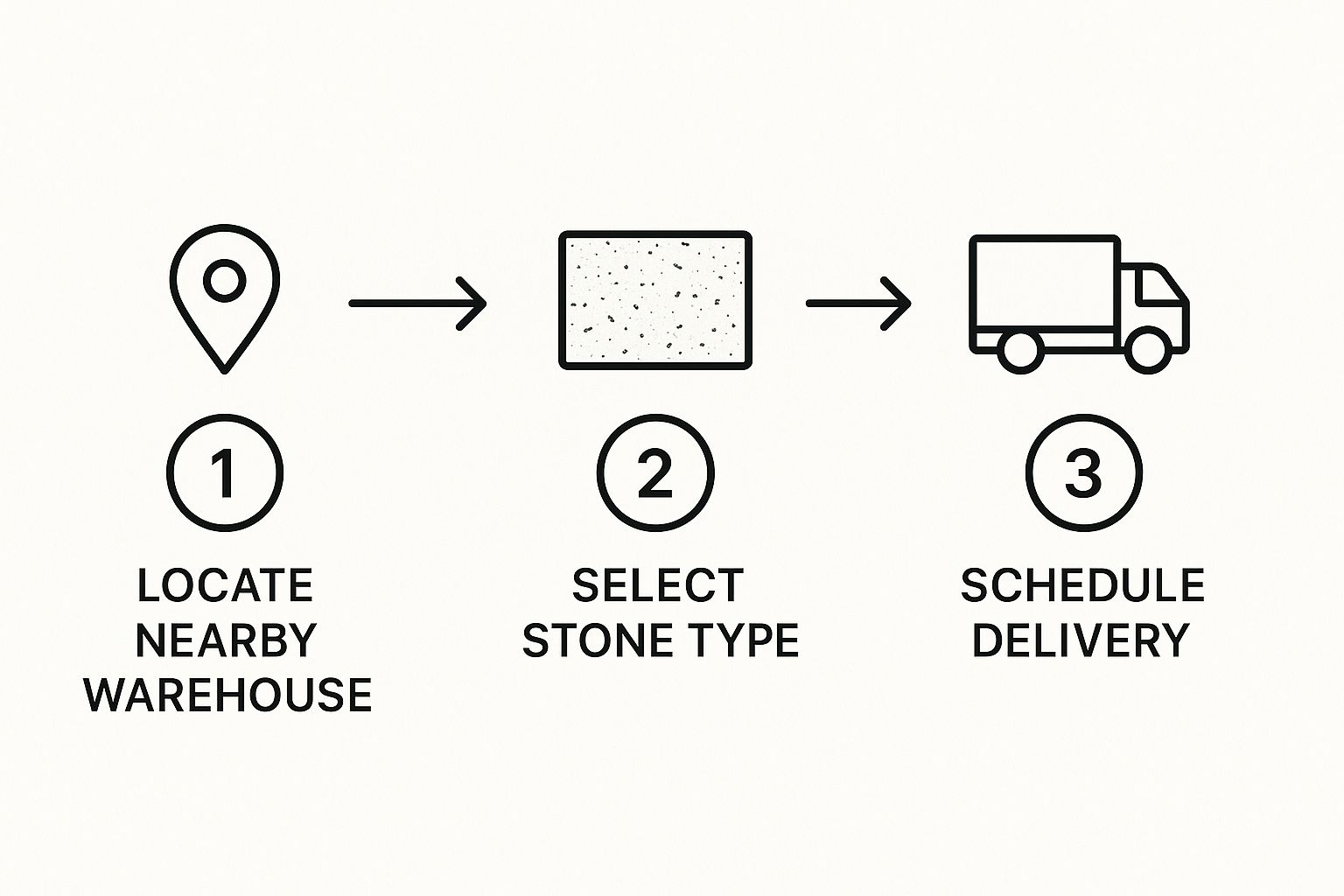
Finally, the finished pieces are brought to your home for installation. The crew will place the stone, level it, and seal any seams. They’ll also mount your sink and drill any faucet holes on-site.
Making Your Final Decision
You’ve done the legwork and have a shortlist of top suppliers. Now it's time to make the final call. This decision is about more than just the stone; it's about finding a true partner.
Real value is a mix of great inventory, expertise, and a smooth process. Finding the right stone warehouse near me means choosing a company that delivers peace of mind along with premium materials.
Weighing the Key Factors
To make a good choice, try creating a scorecard for your top warehouses. This helps you look at the bigger picture.
Rate each supplier on these points:
- Inventory Quality & Uniqueness: Did one place have a more special collection?
- Staff Expertise & Service: How helpful was the team? Did they listen and offer useful advice for your Bay Area home?
- Pricing Transparency: Was the quote clear and easy to understand?
- Fabricator Relationships: How connected are they to skilled local fabricators? A strong network is key.
The ideal supplier scores high in all these areas. They don't just sell a product; they offer a supportive experience to make sure your vision is executed perfectly.
Trusting Your Instincts
Once you've compared the facts, think about how each place made you feel. Did you feel like a valued customer? Were they patient with your questions?
A supplier who invests time to educate you is more likely to be a reliable partner.
This decision should feel right. By balancing practical details with your gut feeling, you can choose a stone warehouse that delivers a stunning product and acts as a trusted ally.
Frequently Asked Questions
When you're diving into the world of natural stone, a few questions always seem to pop up. Let's tackle some of the most common ones we hear from homeowners and designers to make your experience smoother.
Should I visit more than one stone warehouse?
Yes, absolutely. We recommend visiting at least two or three different warehouses. Every supplier has a unique collection, and seeing more options helps you notice the differences in color and veining. It also gives you a feel for each company's customer service and expertise.
What’s the difference between a stone warehouse and a fabricator?
A stone warehouse, like Carmel Stone Imports, is where you select the full-sized slabs of stone. A fabricator is the skilled artisan who takes the slab you've chosen and custom cuts, shapes, and polishes it for your project. The warehouse is like an art gallery, and the fabricator is the master framer.
Can I buy stone directly from the warehouse as a homeowner?
Yes, you can. Reputable stone suppliers are happy to work directly with homeowners, designers, and contractors. Our team is here to guide you through the selection process, answer your questions, and help you find the perfect slab. We then coordinate with your chosen fabricator to get the project started.
How do I make sure the slab I love is mine?
When you find the perfect slab, let a staff member know you want to put it on hold. We will "tag" it for you, which reserves that specific piece for your project. This usually requires a deposit but gives you peace of mind that your unique slab is waiting for you.
What should I bring with me when I visit a showroom?
To make your visit more productive, bring samples of your cabinets, paint swatches, and flooring. Inspiration photos are also helpful. Having a rough idea of your project's measurements will allow us to give you a better idea of how much material you'll need.
Ready to find the perfect stone for your Northern California home? The team at Carmel Stone Imports is here to guide you through our extensive collection. Visit one of our showrooms in Palo Alto, Carmel, or Sand City today.