Marble is a stunning, classic material, but its timeless elegance can be quickly ruined by the wrong cleaning methods. One wrong move with a harsh chemical can turn a luxurious, glossy surface into a dull, damaged one. This guide explains the best way to clean marble, ensuring your investment remains a beautiful focal point in your home for years to come.
At its core, marble is calcium carbonate, a material that has a strong, negative reaction to acids. This is why you must handle it with care, especially in coastal California homes where finishes can be put to the test.
How to Clean Marble the Right Way
The best way to clean marble is surprisingly simple. All you really need is a soft microfiber cloth, some warm water, and a dedicated stone cleaner with a neutral pH. That's it.
Forget about common household cleaners like vinegar or citrus-based products. These are marble's worst enemies. They trigger a chemical reaction that literally eats away at the stone, leaving behind a dull spot called an "etch." This isn't a stain you can just wipe off; it's permanent, physical damage to the stone itself.
The Foundation of Proper Marble Care
Protecting your investment starts with knowing the absolute do's and don'ts. Abrasive tools, like those green scouring pads or stiff-bristled brushes, are just as destructive as acidic chemicals. They create tiny micro-scratches that build up over time, slowly erasing that beautiful, polished finish.
To maintain that signature glow—especially on a high-end Calacatta Gold kitchen island or in a Carrara marble bathroom—a gentle touch is essential. For a deeper dive into choosing and caring for this incredible material, check out our ultimate marble guide for stylish home design.
Key Takeaway: If you remember only one thing, make it this: always use pH-neutral cleaners. If a product isn't specifically labeled as safe for natural stone, don't risk it. The team at Carmel Stone Imports can always guide you toward trusted solutions.
Marble Cleaning Agents At-a-Glance
To make it even clearer, we've put together a quick-reference table. It can be confusing trying to remember what's safe and what isn't, so use this to guide your choices.
| Item/Agent | Recommended for Marble? | Reason |
|---|---|---|
| pH-Neutral Stone Cleaner | Yes | Specifically formulated to be gentle on stone. |
| Mild Dish Soap & Water | Yes (in moderation) | Generally safe, but rinse well to avoid soap scum buildup. |
| Vinegar | No | Highly acidic; will cause etching and dull the surface. |
| Lemon Juice / Citrus Cleaners | No | Acidic and will permanently etch the marble. |
| Abrasive Scrubs / Powders | No | Will scratch and wear down the polished finish. |
| Bleach / Ammonia | No | Too harsh and alkaline; can discolor or damage the stone. |
| Microfiber Cloths | Yes | Soft and effective for cleaning without scratching. |
Sticking to the "Yes" column is the best way to ensure your marble stays beautiful for years to come.
Differentiating Between Cleaning Needs
It's also helpful to think about what kind of cleaning your marble needs at any given moment. Not every situation calls for a deep scrub. Here in coastal California, even the salt in the air can subtly affect natural materials over time, so being mindful is key.
- Daily Upkeep: This is all about prevention. A quick wipe with a damp microfiber cloth is usually all you need to handle daily dust and minor spills.
- Deep Cleaning: This is a more thorough process for when grime builds up or you want to sanitize surfaces. It calls for a dedicated stone cleaner, used exactly as the manufacturer directs.
- Stain Removal: This is a targeted treatment for spills that have already soaked into the stone's pores. It often requires a special poultice to draw the substance out from within.
By knowing which job you're tackling, you can pick the right method and avoid causing accidental harm. This simple understanding will help keep your marble looking like a stunning centerpiece in your Monterey or Palo Alto home for decades.
Your Daily Routine for Pristine Marble
The real secret to keeping marble beautiful for a lifetime isn't some complicated, time-consuming process. It's all about consistency. Maintaining that perfect finish on a Calacatta countertop or the soft glow of Carrara floors just takes a few simple habits woven into your daily and weekly rhythm.
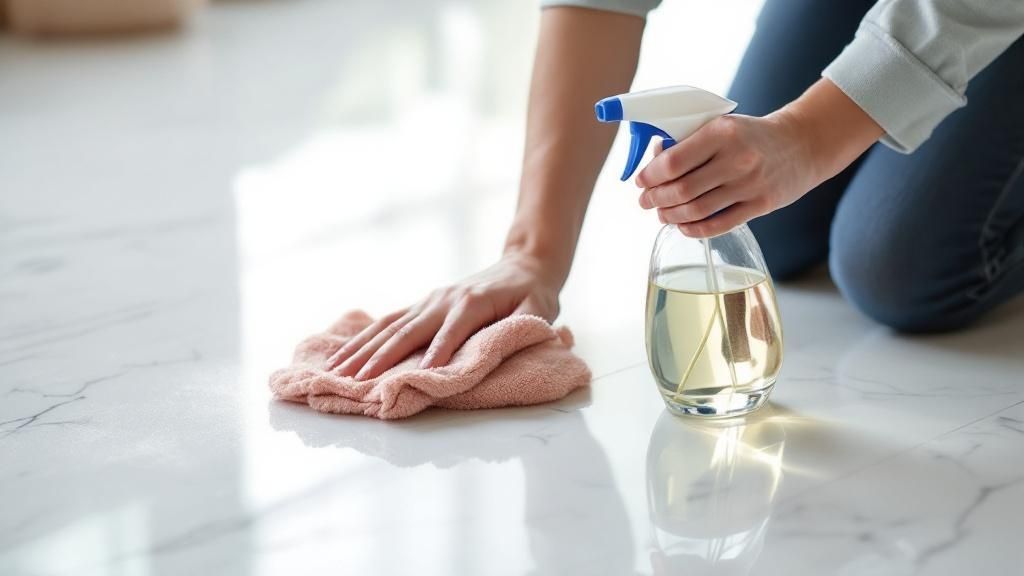
The very best way to clean marble day-to-day starts with getting rid of anything abrasive. Dust, sand, and even tiny crumbs act like fine-grit sandpaper when you drag something across a counter or walk across the floor. This is what creates those tiny micro-scratches that slowly dull the shine. A quick once-over with a dry, clean microfiber cloth or dust mop is usually all it takes to lift them away.
For a slightly deeper clean, just dampen a fresh microfiber cloth with a bit of warm water. If you've got some light grime, a quick spritz of a pH-neutral cleaner made specifically for stone is your best friend. A quick wipe, and you're done. This simple step prevents gunk from building up, which is a lifesaver in busy households, especially here in the Bay Area.
Developing Protective Habits
Honestly, the most important part of any daily routine is stopping damage before it even has a chance to happen. Marble is porous and notoriously sensitive to acids, so being quick on the draw with spills is your number one defense.
Expert Tip: Never, ever wipe a spill—especially something acidic like wine, coffee, or lemon juice. You have to blot it immediately with a soft, absorbent cloth. Wiping just spreads the liquid around, making the potential damage area much larger.
A few small, proactive habits can make a world of difference. Think of it as creating a personal protection plan for your stone.
- Use Coasters and Placemats: Make it a rule to put them under every glass, mug, and plate. This stops those dreaded condensation rings and protects the surface from acidic food bits.
- Employ Trivets and Hot Pads: Never set a hot pot, pan, or baking dish directly on your marble. That sudden temperature change can cause thermal shock, which could actually crack the stone.
- Utilize Trays in the Bathroom: Group your toiletries—lotions, perfumes, hairsprays—on a decorative tray. So many of these products have chemicals or alcohols that can easily etch or stain a marble vanity.
Your Weekly Cleaning Checklist
Set aside just a few extra minutes once a week for a more thorough cleaning. This is what keeps your marble looking great long-term and minimizes the need for heavy-duty deep cleaning later on.
First, clear everything off the surface. Get it completely empty.
Next, give it a good dusting with a dry microfiber cloth to pick up any loose debris that’s settled over the week.
Then, spray a dedicated stone cleaner directly onto the surface and wipe it down with a clean, damp microfiber cloth. For floors, a spray mop with a stone-safe solution works wonders.
Finally, and this is a step many people skip, you need to rinse. Wipe the whole surface again with a cloth dampened with just plain water. This removes any leftover cleaner residue. Follow that up by buffing it completely dry with a separate clean cloth to prevent water spots and bring back that beautiful shine.
This simple routine is really the foundation of great marble care. For more in-depth tips, our article on how to clean marble countertops offers some extra targeted advice. By making these small habits second nature, you’ll ensure your marble stays a stunning highlight in your home for years.
Deep Cleaning And Sanitizing Your Marble
Your daily wipe-downs are great for keeping your marble looking tidy, but every so often, it needs something more. Think about those high-traffic spots—the kitchen island in your Palo Alto home that sees daily use, or the entryway floor in your Monterey property that greets every guest. These areas demand a periodic deep clean to tackle the grime that builds up over time. This isn't just about surface-level looks; it's about hygiene and protecting your investment for the long haul.
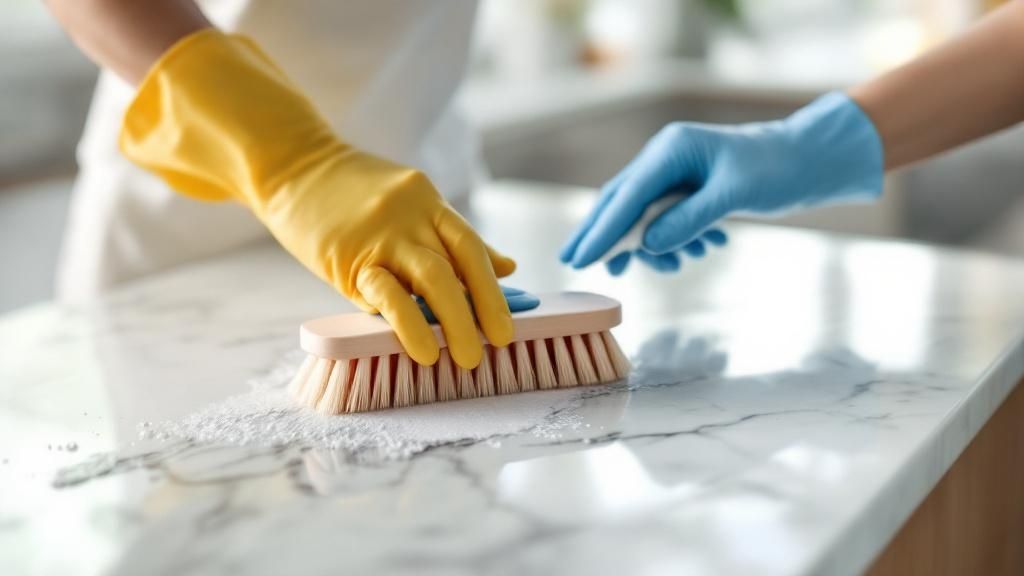
When we talk about deep cleaning, we mean using a high-quality, professional-grade stone cleaner. These aren't your average all-purpose sprays. They're specifically formulated to cut through oils, dirt, and residue without damaging the delicate calcium carbonate that makes up your marble. Applying it correctly is the key to getting a truly clean surface that’s ready for sanitizing.
Applying a Professional Stone Cleaner
First things first, clear everything off the surface. You need a blank canvas. Next, mix your concentrated stone cleaner with water exactly as the manufacturer recommends. Don't eyeball it—the right dilution is crucial for the cleaner to work effectively.
Apply the solution generously across the marble. You can use a clean cloth or a spray bottle, just make sure you get even coverage. Now, let it sit. This is what we call dwell time, and it’s usually about three to five minutes. This gives the cleaner a chance to really penetrate and dissolve all that built-up gunk. Keep an eye on it; you don't want the solution to dry on the surface. If it starts to evaporate, just spritz on a little more to keep it wet.
Once the time is up, grab a soft cloth or sponge and gently agitate the surface. This will lift all the loosened grime.
Important Reminder: Rinsing is a non-negotiable step. After you're done cleaning, you have to rinse the marble thoroughly with plain, clean water. This removes any leftover cleaner that could attract more dirt or leave a dull film behind. To finish, buff the entire surface completely dry with a fresh microfiber towel. This brings back the shine and prevents any pesky water spots.
The Science of Sanitizing Marble
Cleaning removes dirt, but sanitizing takes it a step further by drastically reducing the number of germs. And this isn't just a claim—there's real science to back it up. A 2018 study on the cleanability of stone surfaces showed that a proper cleaning process on Carrara White Marble led to a microbial reduction of 5.35 log10 units. In simple terms, that’s a removal of over 99.999% of microbes. It’s solid proof that a deep clean can make your marble exceptionally hygienic.
For that final sanitizing step, you'll want a pH-neutral, stone-safe sanitizing spray. After you've deep cleaned and dried the marble, lightly mist the sanitizer over the surface and just let it air dry. This ensures your countertops are not only sparkling clean but also a safe surface for food prep.
If you're looking for more tips on keeping your kitchen in top shape, check out our guide on how to clean kitchen countertops.
Tackling Tough Stains on Marble Surfaces
Even if you’re meticulous with your daily cleaning, accidents are bound to happen. Seeing a dark coffee ring or an oily splotch on your beautiful marble can make your heart sink, but it doesn't have to be a permanent mark. The trick is knowing that a stain isn't the same as an etch. A stain is a substance that has actually soaked into the stone's pores, which means you can often draw it back out.
For this job, your best friend is something called a poultice. It’s a thick, absorbent paste you apply to the stain, designed specifically to pull the discoloration out from deep within the marble. The real secret to success, though, is playing detective first—you need to know what caused the stain to mix the right kind of poultice.
Identifying and Treating Common Stains
So, what are you up against? The source of the stain will tell you what active ingredient you need to get the job done.
- Organic Stains (Coffee, Tea, Wine, Food): These are probably the most frequent offenders in any kitchen. For these, you'll want a poultice mixed with hydrogen peroxide or a professional-grade stain remover formulated for stone.
- Oil-Based Stains (Grease, Cooking Oil, Cosmetics): These leave behind dark, shadowy spots. To fight these, you’ll need a gentle degreasing agent like baking soda or even a few drops of ammonia mixed into your poultice base.
- Water-Based Stains & Mineral Deposits: Common around sinks and faucets, these can be a real headache. A poultice might work, but heavy mineral buildup, often called scaling, may require a professional to grind and re-hone the surface.
To make the poultice, you’ll mix your chosen cleaner with an absorbent material—baking soda, diatomaceous earth, or a premade commercial poultice powder—until you get a consistency like smooth peanut butter.
Pro Tip: We can't stress this enough: always test your poultice mixture on a hidden spot first, like under a countertop lip or in a corner. This quick check ensures it won’t cause any weird discoloration on your particular type of marble.
Applying a Poultice The Right Way
Once your poultice is mixed and tested, spread it generously over the stain. You're aiming for a thick layer, about a quarter-inch thick, and make sure to overlap the stain’s edges by about an inch.
Next, cover the whole area with plastic wrap and tape down the edges. This keeps the paste moist and active. Now comes the hard part: waiting. You have to let it sit for 24 to 48 hours. During this time, the poultice is hard at work, with the cleaning agent breaking down the stain while the absorbent material draws it up and out of the stone.
After the time is up, peel off the plastic and just let the poultice air dry completely. You'll see it start to pull away from the stone as it dries—this is the magic happening. Once it's totally dry, gently scrape it off with a plastic putty knife and wipe the area clean with a damp cloth. For really stubborn, deep-set stains, you might need to repeat the whole process.
Modern cleaning science has also given us more advanced options. A notable 2007 study pioneered an innovative gel-paste poultice that uses special gelling and chelating agents to dissolve tough grime without damaging the marble's fragile structure. You can read the full research on this advanced gel-poultice method to see how these techniques are now used to preserve historic marble artifacts worldwide.
Choosing The Right Marble Cleaning Products
Walking down the cleaning aisle can be pretty overwhelming, but what you grab off the shelf is absolutely critical for your marble's long-term health and shine. The best way to clean marble isn't about scrubbing harder—it's about choosing products that are strong enough to clean but gentle enough not to harm the delicate stone.
The most important thing you can do is learn to read product labels with a skeptical eye. So many general-purpose cleaners are loaded with harsh chemicals that are absolute poison for calcium carbonate, which is the main mineral that makes up your marble. You have to steer clear of anything with acidic ingredients like vinegar or citrus, and also avoid highly alkaline stuff like ammonia or bleach. These will chemically burn, or etch, and discolor your beautiful stone in a heartbeat.
What To Look For In A Marble Cleaner
Your main goal is to find a cleaner made specifically for natural stone. These formulas are engineered to get the job done without causing damage.
- pH-Neutral Formula: This is non-negotiable. A cleaner with a neutral pH (right around 7 on the scale) won't have a chemical reaction with your marble. This is what prevents etching and keeps the finish looking perfect.
- Non-Abrasive Ingredients: The product you choose should feel completely smooth, with no gritty or abrasive particles. Those little bits can create micro-scratches that will dull the surface over time.
- No Harsh Chemicals: Always double-check the ingredient list. Make sure it's free from the "big four" no-nos: ammonia, bleach, vinegar, and citrus.
A quality cleaner will lift away dirt and grime without leaving a cloudy film behind. This is especially key for high-traffic spots like bathroom vanities, where hairspray, makeup, and soap can build up. If you're looking for more ideas on managing these high-use areas, our guide to choosing bathroom vanity countertop materials has some great insights.
Professional-Grade And Specialized Solutions
While your daily cleaner is perfect for routine upkeep, some situations call for something a bit more powerful. This is especially true if you have outdoor marble, particularly here in coastal California where the constant moisture can encourage biological growth like algae or mildew.
A landmark comparative study on cleaners identified the D/2 Biological Solution as a top performer for cleaning marble, especially for its sustained antimicrobial action. This product, often used in national cemeteries, was found to be highly effective at removing biological growth without leaving harmful residues, outperforming others in long-term testing.
This really drives home the point that you need the right tool for the job. You can learn more about the findings of this cleaner comparison if you're interested in the science. By making an informed choice, you're giving your marble the precise care it needs to stay pristine for years to come.
Frequently Asked Questions
When you invest in beautiful marble, questions about how to care for it are bound to come up. It's only natural. As a trusted supplier for clients across the Monterey Peninsula and the Bay Area, we've pretty much heard them all. Here are our straightforward, experience-backed answers to the most common concerns we hear from homeowners.
How often should I seal my marble countertops?
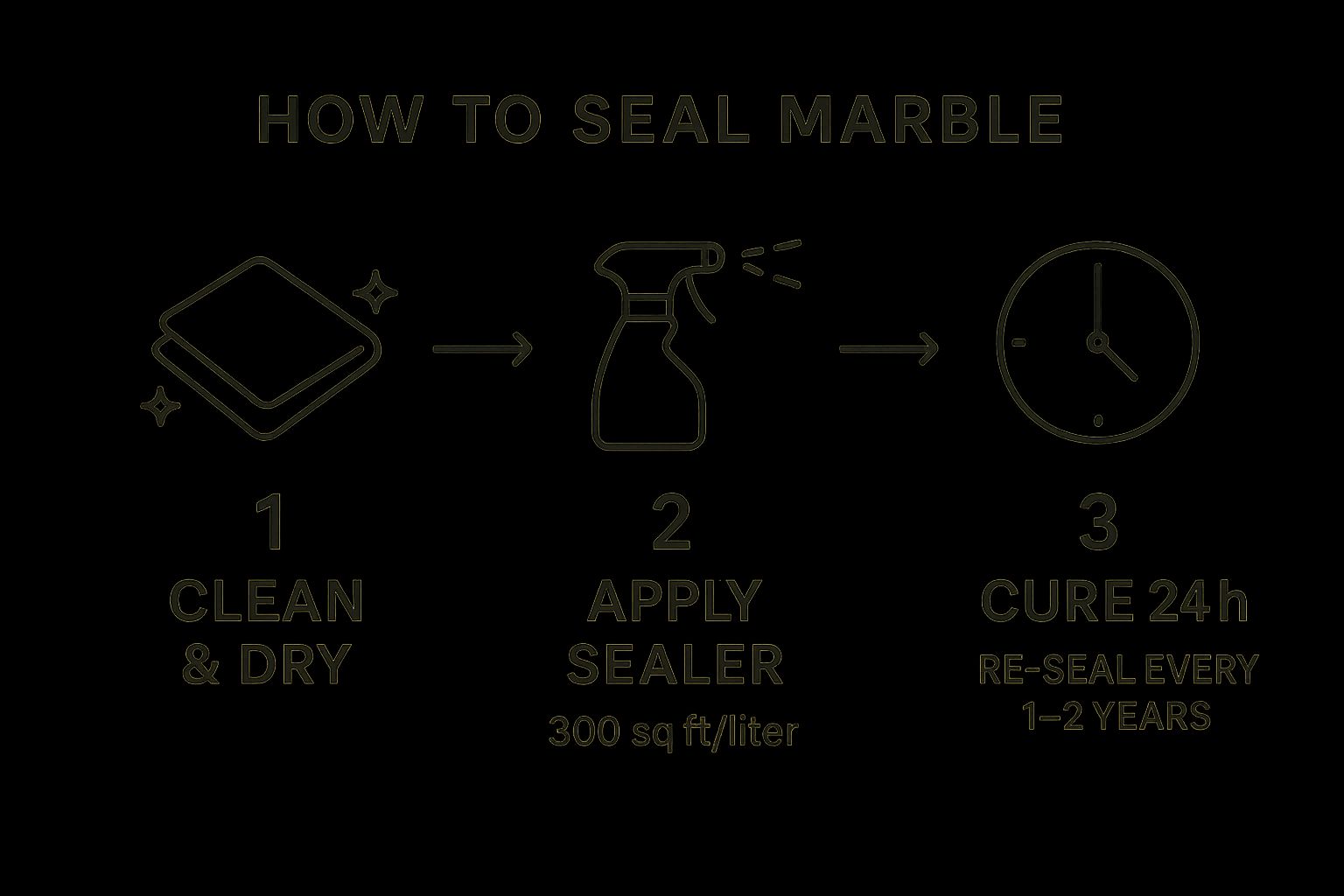
As a general rule, we recommend sealing most marble surfaces annually. However, for high-traffic areas—like kitchen countertops in a busy family home or bathroom vanities—sealing every six months is a much safer bet. Sprinkle a few drops of water on the surface; if it beads up, the seal is strong. If it soaks in, it's time to reseal.
Can I use a steam cleaner on my marble floors?
We strongly advise against using a steam cleaner on any marble surface. The combination of intense heat and high-pressure steam is a recipe for disaster for your marble's protective sealant. It can strip the sealant away, leaving the stone vulnerable to stains and moisture damage. The best way to clean marble floors is with a pH-neutral cleaner and a quality microfiber mop.
Is it safe to use "natural" cleaners like vinegar on marble?
Absolutely not. While vinegar and lemon juice are natural, they are also highly acidic. Acids cause a chemical reaction with the calcium carbonate in marble, which eats away at the stone and leaves a dull, whitish mark known as an etch. Always stick to products that are specifically labeled as pH-neutral and safe for natural stone.
Can minor scratches on marble be repaired at home?
For very light, superficial scuffs on a polished surface, you can sometimes buff them out using a super-fine #0000 steel wool and a little water, but be incredibly gentle. If you can feel the scratch with your fingernail, stop right there. At that point, it's time to call a professional stone restoration expert to avoid making the problem worse.
What is the difference between a stain and an etch on marble?
This is a key distinction. A stain is when a substance soaks into the marble's pores and causes discoloration. An etch, on the other hand, is actual physical damage—a chemical reaction from an acid that eats away at the stone's surface. Stains can often be removed with a poultice, but etching requires a professional to polish and hone the surface back to health.
Your Marble Experts in California
From the modern aesthetics of Bay Area homes to the timeless elegance of Monterey estates, marble remains an unparalleled choice. Proper care is the key to preserving its beauty.
At Carmel Stone Imports, we don't just supply exquisite natural stone; we provide the expertise to help you select and maintain it. If you have questions about caring for your marble or want to explore our stunning collection, we invite you to visit our showrooms or contact our team today. Let us help you keep your investment looking magnificent for a lifetime.
Of course, the quality of the stone you start with makes a difference in its long-term durability. You can learn more by reading about how to choose the right marble or stone countertop supplier in our detailed guide.