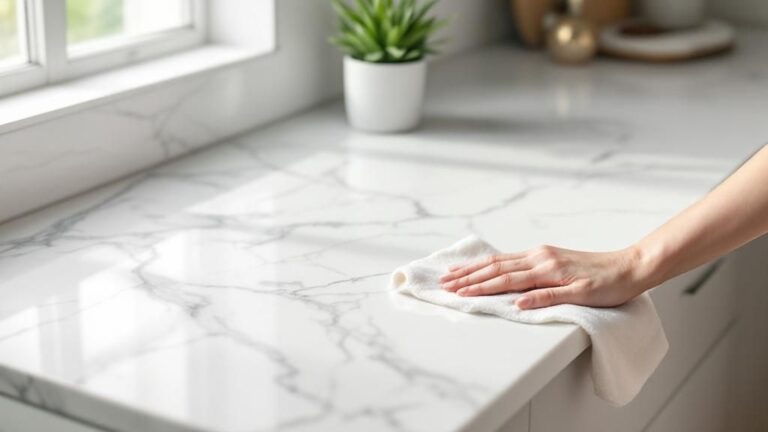
Effective marble countertop cleaning is crucial for preserving the timeless beauty of this natural stone. This guide explains how to protect your investment with gentle, consistent care using pH-neutral cleaners and soft microfiber cloths. But the most important rule is simple: wipe up acidic spills immediately, as liquids like wine, coffee, or lemon juice can permanently etch the stone and dull its elegant finish.
Protecting Your Marble from Day One
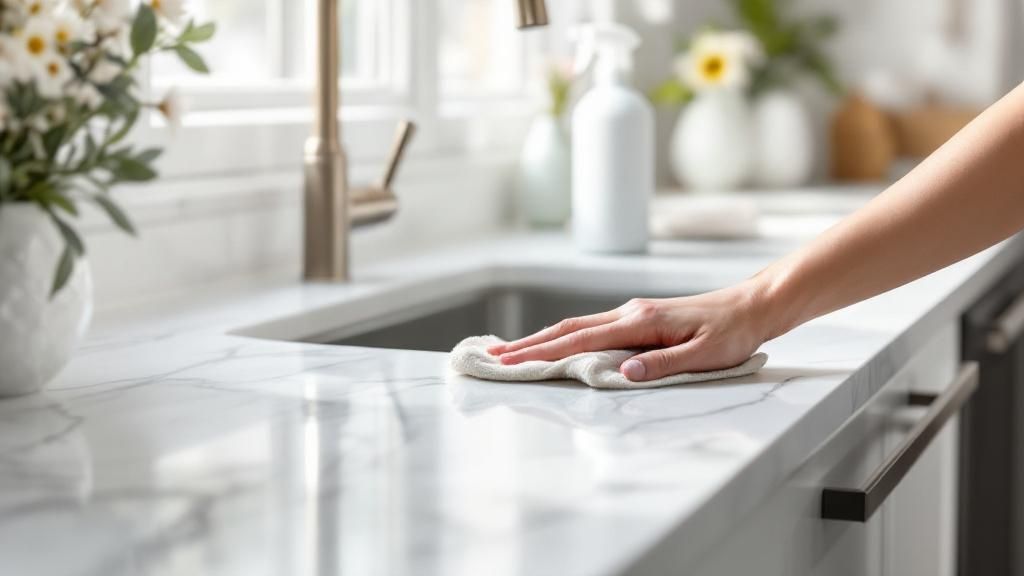
Marble countertops are an investment in timeless luxury, a true showstopper in design-forward homes from Palo Alto to Monterey. Protecting that investment begins the moment they’re installed. While marble feels solid, it is a porous, calcite-based stone, making it uniquely vulnerable to common household substances.
The two main enemies of your marble's pristine surface are etching and staining. Etching is physical damage that occurs when an acid reacts with the stone's calcium carbonate, creating a dull spot. A forgotten lemon wedge or a splash of tomato sauce can leave a permanent mark. Stains, on the other hand, happen when a colored liquid soaks into the stone's pores.
The single most important habit for any marble owner is prevention. Using coasters, trivets, and cutting boards isn't just a suggestion—it’s the golden rule for keeping your marble looking flawless in your coastal California home.
Understanding the Non-Negotiables
To master marble care, you must internalize a few core principles. These rules are essential for stopping damage before it starts and form the foundation of your entire marble countertop cleaning routine.
- pH-Neutral Is Key: Always use cleaners made specifically for natural stone. A simple mix of warm water and a few drops of mild, non-citrus dish soap also works perfectly. Anything acidic, like vinegar or most all-purpose cleaners, is off-limits as it will cause etching.
- Immediate Spill Response: Treat every spill like a minor emergency. Blot it up right away with a soft cloth instead of wiping, which can spread the liquid. The faster you act, the less time the substance has to etch the surface or soak in.
- Avoid Abrasives: Scouring powders, abrasive pads, and scratchy sponges will scratch and dull your marble, whether it has a polished or honed finish. Stick with soft, clean microfiber cloths for all cleaning tasks.
Daily Marble Care At a Glance
| Action | What to Do | What to Avoid | Why It Matters |
|---|---|---|---|
| Wipe Spills | Blot immediately with a soft, dry cloth. | Wiping or scrubbing the spill. | Prevents acidic substances from etching and colored liquids from staining the porous stone. |
| Daily Cleaning | Use a damp microfiber cloth with a pH-neutral cleaner or mild soap and water. | Vinegar, citrus cleaners, or harsh all-purpose sprays. | Acidic and abrasive cleaners damage the marble's calcium carbonate structure, causing dull spots (etching). |
| Protect Surface | Use coasters, placemats, and trivets consistently. | Placing hot pans, wet bottles, or acidic foods directly on the stone. | Creates a physical barrier against heat, moisture, and acids, which are the primary causes of damage. |
| Use Cutting Boards | Always chop food on a designated cutting board. | Cutting directly on the marble surface. | Prevents scratches from knives and stops acidic juices from foods (like tomatoes or citrus) from etching the countertop. |
Setting Up a Protective Environment
Your daily kitchen habits are just as critical as the cleaning products you choose. Especially for homeowners in coastal California, where indoor-outdoor living is the norm, being mindful of what lands on your countertops is crucial.
Get in the habit of placing decorative trays under items like perfume bottles, hand soap dispensers, and oil cruets. You'd be surprised how many of these products contain ingredients that can slowly damage marble over time. In the same way, be careful with items like colored sticky notes or papers with fresh ink, as the dyes can transfer into the porous surface.
By creating these simple barriers, you're building a protective shield around your beautiful stone, ensuring it remains the stunning centerpiece of your home for years to come.
Your Gentle Daily Cleaning Ritual
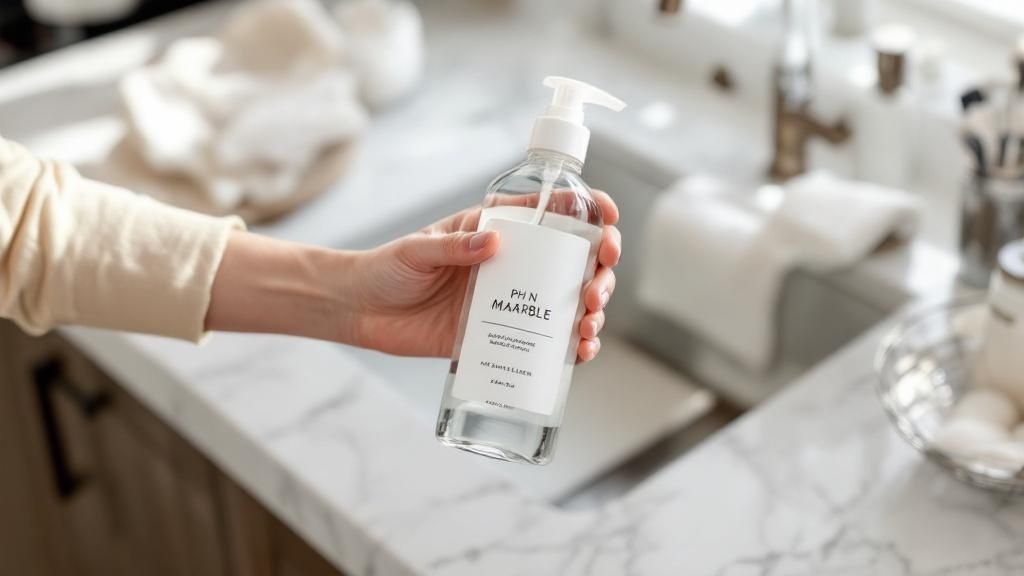
If you do just one thing for your marble, make it this. Effective marble countertop cleaning is about consistency, not aggressive scrubbing. A simple, gentle wipe-down each day is the single best way to protect the stone’s delicate surface.
This quick ritual lifts away the fine layer of dust and crumbs that can cause microscopic scratches if dragged across the surface. You're not trying to deep clean; you're just removing the day's grime. Think of it as preventative care that safeguards your investment for the long haul.
The Right Tools and Solutions
Your cleaning routine is only as good as the tools you use. We've seen too many beautiful marble finishes—both polished and honed—ruined by the wrong sponge or brush. Your essential toolkit is surprisingly simple.
- Microfiber Cloths: You’ll want two high-quality microfiber cloths. One is for cleaning, and the other is for drying. Their soft fibers are brilliant at trapping dust and soaking up moisture without leaving lint or causing scratches.
- A Gentle Cleaning Solution: Your only safe bet is a pH-neutral cleaner made specifically for natural stone. If you prefer a DIY route, a spray bottle filled with warm water and just a few drops of a mild, non-citrus dish soap will also work perfectly.
Working with homeowners across the Bay Area, we’ve seen firsthand the damage that the wrong cleaners can do. Everyday products like vinegar, lemon juice, or generic all-purpose sprays are far too acidic. They will cause etching—permanent damage—on a marble surface.
Never underestimate the power of a simple, pH-neutral approach. Harsh chemicals are the fastest way to dull your marble's natural luster and cause damage that requires professional restoration to fix.
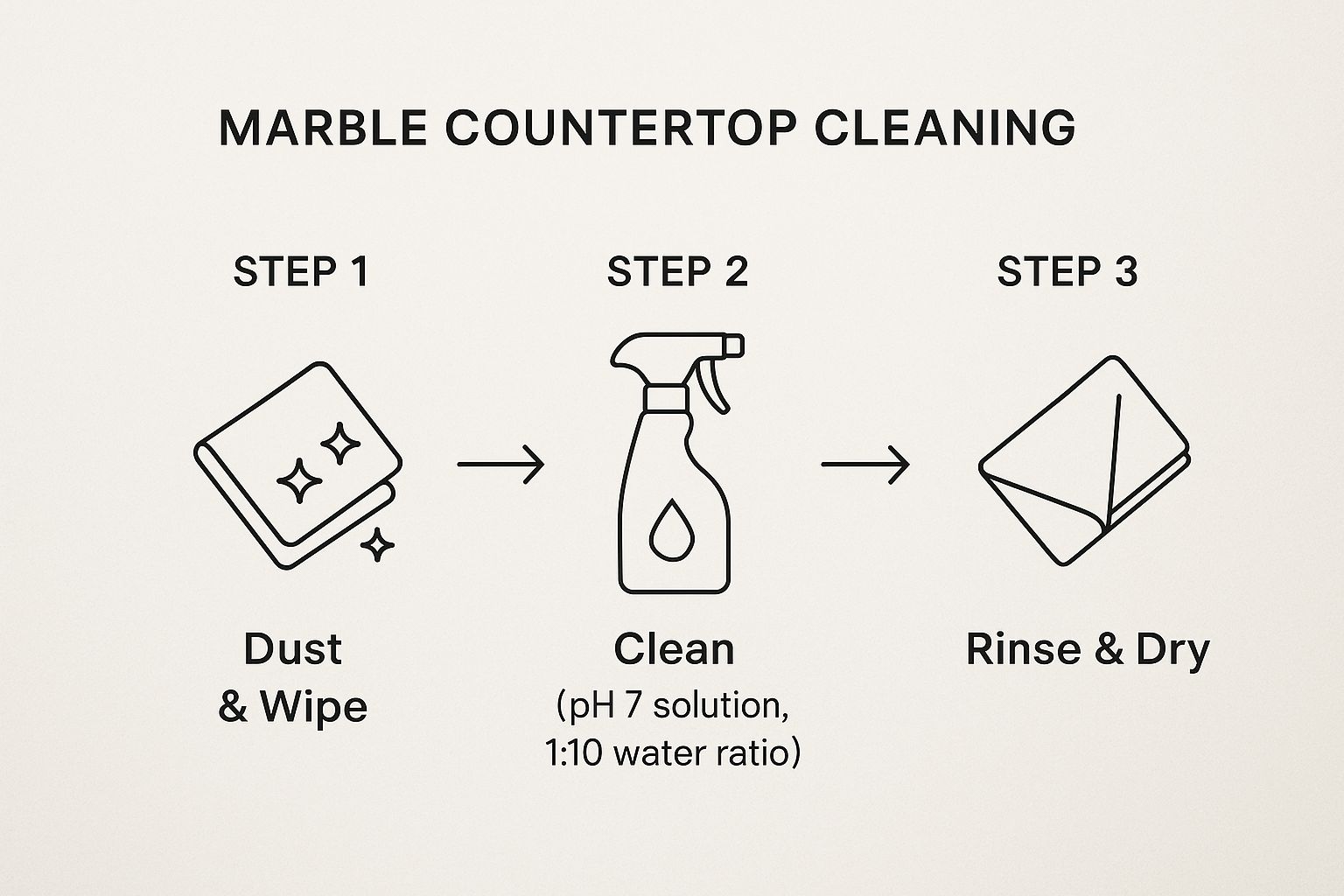
The Simple Three-Step Daily Method
Once you have your supplies ready, the daily wipe-down is a breeze. The whole process takes just a couple of minutes but adds immense protective value.
First, give your countertop a light misting with your pH-neutral solution. You don't need to soak it; a fine spray is enough to loosen any surface grime.
Next, grab your damp cleaning cloth and wipe down the surface using gentle, overlapping motions. Working in sections helps ensure you cover the entire area and prevents the cleaning solution from drying on its own, which can cause streaks.
Finally—and this part is critical—take your second, completely dry microfiber cloth and buff the countertop until it’s totally dry. This step is key for removing lingering moisture that could lead to water spots or mineral deposits, a common issue in many California homes with hard water. This final pass leaves your marble with a gorgeous, streak-free shine.
How To Handle Tough Marble Stains
Let’s be realistic: even with the best daily care, life happens. A splash of coffee during a hectic morning or a ring from a red wine glass after a dinner party doesn’t have to spell disaster for your beautiful marble. The secret is knowing how to tackle tough stains without accidentally causing more damage.
When a spill soaks into marble’s porous surface and leaves a mark, your go-to tool is a poultice. A poultice is a simple, absorbent paste you apply directly to the stain. As it dries, it pulls the staining agent out of the stone.
Creating a DIY Stain-Lifting Poultice
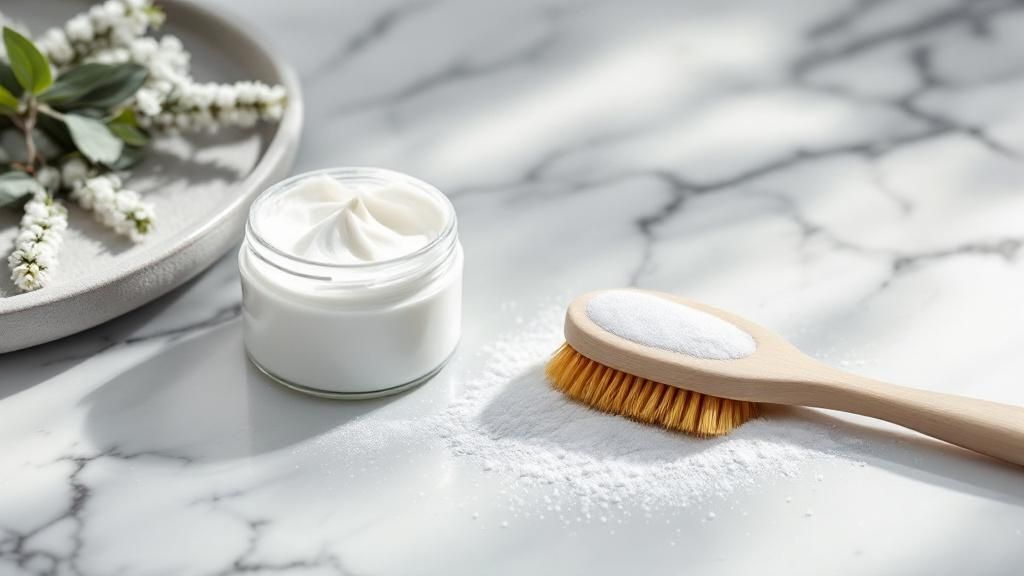
You can forget about harsh, store-bought chemical removers. It’s incredibly easy to make a powerful poultice using a few things you probably already have. The basic recipe is a thickening agent mixed with a chemical agent, blended into a paste with the consistency of thick peanut butter.
- For the Base: Baking soda is a fantastic and gentle thickening agent. You could also use diatomaceous earth or powdered whiting if you have them on hand.
- For the Chemical: Hydrogen peroxide works wonders on organic stains like coffee, tea, or wine. For oil-based messes like salad dressing, a few drops of ammonia or acetone will do the trick.
Just mix your chosen chemical agent into the baking soda a little at a time until you get that perfect, thick consistency. You want it thick enough that it won't run, but still wet enough to spread easily. Mastering this is a core technique in advanced marble countertop cleaning.
A properly made poultice is your secret weapon against stains that seem set in. It works gently over several hours to reverse the staining process without harming the marble itself.
How to Apply and Remove the Poultice
Once your poultice is mixed, the application is simple. Grab a plastic spatula and spread the paste directly over the stain. Make sure it's about a quarter-inch thick and extends just beyond the stain's edges.
Next, cover the poultice with a piece of plastic wrap and tape down the edges. This is a crucial step because it keeps the paste moist, giving it the 24 to 48 hours it needs to work its magic. After that time has passed, remove the plastic wrap and let the poultice air dry completely.
Finally, gently scrape off the dried paste with your plastic spatula and wipe the area clean with a damp cloth, followed by a dry one. For stubborn stains, you might have to repeat the process. This method shares principles with cleaning other porous stones; for more, check out our guide on how to clean travertine countertops.
Sealing Marble Like a Professional
While daily cleaning habits are crucial, sealing is the single best proactive step you can take. Think of it as an invisible shield. Sealing won't make your countertops stain-proof, but it dramatically boosts their stain resistance by buying you more time to clean up spills.
For marble, you'll want to use an impregnating sealer. This type of sealer absorbs into the stone, filling microscopic pores from the inside out. This creates a barrier that stops liquids but still allows the marble to breathe naturally, which is key to preserving its classic look.
Does Your Marble Need Sealing? The Water Test
Before you break out the sealer, you need to know if your countertop is ready for a fresh coat. Luckily, there's a simple test for this.
Find a clean spot on your counter and sprinkle on a few drops of water. After about 10-15 minutes, check the results.
- Did the water bead up? Great news! Your current sealer is still holding strong. You can wait a few more months before testing again.
- Did the water soak in and leave a dark spot? This is your sign. The old sealer has worn off, and your marble is now absorbent and vulnerable. It's time to reseal.
I always tell clients to do this quick water test every few months, especially in high-traffic zones like the area around the sink. It takes the guesswork out of your long-term maintenance.
Sealing your marble isn't a one-and-done job. For most homes in the Monterey or Bay Area, we recommend sealing every 6 to 12 months, depending on how heavily you use your kitchen.
The Right Way to Apply a Marble Sealer
Applying a sealer is a manageable DIY project, but your technique makes all the difference. The goal is to get an even coat without leaving any excess product on the surface, which can dry into a hazy, streaky mess.
First, give the countertop a thorough cleaning with your pH-neutral stone cleaner and let it dry completely—ideally overnight. You never want to trap moisture under a new coat of sealer.
Next, grab your impregnating sealer and apply it according to the manufacturer's directions. This usually means pouring a small amount onto a clean, lint-free cloth and wiping it onto the marble in a thin, even layer. I find it easiest to work in small, manageable sections.
Let the sealer sit and soak into the stone for the recommended time, typically around 15-20 minutes. Now for the most important part: after that time is up, you must buff off every last bit of excess sealer from the surface with a separate, clean, and dry cloth. Keep buffing until the countertop feels completely dry to the touch for a flawless, protected finish.
Remember, the quality of stone from a trusted marble countertop supplier can also play a role in how well it takes the sealer, so starting with a great slab is always a plus.
Frequently Asked Questions
1. What is the best daily cleaner for marble countertops?
The best daily cleaner is a pH-neutral solution specifically formulated for natural stone. For a simple and safe DIY alternative, mix warm water with a few drops of mild, non-citrus dish soap in a spray bottle. Avoid acidic or abrasive cleaners at all costs.
2. What's the difference between etching and staining?
An etch is physical damage to the stone's surface caused by an acid, creating a dull, whitish mark. A stain is a discoloration that occurs when a colored liquid soaks into the stone's pores. Stains can often be removed with a poultice, while etches typically require professional honing or polishing to repair.
3. How often do I really need to seal my marble?
We recommend sealing marble countertops every 6 to 12 months. However, the frequency depends on usage. High-traffic kitchens in homes from the Bay Area to Monterey may need sealing more often than a rarely used bathroom vanity. Use the water test every few months to check if it's time to reseal.
4. Is honed marble easier to maintain than polished marble?
Each finish has its own trade-off. A honed (matte) finish is excellent at hiding etch marks, making it ideal for busy kitchens. However, it can be slightly more susceptible to staining if not sealed properly. Polished marble naturally resists stains better but will show every etch and scratch more easily.
5. Why did a water glass leave a ring on my marble?
That ring is almost certainly an etch mark, not a water stain. It happens when condensation from a glass containing an acidic beverage (like lemonade, wine, or soda) pools on the countertop and corrodes the stone's surface. This is why using coasters is a non-negotiable rule for protecting marble.
At Carmel Stone Imports, our experts are here to help you select the perfect stone and provide the guidance you need to keep it beautiful for a lifetime.
Ready to find the marble of your dreams? Visit our showrooms in Carmel, Palo Alto, or Sand City to explore our world-class collection.