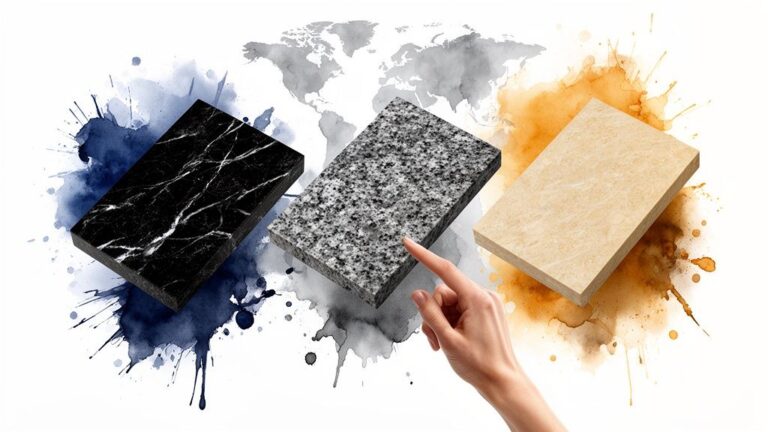
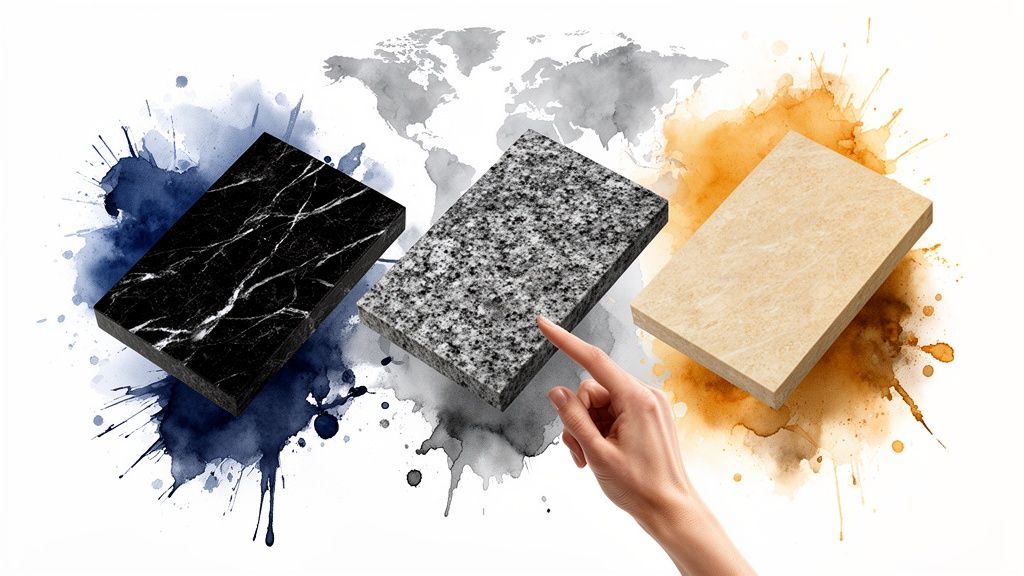
If you are remodeling your home, you have probably noticed that granite prices are all over the map. One quote might seem like a great deal, while another is much higher. This article explains the key reasons for these price differences, so you can make a smart choice for your project. This happens because not all granite—and not all suppliers—are the same. The final cost is shaped by everything from the stone's origin to the supplier's business model.
Why Granite Prices Are So Different
When comparing granite slabs for your Bay Area home, you might look at big-box chains like Home Depot and local stone yards. But if you’re wondering why prices can vary so much between them, the answer is what happens behind the scenes. The price difference often reflects major contrasts in quality, sourcing, and your experience as a buyer.
Homeowners often don’t realize that big-box stores source lower-quality granite. According to online forums, these slabs are often thinner or less consistent in color. The price you see also includes hidden markups for coordination and delivery.
The Big-Box Store Misstep
Many buyers assume national retailers offer better deals. But what you save in convenience, you often lose in quality, selection, and control.
At a big-box store, you usually don’t get to choose the actual slab. You are limited to a small selection and must pick from a tiny sample, hoping the full slab looks just as good.
A Better Approach to Buying Granite
The best way to get real value is to visit a local supplier where you can see and select the exact granite slab you’ll get. You can ask questions about where the stone comes from, its grade, and its thickness.
Local suppliers often have direct-import relationships with quarries. This means better pricing and access to premium material. You can also explore how other natural stones compare, like we cover in our guide on the price of quartzite vs. granite.
Comparing Granite Suppliers At A Glance
| Factor | Local Stone Specialist (e.g., Carmel Stone Imports) | Big-Box Retailer |
|---|---|---|
| Selection | Large, unique inventory with hand-picked slabs. | Limited, standard options. You pick from small samples. |
| Quality | Premium, first-choice material from quarries. | Often lower-grade, thinner, or less consistent material. |
| Sourcing | Direct import relationships, cutting out middlemen. | Complex supply chain with markups at each step. |
| Expertise | In-house stone experts to guide you. | General sales staff with limited stone knowledge. |
| Transparency | You choose your exact slab and get a clear cost breakdown. | Hidden costs are common; you don't see the slab until delivery. |
Choosing the right supplier is as important as choosing the right stone.
At Carmel Stone Imports, we source granite directly from top quarries worldwide. This gives us one of the largest curated inventories in California. Our team helps you compare slabs in person, understand what affects price, and choose a stone that fits both your style and budget—without middlemen or markups.
The Granite Slab's Journey From Quarry To Showroom
A granite slab’s price starts deep inside the earth. The biggest driver of cost is where the stone comes from. Think of it like wine—a bottle from a famous Italian region costs more than a generic table wine. It’s the same with granite.
A slab from a well-known quarry in Italy or Brazil will have a higher base cost. This is because some quarries produce stone with unique veining or colors that are in high demand for luxury projects across the Bay Area. The methods used to extract these large blocks also add to the cost.
The infographic below shows the key stages that add to the final price of a granite slab.

As you can see, the journey from a raw block to a polished slab involves many steps. Understanding this process is key to knowing why granite prices vary so much between suppliers.
From Global Quarries To California Showrooms
Once a block is pulled from the earth, it begins a long journey. Granite slabs are heavy, so the cost of international sea freight services is a major factor in the final price.
This is where the stone's origin affects the bottom line. Based on 2024 global trade data, export prices can be as low as $12 per ton in some countries. For premium blocks from Italy, the price can be as high as $1,392 per ton.
At a direct importer like Carmel Stone Imports, we manage this supply chain by building relationships with quarry owners. This lets us inspect blocks for quality before they are shipped. Only premium materials make their way to our showrooms in Palo Alto, Carmel, and Sand City.
The Role of Direct Sourcing
By sourcing directly from quarries, we get unique, high-quality slabs you won't find at big-box retailers. This also cuts out the middlemen who add their own markups. For homeowners in San Jose or Monterey, this means access to world-class stone at a better value.
If you’d like to learn more about how top materials are selected, check out our guide on where designers get their natural stone materials.
How Quality and Rarity Determine A Slab's Value
 stone slabs with diverse patterns and colorful watercolor splashes.” />
After a block of granite is pulled from the earth, its value must be determined. This process is called grading. It involves evaluating the stone's quality, rarity, and appearance.
Grading is one of the biggest reasons why granite prices vary so much between suppliers. A premium, “first-choice” slab has consistent patterns, vibrant colors, and few flaws. Commercial-grade slabs might have less exciting colors, making them a budget-friendly choice.
The Impact of Color and Veining
A granite slab’s price often comes down to how it looks. If a stone has a rare color or dramatic, flowing veins, it will be priced higher.
A common, speckled gray granite is easy to find, so it is less expensive. But a deep blue granite with gold swirls is special and found only in a few quarries. Its rarity and beauty drive up the cost.
Quarry rarity and quality can cause granite prices to fluctuate by 40-100%. For example, a premium 'Absolute Black' might cost $50-70 per square foot, while a basic 'Tan Brown' could be just $25-35 per square foot, according to industry data.
This is why a specific slab of 'Black Galaxy' from India costs more than a generic black granite. Seeing them side-by-side in a showroom helps you see the differences in value.
What Determines a Granite Slab's Grade
A stone’s grade is a quick way to gauge its quality. Suppliers generally sort slabs based on a few key factors:
- Visual Consistency: Is the color and pattern uniform across the slab?
- Imperfections: Are there any fissures, pits, or soft mineral spots?
- Rarity of Color: Is the color a common gray or a hard-to-find blue or green?
- Veining and Movement: Does the slab have striking patterns or a muted texture?
At Carmel Stone Imports, our team explains these details to clients in San Jose, Monterey, and the East Bay. We want to help you find a stone that fits your design and budget. Visit our showroom to see how these factors create a spectrum of beauty and value in our exclusive natural stone materials.
How A Supplier's Business Model Impacts Price
Where you buy your granite has a huge impact on the final price. The gap between prices at big-box stores and local stone yards is due to differences in their business models, which involve quality, sourcing, and overhead.
Big-box retailers often seem to have low prices. But to hit those prices, they usually sell lower-quality, mass-produced granite. Their "all-in-one" price often hides markups to cover costs.
Direct Importers vs. National Retailers
A local, direct importer like Carmel Stone Imports works differently. By building direct relationships with quarries, we can select and purchase premium stone blocks without middlemen. This direct-sourcing cuts out markups, meaning we can offer better quality at a better value.
Understanding how a business calculates its prices is key. Some resources on how to price landscaping jobs share similar ideas, showing how materials and overhead factor into a final quote.
Many buyers mistakenly assume a national retailer offers better deals. But what you might gain in convenience, you often lose in quality, selection, and control.
The Power of Seeing Your Slab
One of the biggest benefits of working with a direct importer is transparency. Whether you're renovating a coastal home in Monterey or a modern home in the East Bay, seeing full slabs in a showroom gives you an advantage.
- You Choose Your Exact Slab: You get to see, touch, and claim the exact slab for your home instead of picking from a small sample.
- Expert Guidance: You get real answers from stone specialists who know the material's origin, grade, and unique features.
- No Hidden Markups: The pricing is simple. You are buying from the source, cutting out middlemen who raise costs.
At Carmel Stone Imports, our team helps clients from San Jose to Palo Alto compare slabs in person. We explain what drives the price and help you choose a stone that fits your vision and budget. For more details, see our article on the difference between big-box and local granite suppliers.
How Global Economics And Tariffs Affect Your Project
Ever wonder why two similar granite slabs have different price tags? It’s often due to global economics. International trade policies, tariffs, and supply chains can cause prices to change, and those costs affect your project budget.
When a trade agreement changes or a new tariff is added, the cost of a slab can jump overnight. Logistics also play a role. When ships are stuck at ports or fuel costs rise, those expenses are passed down to you.
The Ripple Effect of Tariffs
Tariffs are like taxes on imported goods. In the stone market, they can create big price shifts. For example, some suppliers source from countries where production costs are lower.
But trade policies can change quickly. Recent U.S. tariffs on engineered quartz from Asia also drove up the price of some imported natural granite by 15-25% at California ports. You can read more about these trends in this Fortune Business Insights report.
A supplier with a "just-in-time" inventory is very exposed to these sudden price shocks.
How A Premier Supplier Navigates a Volatile Market
This is where working with an established, direct importer like Carmel Stone Imports makes a big difference. We proactively manage the market.
- We maintain a large, diverse inventory. By stocking a deep selection of slabs from around the world, we can protect our clients from sudden price spikes.
- We build global relationships. Our long-term partnerships with quarries in many countries give us the flexibility to change our sourcing. This ensures a stable supply of premium stone at fair prices.
This approach creates a buffer against global economic shifts, giving you more predictable pricing. You can also learn about our pre-tariff pricing on select stone slabs.
Choosing The Right Supplier For Your Home

If you’re remodeling your kitchen, you might be comparing big-box chains to local stone yards. You might be unsure who to trust, or why do granite prices vary so much between suppliers? Understanding this is key to making a smart investment.
Homeowners often don’t realize that big-box stores subcontract work and source lower-quality granite. Their prices might seem good, but you can lose in quality, selection, and control.
The Right Way to Select Granite
Many buyers assume national retailers offer better deals. But at a big-box store, you usually don’t get to choose the actual slab. Lead times can also stretch due to third-party schedules.
The best approach is to visit a local supplier where you can see and select the exact granite slab you’ll get. Ask about its origin, grade, and slab thickness. Local suppliers often have direct-import relationships, which means better pricing and access to premium material.
Visiting a dedicated stone supplier puts the power back in your hands. This hands-on experience removes guesswork and ensures the stone you love is the one you get.
The Carmel Stone Imports Advantage
Carmel Stone Imports sources granite directly from international quarries. This gives us one of the largest curated inventories in California. Our team helps you compare slabs in person, understand what affects price, and choose a stone that fits both your style and budget—without middlemen or markups.
Whether you're renovating in San Jose, remodeling in Monterey, or comparing options near Palo Alto or the East Bay, our showrooms give you direct access to premium granite slabs. Visit us to get expert guidance and see the difference for yourself.
Frequently Asked Questions
Here are answers to common questions homeowners have about granite pricing. We want you to feel confident in your decision.
Is more expensive granite always better quality?
Not always. A higher price usually points to a slab's rarity, a unique color, or its distant origin—not its durability. A common, less expensive granite can be very durable for a busy kitchen. The price is often tied to how it looks.
Why can't I choose granite from a small sample?
Granite is a natural product, so no two slabs are the same. A small sample can't show the full pattern, color variations, and movement of a large slab. Choosing your exact slab in person is the only way to guarantee you won't have any surprises.
Does the finish on the granite affect the price?
Yes, it can. A standard polished finish is usually included in the slab's price. But if you want a special finish like honed (matte) or leathered (textured), it requires extra work. This adds to the material's final cost.
How does buying from a direct importer save me money?
A direct importer like Carmel Stone Imports buys stone in large amounts, straight from quarries. This model cuts out middlemen like distributors and wholesalers who add markups. This means we can offer great value on high-quality slabs.
Are thicker granite slabs more expensive?
Yes, slab thickness directly impacts cost. A 3cm (1.25 inch) slab has more raw material than a 2cm (0.75 inch) slab, so it costs more. The thicker slab is also heavier, which increases shipping costs and adds to its higher price.
Ready to see the difference for yourself and find the perfect granite for your home? The team at Carmel Stone Imports is here to guide you. Visit one of our showrooms in Palo Alto, Carmel, or Sand City to explore our curated collection of premium slabs and get expert advice from our stone specialists. Contact us today to schedule your visit.