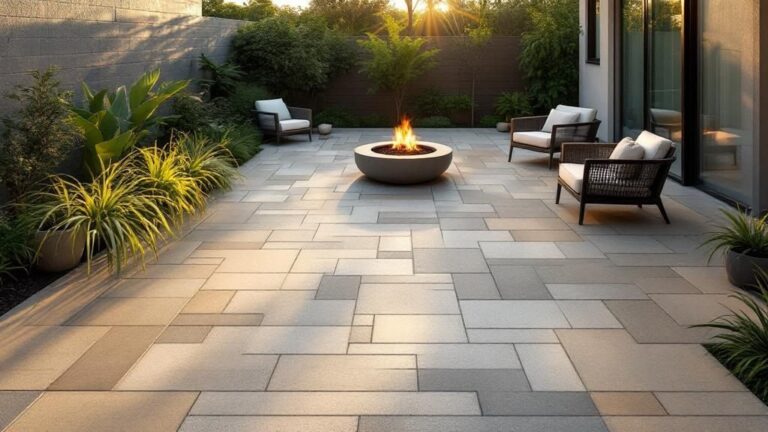
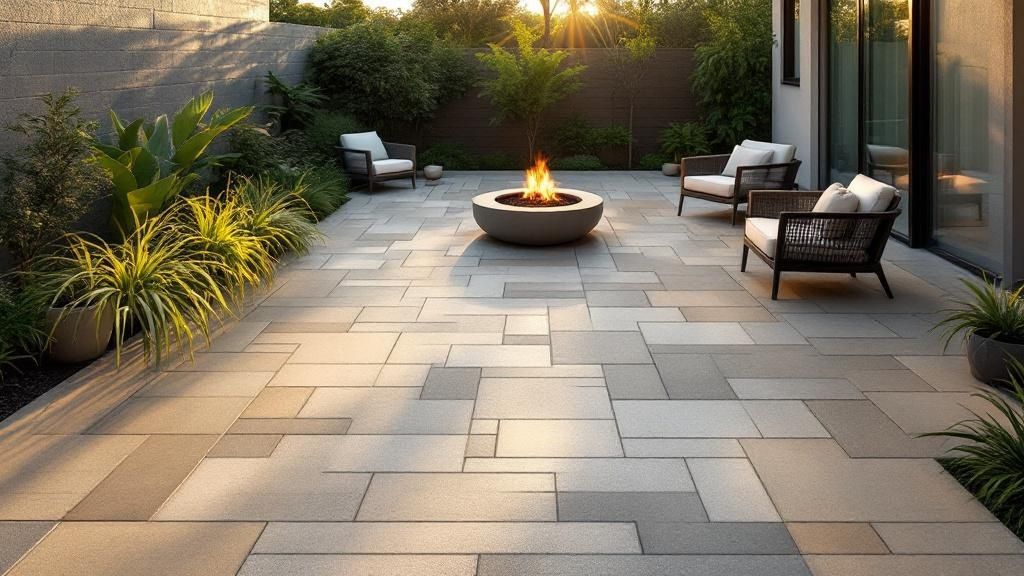
When choosing the best pavers for patios, the goal is to find a material that balances durability, aesthetics, and suitability for your specific location. In California, the leading contenders are natural stone like limestone and travertine for timeless elegance, porcelain pavers for modern low-maintenance appeal, and concrete pavers for their versatility and budget-friendliness. This guide will walk you through these top choices to help you create a stunning and lasting outdoor living space.
Ultimately, the right choice boils down to your personal style, budget, and the unique microclimate of your home, from the sunny Bay Area to coastal Monterey.
Your Guide to Choosing the Perfect Patio Pavers
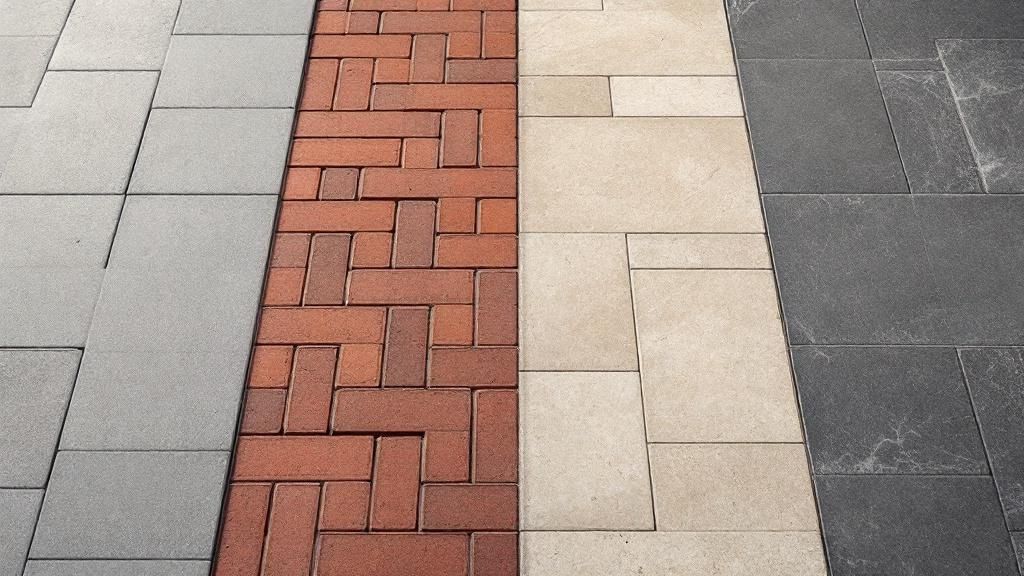
Choosing pavers for your patio is a critical decision for your outdoor space. It’s about more than just picking a color; it’s about finding a material that fits your California lifestyle, holding up to everything from the salty air of Monterey to the intense sun in the Bay Area. Get this right, and you’re building the foundation for an outdoor oasis where memories will be made for years to come.
This guide is designed to make the process simple. We’ll explore the world of paver materials, from the classic, earthy appeal of natural stone to the sleek performance of modern porcelain. The goal is to provide a clear roadmap so you can create a beautiful, lasting patio that becomes everyone’s favorite spot.
What to Keep in Mind
Before getting lost in material options, it helps to ground yourself in a few key factors. The best patios always strike a perfect balance between how they look and how they perform.
Here’s what to consider from the start:
- Aesthetics and Style: Your pavers set the tone. Their color, texture, and shape should feel like a natural extension of your home's architecture, whether you have a Mediterranean-inspired villa or a modern Bay Area retreat.
- Durability and Climate: Your patio needs to handle foot traffic, heavy furniture, and our unique weather patterns. A paver that won't fade in the sun or absorb too much heat is a smart move for any California home.
- Maintenance Requirements: Be honest about upkeep. Some materials, like porcelain, are virtually hands-off. Others, like certain natural stones, may need a sealer to keep them looking their best.
A recent Houzz study found that 58% of renovating homeowners are upgrading their outdoor spaces, with patios leading the charge. This highlights how much we value creating functional, stylish outdoor areas that feel like a true part of the home.
To help you get a quick sense of the options, we've put together a simple comparison table.
Patio Paver Materials at a Glance
This table offers a quick comparison of popular paver materials based on key factors like aesthetics, durability, maintenance, and cost to help you make an informed initial decision.
| Material | Key Benefit | Best For | Durability | Maintenance |
|---|---|---|---|---|
| Natural Stone | Unmatched, authentic beauty | High-end, classic, and rustic designs | Very High | Low to Moderate |
| Porcelain | Extremely durable & low maintenance | Modern, minimalist, and high-traffic areas | Excellent | Very Low |
| Concrete | Versatile and budget-friendly | A wide range of styles, from traditional to modern | Good | Low to Moderate |
| Brick | Timeless, classic charm | Traditional, colonial, and historic-style homes | Good | Low |
| Travertine | Stays cool underfoot | Pool decks and hot climates | High | Moderate |
This should give you a solid starting point for narrowing down your choices based on what matters most to you. For more visual inspiration on how these materials can completely transform a space, check out our gallery of stunning stone paver patio ideas.
Exploring the Best Paver Materials for California Patios
The soul of a great patio truly lies in the material you choose. Picking the right paver is a delicate balance of aesthetics, how it will hold up over time, and what makes sense for our unique California climate. Let's walk through the top options we see homeowners falling in love with at Carmel Stone Imports, breaking down what makes each one special.
We’ll start with the classic, old-world feel of Travertine, move to the quiet strength of Limestone, and then cover the sleek performance of modern Porcelain Pavers. We'll also touch on Concrete Pavers and explain why their versatility and smart cost make them such a popular go-to. For each one, we'll talk about the textures, colors, and finishes available, helping you picture exactly how it could redefine your space—from a rustic Mediterranean courtyard to a sharp, contemporary entertaining area fit for a Palo Alto backyard.
Timeless Elegance with Travertine Pavers
Travertine is a type of limestone with a character all its own, formed over millennia by mineral springs. It instantly brings a sense of history and warmth to any outdoor space. Its naturally pitted surface and soft, earthy color palette—creamy ivories, warm golds, and rich walnuts—make it a perennial favorite for Mediterranean and rustic-style homes all along the Monterey Peninsula.
One of travertine’s most praised qualities, especially here in sunny California, is its ability to stay cool underfoot. This makes a huge difference for pool decks and patios where you want to kick off your shoes. While it is a naturally porous stone, a good quality sealer is all it takes to protect it from stains and weather, locking in its beauty for the long haul.
Key Insight: Travertine's heat-resistant reputation is well-earned. Its porous structure lets it breathe, so it doesn't soak up and hold onto the sun's heat like denser materials, making it one of the most comfortable natural stone choices for a sun-drenched patio.
Sophisticated and Durable Limestone Pavers
If you love the authenticity of natural stone but prefer a cleaner, more consistent look, limestone is your answer. It has a finer grain and more subtle color variations than travertine, creating an air of understated luxury that works with both traditional and modern homes. At Carmel Stone Imports, we offer limestone in several finishes, from a smooth, matte honed finish to a tumbled one that feels softer and antiqued.
Don't let its refined looks fool you; limestone is incredibly tough. It's a dense, hard-wearing stone that can handle constant foot traffic and heavy patio furniture, making it a smart, long-term investment for an elegant outdoor living area.
- Color Palette: You'll typically find it in calming shades of gray, blue, tan, and white, making it incredibly easy to coordinate with almost any design scheme.
- Best Application: It's perfect for creating sophisticated outdoor dining areas, elegant walkways, and patios that feel like a natural extension of your indoor living space.
- Regional Fit: The clean lines and muted tones of limestone are a fantastic match for the modern aesthetic you see in many Bay Area homes.
For a deeper look at how natural stones stack up against manufactured options, you can explore our detailed comparison of natural stone pavers and porcelain pavers.
High-Performance Porcelain Pavers
For anyone who wants a modern look combined with almost zero maintenance, porcelain pavers are a game-changer. These are engineered from highly refined clay fired at incredibly high temperatures, making them dense and almost completely non-porous. This results in superior resistance to stains, scratches, water, and fading from UV rays—a must-have for any patio soaking up the California sun.
The manufacturing process also gives porcelain an amazing ability to mimic other materials like natural stone, wood, or concrete, but without the upkeep. This versatility lets you achieve a specific aesthetic with the confidence that it will look just as good years from now. Porcelain's incredibly low porosity (less than 0.5% water absorption) also means it's highly resistant to mold and mildew, a huge plus in coastal areas like Carmel where morning fog is common.
Versatile and Cost-Effective Concrete Pavers
Concrete pavers are arguably the most widely used patio material out there, and for good reason. They are engineered for consistent strength and offer a reliable, budget-friendly solution without compromising on design. Modern manufacturing means these pavers come in a staggering array of shapes, sizes, colors, and textures.
From pavers that look like classic brick to ones that capture the charm of natural flagstone, the design potential is practically unlimited. This adaptability makes them a great fit for any style, from a quaint cottage garden path to a sprawling contemporary patio. Their interlocking design also creates a strong, flexible surface that can handle minor ground shifts better than a solid concrete slab, reducing the risk of cracking.
Why Concrete Pavers Are a Top Patio Choice
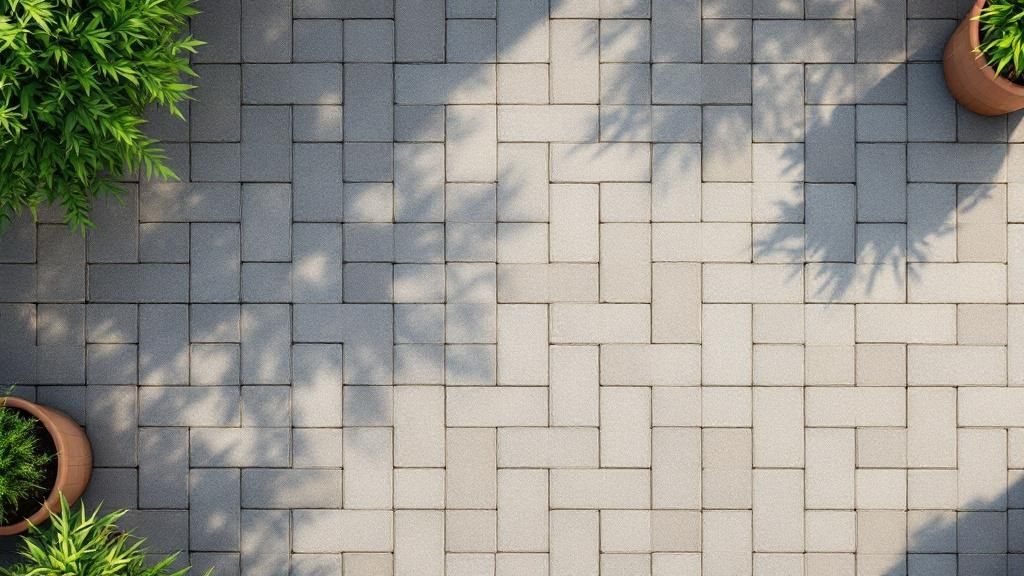
When you start looking at the best pavers for patios, you'll find that concrete pavers come up again and again. Forget plain gray slabs—today's concrete pavers are sophisticated, highly engineered products built for stunning looks and long-term performance. They hit a sweet spot of durability, design freedom, and value that's tough for other materials to beat.
Unlike a poured concrete slab, which is prone to cracking, pavers are individual units made under tightly controlled factory conditions. A mix of cement, aggregates, and pigments is compacted under immense pressure, resulting in a product that's incredibly dense and consistently strong—the secret to their success.
Unmatched Design Versatility
One of the biggest reasons people fall in love with concrete pavers is the sheer variety. The manufacturing process gives designers and homeowners a massive palette of colors, shapes, sizes, and textures to play with, creating looks out of reach with most other materials.
- Mimicking Natural Stone: Modern techniques are so good that concrete pavers can convincingly pass for natural slate, flagstone, or cobblestone, offering timeless appeal without the premium price tag.
- Modern and Geometric Styles: For a contemporary home in places like Palo Alto, large-format pavers with smooth finishes and cool tones like gray or charcoal create crisp, clean lines that define a minimalist aesthetic.
- Classic and Traditional Looks: It's just as easy to find pavers that have the warm, inviting feel of traditional brick, perfect for crafting a cozy, rustic patio.
This adaptability means there’s a concrete paver out there that will feel right at home with any architectural style, from a Spanish-style residence in Monterey to a sleek urban retreat.
Engineered for Strength and Durability
Beyond just looking good, concrete pavers are built to handle real life. Their high-density structure makes them tough enough to resist the daily grind of patio furniture, constant foot traffic, and anything else you throw at them. They are specifically designed to stand up to the elements.
The real magic is in their interlocking system. When installed correctly over a solid base, the sand-filled joints between each paver allow the entire surface to act as a flexible system, moving slightly with the ground.
Key Advantage: This flexibility is a game-changer for California properties. It helps the patio resist cracking from subtle ground movement or the expansion and contraction caused by temperature swings—the very things that are the enemy of solid concrete slabs.
This built-in resilience makes them one of the most dependable and low-maintenance options for a patio floor that will last for decades.
A Smart Investment for Your Outdoor Space
From a budget perspective, concrete pavers deliver incredible bang for your buck. They generally have a lower initial cost per square foot than premium natural stones, putting a high-end look within reach. Add in their durability and the simplicity of repairs—you just pop out a single damaged paver—and you've got excellent long-term value.
This powerful combination of cost, beauty, and performance is exactly why the market is booming. The global concrete pavers market was valued at USD 16.4 billion and is projected to keep growing, fueled by homeowners who want beautiful and functional outdoor living spaces. You can dig deeper into these trends with this global concrete pavers report.
The Engineering Behind Interlocking Paver Systems
So, what makes an interlocking paver system so incredibly tough? It’s not about the strength of just one paver; it's the collective power of the whole system working together. Let’s dive into the brilliant engineering that creates a surface that's both flexible and unbelievably strong.
Unlike a solid slab of concrete that takes all the stress on its own, an interlocking system spreads the load across many different units. This is exactly why these systems can handle years of heavy foot traffic and patio furniture without cracking or shifting. This interconnected strength is a huge deal, especially in California, where tiny, sand-filled gaps give the entire surface room to expand and contract with temperature swings.
How The System Works Together
The real magic of an interlocking paver system is how a few key parts work in perfect harmony. The pavers themselves provide the durable, beautiful surface, but it's the base underneath and the sand in the joints that truly lock everything into a high-performance system.
A rock-solid foundation is non-negotiable. This means starting with essential base materials like a high-quality MOT Type 1 sub base. A well-compacted base is your insurance policy against sinking and shifting, keeping the pavers level for years.
The sand-filled joints are the final piece of the puzzle. This sand creates just enough friction between the pavers to lock them tightly in place while still allowing for micro-movements. This clever design prevents pavers from grinding against each other and makes repairs a breeze—if one gets damaged, you can simply lift it out and pop in a new one.
The global market for interlocking concrete pavers was valued at around USD 18 billion, and it's projected to keep growing. Here in the U.S., the market is worth about USD 4.9 billion, which shows just how much homeowners trust these durable patio solutions.
Visualizing The Trade-Offs
When you’re choosing pavers, you’re often making a trade-off between initial cost, durability, and long-term maintenance. This image helps illustrate how those key factors are related.
As you can see, spending a bit more upfront often buys you much greater durability, which means less work and lower maintenance costs over the life of your patio. Finding that sweet spot is the key to selecting the best pavers for patios that fit your budget and your lifestyle. For more inspiration on putting these ideas into practice, check out our article on how Bootstrap pavers can modernize your outdoor space.
Key Design Considerations for Your California Patio
A truly great patio design feels less like an add-on and more like a natural extension of your home. Once you’ve settled on a material, the real design work begins—the details that will shape the final look, feel, and usability of your outdoor space.
The first step is ensuring your new patio and your home’s existing style speak the same language. Think about the color and texture that best complement your architecture. A hand-chiseled, warm-toned limestone can feel right at home with a Mediterranean villa in Monterey, while sleek, large-format porcelain pavers are a perfect match for a modern Bay Area home. For a deeper dive into your options, check out our guide to high-quality exterior pavers.
Scale and Pattern
The size of your pavers and the pattern you lay them in have a huge impact on how big your patio feels. Get it right, and you can make a tiny space feel expansive or add visual punch to a large area. A good pattern truly defines your patio's character.
- Large-Format Pavers: Going big with pavers (think 24×24 inches or larger) and using tight grout lines creates a clean, uncluttered look. It's a fantastic way to make smaller patios feel more spacious.
- Classic Patterns: You can't go wrong with a running bond pattern, where pavers are offset just like bricks. It’s traditional, timeless, and always looks good.
- Intricate Designs: A herringbone or basketweave pattern instantly adds a layer of sophistication and texture, perfect for creating a stunning focal point or a more formal atmosphere.
Functional and Safety Factors
Looks are important, but a great patio has to be comfortable, safe, and built to handle the elements. For those of us in California, three things are absolutely critical: drainage, slip resistance, and heat absorption.
Crucial Tip: Pay close attention to the paver's finish. A honed or polished surface might look incredible, but it can become dangerously slick when wet. A textured, tumbled, or brushed finish offers much better grip and is a far safer bet for most outdoor patios.
Proper drainage is a must to prevent puddles, which can damage pavers and your home's foundation. A slight, almost unnoticeable slope away from the house is standard. Slip resistance is another major safety point, especially with kids or a pool. Materials with a natural texture, like travertine or certain types of porcelain, are excellent choices here.
Finally, under that beautiful California sun, heat matters. Lighter-colored materials—like a beige travertine, light gray limestone, or sand-colored concrete pavers—are some of the best pavers for patios because they reflect more sunlight and stay much cooler. The demand for such functional pavers has fueled industry growth; the global market for pavers equipment, valued at USD 4.7 billion, is projected to reach USD 7.7 billion by 2035, largely driven by residential landscaping. You can explore more on this trend and its impact by reading these paver industry insights.
Frequently Asked Questions
Choosing the perfect material for your patio is a big decision, and it's natural to have questions. Here are the answers to some of the most common inquiries we receive from homeowners and designers at Carmel Stone Imports.
What is the most durable type of paver for a patio?
For pure durability, porcelain pavers and dense natural stones like limestone and granite are top contenders. Porcelain is engineered to be non-porous, making it extremely resistant to stains, scratches, and fading. High-density natural stones offer incredible compressive strength and will last for generations with proper care, making them a premium, long-term investment.
How do I choose a paver color that won't get too hot?
This is a critical consideration for any California patio. Lighter colors are your best friend for keeping a surface cool underfoot. Shades of off-white, light gray, beige, and sand reflect more solar radiation than they absorb. Materials like travertine are especially known for staying cooler than other stones due to their natural porous structure.
Are pavers a better solution than a poured concrete slab?
For most patios, yes. Pavers offer superior design flexibility and are far more resistant to cracking than a solid concrete slab. The interlocking system allows for slight movement with temperature changes and ground settlement, which is a common issue in California. Furthermore, if a paver is damaged, you can replace a single unit instead of repairing a large, unsightly crack in a slab.
How much maintenance do patio pavers require?
Most modern paver solutions are designed for low maintenance. Porcelain pavers are virtually maintenance-free, requiring only occasional cleaning. Natural stone and concrete pavers benefit from being sealed every 3-5 years to protect against stains and preserve their color, but otherwise only need routine sweeping and rinsing.
What kind of sand should be used between pavers?
We highly recommend using polymeric sand for the joints between pavers. Unlike regular sand, polymeric sand contains polymers that harden when activated with water, locking the pavers together firmly. This helps prevent weed growth, deters ants, and resists erosion from rain, ensuring your patio remains stable and beautiful for years.
Begin Your Project with Carmel Stone Imports
Turning an ordinary outdoor space into something truly special starts with choosing the right materials and getting expert guidance. When you're looking for the best pavers for your patio, it's a careful balance between aesthetics, long-term durability, and what makes sense for our unique California climate. At Carmel Stone Imports, we help homeowners and trade professionals make those choices with confidence.
We’ve curated an extensive collection of premium natural stone and porcelain pavers, all chosen to meet the highest standards. We firmly believe the best way to choose a material is by seeing and feeling it for yourself. There’s no substitute for experiencing the rich, hand-chiseled texture of a limestone paver or the sleek finish of porcelain.
Visit Our Showrooms
That’s why we invite you to visit our showrooms in Monterey and Palo Alto. It’s one thing to look at pictures, but it's another to touch the stone and see how the light catches it. Our team is there to offer personalized recommendations based on your project, including your home’s architectural style and how you plan to use the space.
When you work with us, you're getting more than just stone. You're getting access to decades of hands-on experience and a commitment to helping you create a beautiful, lasting outdoor living area.
For a deeper dive into what works well locally, take a look at our guide to exterior pavers in San Jose.
Ready to find the perfect pavers for your dream patio? Contact us today or stop by one of our showrooms to begin the journey.